SIO the other newsletter – No. 192: Proton Storage – The Whole H-Technology
By Troy vom Braucke
Every hydrogen fuel system pays an entropy toll twice.
First, to hold the protons. Hydrogen naturally wants to spread out – an entropy cost every storage method pays. Compression costs ~10–13% of the fuel’s energy, liquefaction 30–40%. Binding routes (hydrides, MOFs, LOHCs, ammonia) are constrained by T = ΔH/ΔS, so they need either extreme cold to hold hydrogen or added heat to release it; metal foams and heat exchangers manage that heat but don’t remove it.
Then, to move the protons. Membranes conduct only when hydrated and drag water from anode to cathode. With stacks needing to operate below ~90 °C, and they swell and fatigue with every humidity cycle.
Incremental materials work has circled around these challenges for decades, trading one entropy cost for another. Wouldn’t it be better to remove the cost entirely? Whoever does that can reshape storage, refuelling and stack design at once.
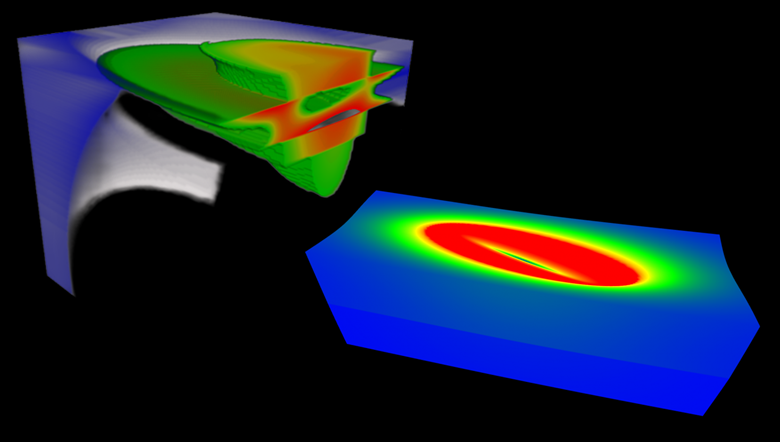
The coherent-domain physics in Fluid Universe [1], building on [2, 3], allows one to treat protons as fluidic fields interacting with engineered surfaces. The physics providing the foundation for a fluid ΔS = 0 storage concept.
Where fuel cell developers can win now with FilmDoctor® [4]:
- Membrane, catalyst and GDL interfaces: stress from swelling and humidity cycling, reverse-optimized before cells are built (i.e. iStress module).
- Bipolar plate coatings: adhesion and stress in layered, corrosion-resistant designs.
- Flow-field topology: with custom module development to address shark-skin-type surfaces for improved efficiency (NL#167).
- Storage: co-development on fluid ΔS ≈ 0 concepts.
Which entropy cost in your system have you accepted as fixed?
Contact to discuss project opportunities.
If you have any questions concerning the theory, please contact Norbert Schwarzer directly via email: n.schwarzer@siomec.de
If you have any questions concerning the software and animation, please contact Nick Bierwisch: n.bierwisch@siomec.de
For all other concerns (software, offers, development, investor requests) address Peggy Heuer-Schwarzer: p.heuer@siomec.de or Troy vom Braucke: troy@gpplasma.com
SIO the other newsletter – No. 191: Measurement Conversion Center 1.1.0
By Nick Bierwisch and Troy vom Braucke
After version 1.0.1, more customers sent example files – thank you. Two of those exports were layouts the converter could not take as a set: a single measurement on one spreadsheet sheet, and a folder where the nanoindenter setup file sits in Excel and each curve data set sits in its own text file.
Measurement Conversion Center 1.1.0 converts both, while FilmDoctor® itself does not need an update.
Tell the converter what you are loading before you click load data, choose single measurement or measurement series, then the file type.
Single measurement — a text file, an fdf file, or an Excel file.
Measurement series
- Excel — all curves on one sheet (new)
- Excel + text — Oliver & Pharr results and the experimental setup in the Excel file; each curve in its own text file (new)
The ‘Excel + text’ pair is now read as one measurement series. Now you do not need to stitch the files by hand.
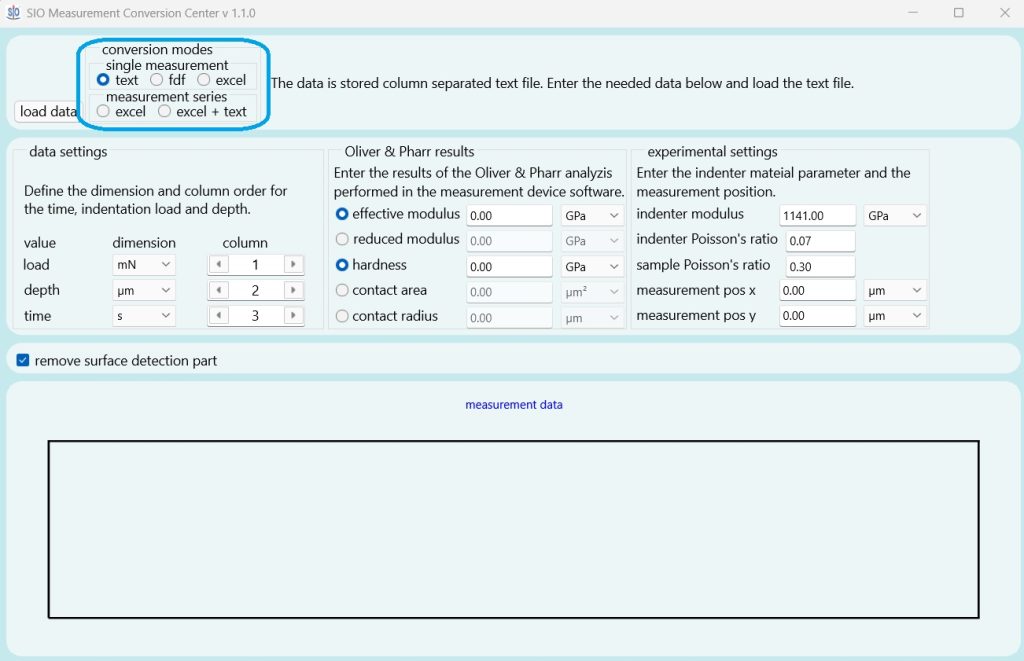
Confirm you are on v1.1.0 The window title reads SIO Measurement Conversion Center v 1.1.0. The download page shows the same version.
Re-download (no installer — unzip and run): siomec.com/measurement-conversion-center
Indentation is still the currently supported test type with scratch and other formats to follow.
If your export still does not convert — wrong layout, missing field, or an instrument we have not seen — send the file.
If you have any questions concerning the theory, please contact Norbert Schwarzer directly via email: n.schwarzer@siomec.de
If you have any questions concerning the software and animation, please contact Nick Bierwisch: n.bierwisch@siomec.de
For all other concerns (software, offers, development, investor requests) address Peggy Heuer-Schwarzer: p.heuer@siomec.de or Troy vom Braucke: troy@gpplasma.com
SIO the other newsletter – No. 190: Measurement Conversion Center 1.0.1
By Nick Bierwisch and Troy vom Braucke
Last week we released the SIO Measurement Conversion Center and asked: if you have an unsupported format, please send an example file. A customer did just that and v1.0.1 is built from that file. Thank you.
FilmDoctor® itself does not need an update. Just re-download the converter only.
What 1.0.1 changes
1. Load unit is µN, not µm
The load-unit selector was mislabelled in µm — a length unit on the force axis. It is now µN.
2. Text import no longer fails on blank header lines
Some instrument exports insert empty lines in the header. Those files now import.
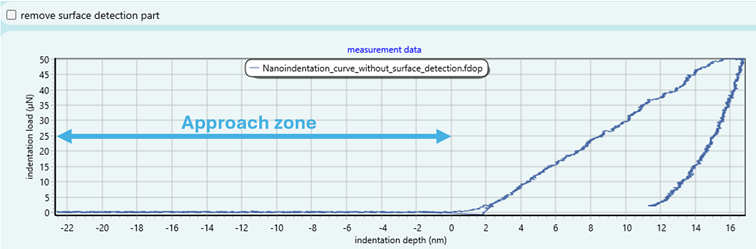
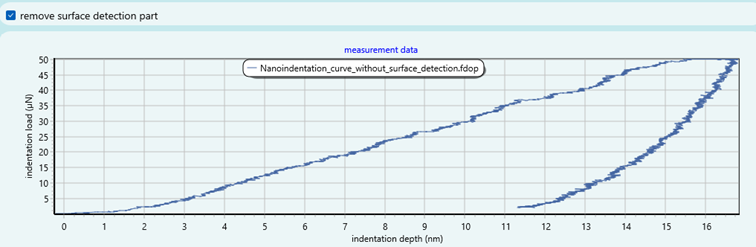
3. Approach / surface-detection segment removed by default
The customer file contained the pre-contact points the instrument uses to find the surface. Those points are not used in the FilmDoctor analysis and are usually already absent from the data we receive. 1.0.1 removes them on import by default. Uncheck the box if you want every measured point left in the FilmDoctor file.
- Checkbox off: all measurement points are kept.
- Checkbox on (default): segment removed; first contact at zero depth. On this curve the approach is a shallow rise from 0 nm and only becomes obvious around 0.5 nm.
Confirm you are using version 1.0.1
The window title now reads with the version number, and the download page link also shows the latest version number.
Re-download (no installer — unzip and run): siomec.com/measurement-conversion-center
Indentation — single curves and batch series, text and Excel — remain the currently supported data set. Scratch and other test types will follow. We will add features in later updates and keep you informed.
If you find an export fails or a field or feature does not map, send us the file.
If you have any questions concerning the theory, please contact Norbert Schwarzer directly via email: n.schwarzer@siomec.de
If you have any questions concerning the software and animation, please contact Nick Bierwisch: n.bierwisch@siomec.de
For all other concerns (software, offers, development, investor requests) address Peggy Heuer-Schwarzer: p.heuer@siomec.de or Troy vom Braucke: troy@gpplasma.com
SIO the other newsletter – No. 189: SIO Measurement Conversion Center
By Nick Bierwisch and Troy vom Braucke
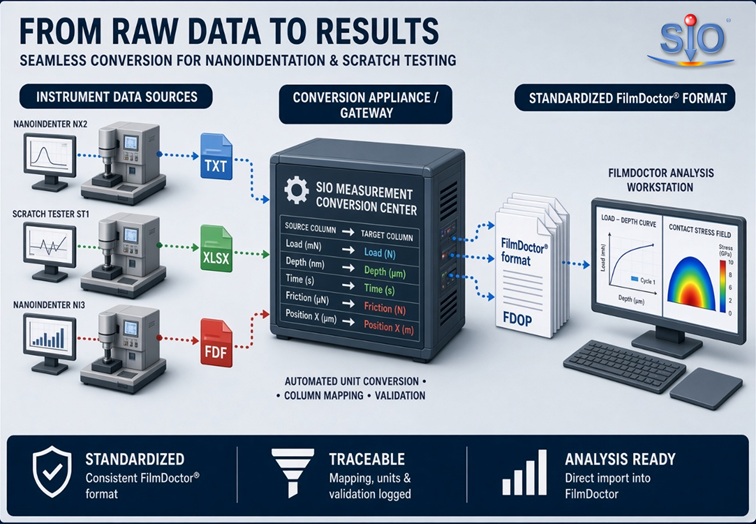
FilmDoctor® can use data from any measurement instrument once it is in the FilmDoctorformat required by the module in use.
Until now there were two ways to import the measurement data:
- Direct export from the instrument software into a FilmDoctor format
- Conversion of instrument-exported tab-separated text files during the simulation and analysis workflow
In modules that import many files — calotte stress profiles in particular — the second path meant repeated column mapping, unit checks and a high risk of input error.
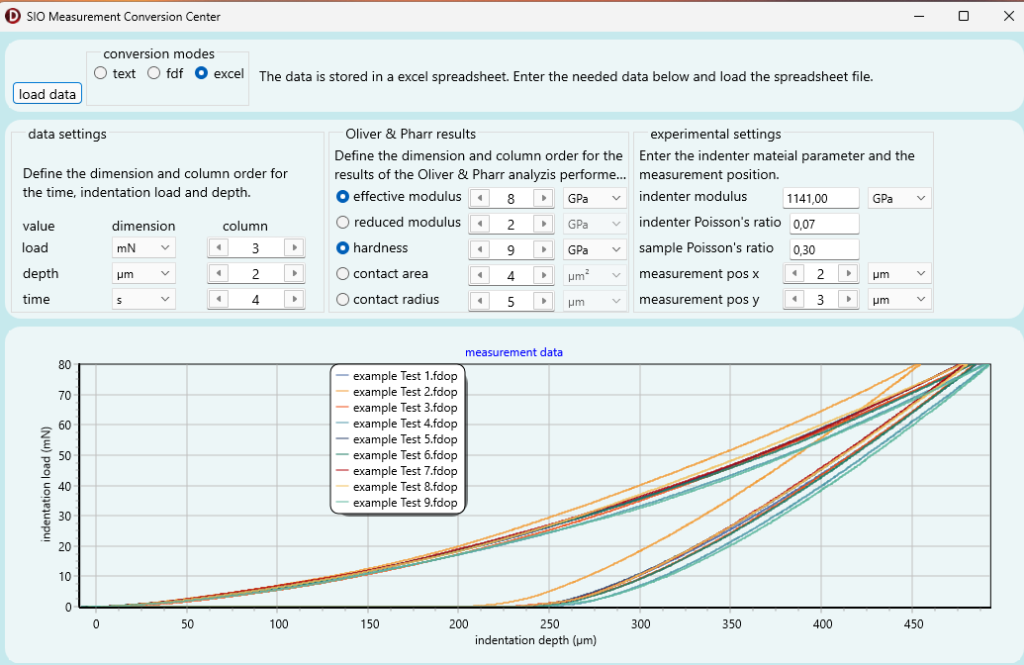
Data-format conversion is now a separate tool: the SIO Measurement Conversion Center. The operator who knows the instrument maps columns, units and analysis fields once, then saves files in the corresponding FilmDoctor format. The analyst opens FilmDoctor and runs the model. When a manufacturer changes an export layout or adds fields, the mapping is adjusted in the converter.
FilmDoctor® itself does not need a new update.
The first release was validated with example datasets from several instrument makers. It handles indentation data for single measurements and batch series in text and Excel formats. Scratch and other test types will follow.
Free download: siomec.com/measurement-conversion-center
If you have an unsupported format, please send an example file.
If you have any questions concerning the theory, please contact Norbert Schwarzer directly via email: n.schwarzer@siomec.de
If you have any questions concerning the software and animation, please contact Nick Bierwisch: n.bierwisch@siomec.de
For all other concerns (software, offers, development, investor requests) address Peggy Heuer-Schwarzer: p.heuer@siomec.de or Troy vom Braucke: troy@gpplasma.com
SIO the other newsletter – No. 188: Confidence as an F1 Design Parameter ? The Contact Patch
By Troy vom Braucke
In newsletter 182 we started where the rubber meets the road: the tire–track patches. Grip, wear, steering feel, driver confidence and ultimately performance are all decided there.
Driver style and their subjective responses already enter the race programme through debrief, driver-in-the-loop simulation and teammate-specific setup. An established loop, but it remains late with respect to concept design.
Renowned British F1 motorsport engineer, Pat Symonds stated the constraint directly [1] “I have always wished that we were clever enough to design a car to suit a particular driver. The reality is that you always design a car to give the maximum possible physical performance.”
And “… the designer cannot really design a car to suit a driver, there is no doubt that as the car is developed the race and performance engineers will try to find set-ups that take the car to the limit of stability that their driver can handle …”
Renowned race engineer Jock Clear identified the missing observable [2] “Your simulator and your simulations are not going to tell you precisely what that confidence level is giving you, and maybe that’s the next development down the line”.
Until they do, development cannot be driven quantitatively by confidence. The remaining inputs are simulator sessions, track time and anecdotal feedback.
The 2015 Hertz-to-Higgs treatment [3 – 5] addressed this same class of problem: retain the classical mechanical optimization and couple soft — including psychological — constraints into the same field [6], rather than introducing them after the architecture is fixed.
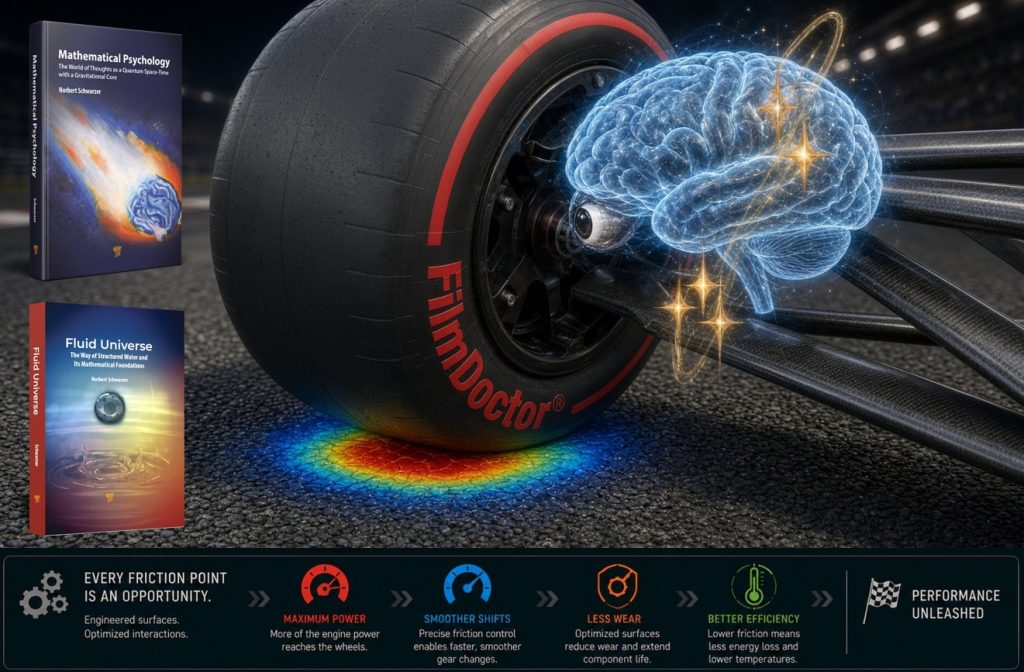
FilmDoctor® combined with [6] renders that coupling tractable. Classical CFD and finite-element methods introduce mesh starting errors and do not resolve layered properties at the relevant scales. This alternative is a scale-invariant analytical field model derived from first-principle interatomic potentials via Einstein-field techniques and time-dependent contact mechanics [7]. Critically, an invertible approach for reverse optimization.
Molecular-dynamics and related particle methods employ effective potentials with corrections and tight-binding approximations, and are not invertible. Starting error is therefore a design error [9, 10]. In optimization or parameter identification those errors accumulate; sensitivity analysis remains semi-empirical and the identified solution drifts.
Because the contact-patch energy field is calculated analytically and is invertible, it can be reverse-optimized. While our preliminary associated numerical acceleration lies between about 40× and [(η x 1000) x 8], where η is the number of dimensional factors, and increases non-linearly through an optimization cycle [8, 9].
2D Graphene simulation benchmarks on the same foundation exceeded 140,000× relative to a non-truncated MD orbital model [10]. For an F1 design optimization loop, the relevant statement is not that every evaluation lasts a few seconds; it is that the number of design cycles available inside a cost cap increases by that factor.
Inclusion of a driver-specific confidence envelope is not a standard module. It is a significant dedicated development project defined around the driver and the programme.
At which point in the present cycle does unused commitment first appear as a quantitative constraint — in the model, or only after the driver is in the car?
References
[1] P. Symonds, “Why an unstable car is faster – with the right driver on board,” Autosport, 24 May 2025 https://www.autosport.com/f1/news/why-an-unstable-car-is-faster-with-the-right-driver/10724466/
[2] J. Clear, “The data vs driver conflict at the heart of F1’s ground-effect cars,” Autosport, 14 Aug 2023 https://www.autosport.com/f1/news/the-data-vs-driver-conflict-at-the-heart-of-f1s-ground-effect-cars/10506308/
[3] N. Schwarzer, “From Hertz via Higgs to a Paradox Failure Mechanism,” SVC Bulletin, Fall 2015, pp. 46–49. flipsnack https://www.flipsnack.com/svcdigitalpublications/2015-fall-winter-bulletin.html
[4] SIO, “Endlessly Touchable – the Next Generation of Surface and Coating Optimization.” https://siomec.com/downloads-publications-2013/#Endlessly_Touchable_%E2%80%93_the_Next_Generation_of_Surface_and_Coating_Optimization
[5] N. Schwarzer, “From Hertz via Higgs to a New Failure Mechanism – About Holistic Coating Optimization,” 58th Annual Technical SVC Conference Proceedings, 2015.
[6] N. Schwarzer, “Fluid Universe – The Way of Structured Water; Mathematical Foundation” , 2026, a Jenny Stanford Pub. mathematical foundations book-project, ISBN: 9789815352153
[7] N. Schwarzer, “From interatomic interaction potentials via Einstein field equation techniques to time dependent contact mechanics,” Mater. Res. Express 1 (2014) 015042.
[8] GP Plasma, “Make a Laptop Perform Like a Mainframe.” https://gpplasma.com/blog/make-a-laptop-perform-like-a-mainframe
[9] GP Plasma, “Finding Scarce Material Performance Alternatives…” (FEM ~3% / MD ~5% starting error). https://gpplasma.com/blog/finding-rare-earth-material-performance-alternatives-to-mitigate-supply-chain-risk-and-lower-costs
[10] GP Plasma, “Rapidly Optimize 2D Materials and Become Uncatchable!” https://gpplasma.com/blog/rapidly-optimize-2d-material-properties-and-become-uncatchable
If you have any questions concerning the theory, please contact Norbert Schwarzer directly via email: n.schwarzer@siomec.de
If you have any questions concerning the software and animation, please contact Nick Bierwisch: n.bierwisch@siomec.de
For all other concerns (software, offers, development, investor requests) address Peggy Heuer-Schwarzer: p.heuer@siomec.de or Troy vom Braucke: troy@gpplasma.com
SIO the other newsletter – No. 187: Rare Earths – Now Brazil
By Troy vom Braucke
In our newsletter No. 48 we outlined a project to substitute REE’s with more readily available materials via reverse optimization with an extended FilmDoctor®. In No. 174 the supply chain choke had already reached magnetron magnet sourcing, and is impacting the cost of crucial target materials. The strategic demand has not eased, with Australia making a $4B push to develop the industry and now we see capital moving into Brazil.
Why Brazil, why now?
- Reserves: China ~44 Mt. Brazil ~11 Mt — second globally. Australia ~5.7–6.3 Mt. Russia ~3.8 Mt.
- Mine output (2025): China ~270 kt. Australia ~29 kt. Russia ~2.6 kt. Brazil ~2 kt and climbing.
- > 86% of Brazil’s REE applications were filed within the last three years.
Efficiency – Hard-rock recovery is ~65–80%. Ionic-clay leach ~60–70%. Then 100–200+ solvent-extraction stages. China holds ~90% of light and ~98% of heavy separation production. A new pit does not solve that.
“Digging something out of the ground and exporting it creates revenue, but processing it and converting it into finished products creates industry”, M. Armstrong.
However, current refinement methods make it very difficult to process the ores. That is why the West kept mining, exporting, and then bought the midstream and downstream product.
“The extraction of REE is a difficult task not because the rare earths are rare – they are anything but – but because they are chemically so similar to each other”, N. Schwarzer.
Whether we leverage FilmDoctor® to reverse-optimize material systems from first-principles physics [1], or – as Dr Schwarzer has said – aim for substitution or separation of a certain material it doesn’t matter; scientifically you require the same knowledge [2-4].
There are companies that will use this tool-set to extract and refine in situ at higher efficiency than the Chinese producers, at significantly lower cost, by cutting out the hundreds of separation steps — and with a smaller environmental footprint than opening up more ground near the Amazon.

Accessing more rare earth ore in Brazil is not a supply chain. Applying better physics on the ore that is already there, is.
Read more on the novel extraction potential on this X post: “From Critical to Desperation –> Something you Should Know About “Rare” Earths and Crucial Minerals” N. Schwarzer 2026.
Further reading on the geopolitical angle is written here: “Brazil’s Rare Earths and the Coming Resource War”, Armstrong, 24 Aug 2026.
References
[1] N. Schwarzer, “Scale invariant mechanical surface optimization applying analytical time dependent contact mechanics for layered structures”, Chapter 22 in Applied Nanoindentation in Advanced Materials, edited by Atul Tiwari and Sridhar Natarajan, John Wiley & Sons, 2017, pp. 513–560. ISBN: 978-1-119-08449-5
[2] N. Schwarzer, “Scarce Material Replacements…”, 2023, ASIN: B0CNY7TRH2
[3] W. Wismann, N. Schwarzer, “A Higher Order Chemistry”, 2025, a RASA-SIO science paper
[4] N. Schwarzer, “Fluid Universe – The Way of Structured Water; Mathematical Foundation” , 2026, a Jenny Stanford Pub. mathematical foundations book-project, ISBN: 9789815352153
If you have any questions concerning the theory, please contact Norbert Schwarzer directly via email: n.schwarzer@siomec.de
If you have any questions concerning the software and animation, please contact Nick Bierwisch: n.bierwisch@siomec.de
For all other concerns (software, offers, development, investor requests) address Peggy Heuer-Schwarzer: p.heuer@siomec.de or Troy vom Braucke: troy@gpplasma.com
SIO the other newsletter – No. 186: Friction Surfaces in F1 & Motorsport – The Engine
By Troy vom Braucke
In Parts 1–3 we examined track roughness, car-wide friction surfaces and the gearbox. Today we go inside the power unit.
Hundreds of parts interact at extreme speed and pressure. Here are some critical interfaces:
- Pistons & rings – rings dominate friction; short skirts and DLC coatings manage occasional film breakdown and side loads.
- Camshafts & followers – high contact stress on lobes, follower fingers (with or without rollers) and roller pins, all of which can benefit from engineered coatings.
- Crankshaft & bearings – extreme loads at high speed demand consistent oil films against wear-resistant coatings and graded load-bearing support layers.
DLC and related coatings have been standard in F1 for two decades (Cosworth alone quantified ~4 bhp from piston-skirt DLC). The remaining opportunity is no longer just the coating itself, but accurate solid–fluid interface digital twins optimized together with the coatings and graded load support layers – particularly as engine rules change.
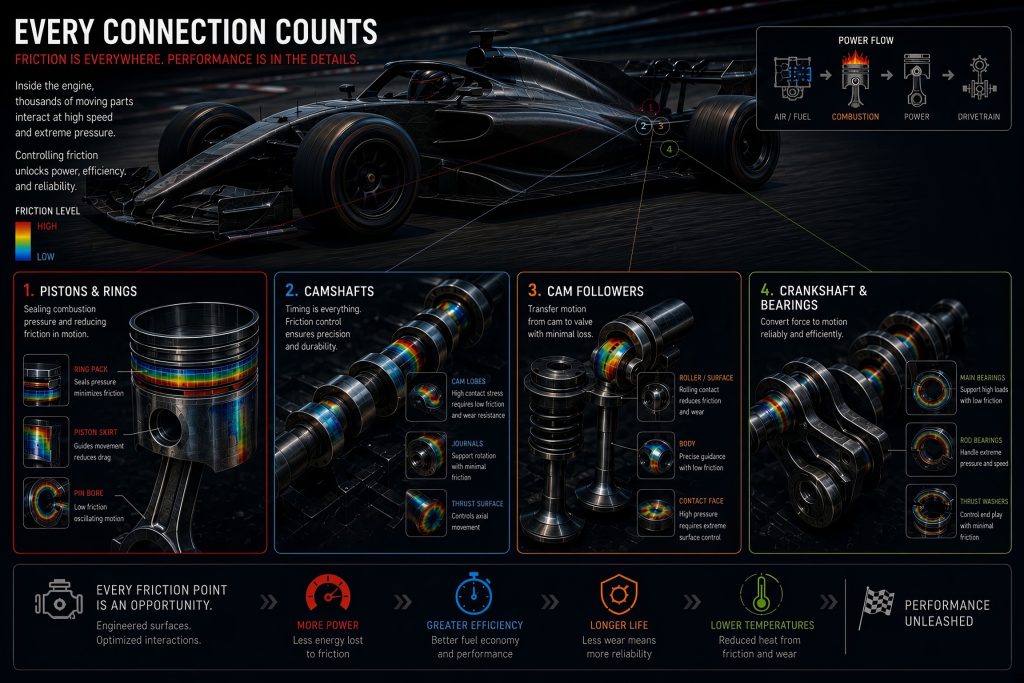
FilmDoctor® [1, 2] resolves mixed lubricated contacts in seconds on a laptop. Latest fluid-physics work [3] allows for the solid–fluid interface explicitly, enabling reverse optimization of layered coatings and the engineered topology of films – under minimal lubrication – required for controlled friction and wear.
For race and component engineers this delivers faster designs for lower parasitic losses, cooler surfaces and improved reliability — without the mesh limitations of conventional FEA or CFD.
Interestingly, the same physics can be applied to charge-carrier transport via coherent domain physics, and opens a path to eliminating measurable battery heat during charge/discharge and increasing charge cycle performance [4].
Conservatively, that could reclaim several to low-tens of kW in continuous parasitic losses, free equivalent cooling capacity (reducing radiator size, packaging volume and aero drag), and enable more consistent energy deployment for lower lap times — a possibility already indicated by the physics explored in our rechargeable-fuel work [Newsletter #133].
[1] N. Schwarzer, From interatomic interaction potentials via Einstein field equation techniques to time dependent contact mechanics, Mater. Res. Express 1 (2014) 015042
[2] N. Schwarzer, Chapter 22 in Applied Nanoindentation in Advanced Materials, Wiley, 2017.
[3] N. Schwarzer, “Fluid Universe — The Way of Structured Water and Its Mathematical Foundations”, Jenny Stanford Publishing, 2026.
[4] N. Schwarzer, “Endlessly Chargeable – Avoiding the Degeneration / Degradation of Batteries”, SIOmec institute paper, 2020.
If you have any questions concerning the theory, please contact Norbert Schwarzer directly via email: n.schwarzer@siomec.de
If you have any questions concerning the software and animation, please contact Nick Bierwisch: n.bierwisch@siomec.de
For all other concerns (software, offers, development, investor requests) address Peggy Heuer-Schwarzer: p.heuer@siomec.de or Troy vom Braucke: troy@gpplasma.com
SIO the other newsletter – No. 185: Friction Surfaces in F1 & Motorsport – The Gearbox
By Troy vom Braucke
In Parts 1 and 2 we examined track roughness and the wider set of friction surfaces in an F1 car. Today we focus on one of the most severe interfaces: the gear mesh inside the sequential gearbox.
Straight-cut spur gears operate under extreme mixed sliding-rolling conditions, with radii of curvature R₁, R₂ ≈ 15–25 mm and Hertz pressures frequently above 2–3.5 GPa.
Mis-timed shifts add impact loads, and any wear debris creates a 3-body contact problem in lubricant rather than the simpler 2-body problem.
FilmDoctor® [1, 2] resolves these mixed normal, tangential, and rotational loads under lubricated conditions in seconds on a laptop, with reverse optimization capability to minimize stress and maximize critical load bearing capability.
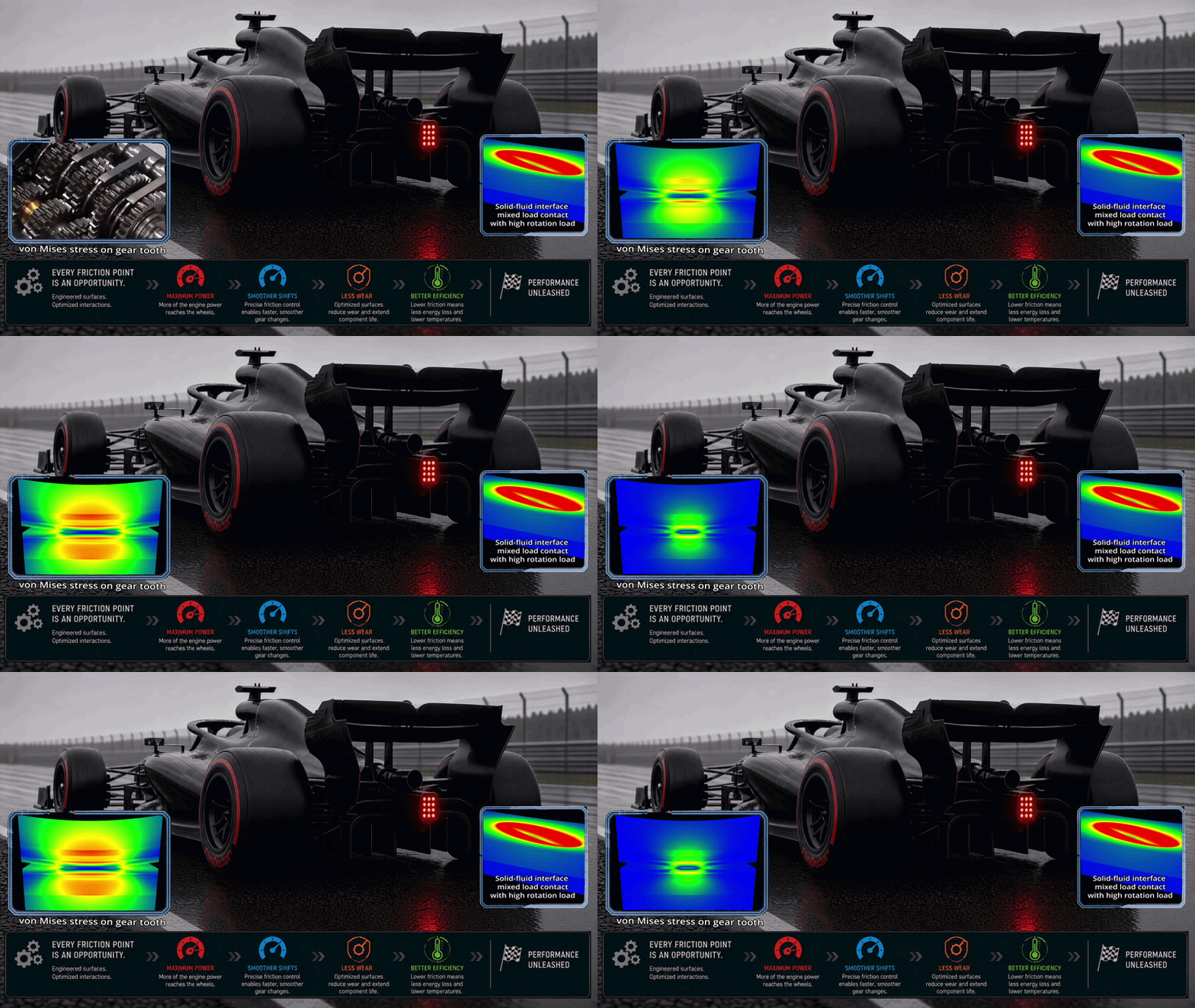
While some F1 sub-suppliers already use FilmDoctor® and SIOmec® services to optimise coating designs and shorten development time, our latest developments [3] build on the lubrication-materials optimization framework (see Newsletter 92).
A focused FilmDoctor® development project can combine advanced coating design (typically DLC or TaC on graded load-bearing layers) with scale-appropriate, adaptable surface topologies engineered into the coating material itself.
Offering potential to minimise friction while retaining only the minimal lubricant quantity needed under high-pressure elastohydrodynamic and mixed-lubrication conditions — enabling simultaneous control of friction, film behaviour, and wear.
The same approach extends to dog ring faces, bearings, seals, and selector components, and is transferable to production gearboxes.
For powertrain engineers this means lower friction, longer life, and potentially greater packaging freedom — turning every contact surface into a design opportunity.
Where else could the saved development time and cost be spent once gear-mesh friction and wear are significantly reduced?
More to come.
[1] N. Schwarzer, From interatomic interaction potentials via Einstein field equation techniques to time dependent contact mechanics, Mater. Res. Express 1 (2014) 015042
[2] N. Schwarzer, Chapter 22 in Applied Nanoindentation in Advanced Materials, Wiley, 2017.
[3] N. Schwarzer, “Fluid Universe — The Way of Structured Water and Its Mathematical Foundations”, Jenny Stanford Publishing, 2026.
If you have any questions concerning the theory, please contact Norbert Schwarzer directly via email: n.schwarzer@siomec.de
If you have any questions concerning the software and animation, please contact Nick Bierwisch: n.bierwisch@siomec.de
For all other concerns (software, offers, development, investor requests) address Peggy Heuer-Schwarzer: p.heuer@siomec.de or Troy vom Braucke: troy@gpplasma.com
SIO the other newsletter – No. 184: Friction Surfaces in F1 & Motorsport
By Troy vom Braucke
On a race car, every surface and connection is a potential friction problem — brakes, bearings, suspension pivots, damper shafts, bearing seals, slide pins, cam shafts / followers, and piston rings.
FilmDoctor® can characterise these surfaces for 2-body / 3-body wear, leveraging nanoindentation, scratch and pin-on-disk data to determine critical loads and forecast behaviour under real operating conditions. Then we reverse-optimise the material parameters that control reliability and friction for worst-case loads, speeds and temperatures.
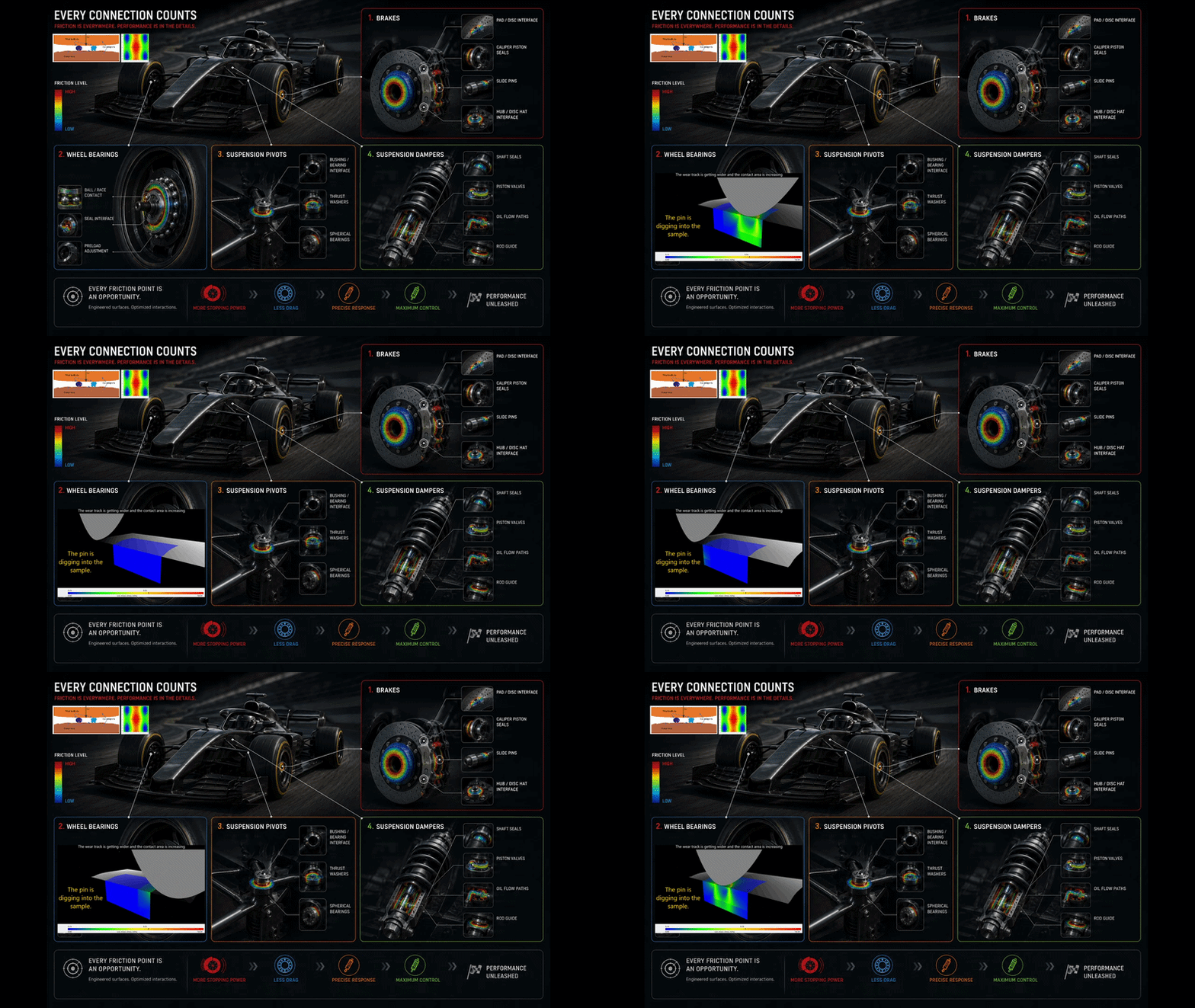
We do not use classical CFD or finite-element methods. Those introduce mesh starting errors and cannot practically resolve nanoscale layered properties. Instead, we use scale-invariant analytical field models derived from first-principle interatomic potentials [1, 2].
The field approach is ideal for optimising inhomogeneous layered coatings and surface topology under real contact conditions. Recent developments [3] also address fluid–surface interaction — including potential application inside suspension dampers — where continuum CFD cannot resolve the nanoscale surface interactions that decide friction and force response. Perhaps offering opportunity to improve force response and reduce parasitic losses and maybe reduce package size.
Target interfaces: wheel-bearing seals and races, suspension pivots, brake slide pins, damper shafts and rod guides. Even bearing pre-load can be set so the nanoscale contacts are not over-stressed at maximum temperature.
FilmDoctor® turns surface friction into a design opportunity that can be optimised with far fewer iterations.
Where are you currently limited by mesh resolution or by the inability of CFD to interact with real nanometer scale surface properties in your model?
More to come.
[1] N. Schwarzer, From interatomic interaction potentials via Einstein field equation techniques to time dependent contact mechanics, Mater. Res. Express 1 (2014) 015042
[2] N. Schwarzer, Chapter 22 in Applied Nanoindentation in Advanced Materials, Wiley, 2017.
[3] N. Schwarzer, “Fluid Universe — The Way of Structured Water and Its Mathematical Foundations”, Jenny Stanford Publishing, 2026.
If you have any questions concerning the theory, please contact Norbert Schwarzer directly via email: n.schwarzer@siomec.de
If you have any questions concerning the software and animation, please contact Nick Bierwisch: n.bierwisch@siomec.de
For all other concerns (software, offers, development, investor requests) address Peggy Heuer-Schwarzer: p.heuer@siomec.de or Troy vom Braucke: troy@gpplasma.com
SIO the other newsletter – No. 183: Track Roughness Changes Everything
By Troy vom Braucke
In last week’s newsletter we showed how rising track temperature and the “rubbered-in” state more than double shear strain and distortion energy in the tire contact patch — even when peak stress stays roughly constant.
That analysis assumed a perfectly smooth interface. This week we remove that assumption.
Using FilmDoctor® we introduced a representative track surface* roughness (0–2000 µm macrotexture) and ran the same 50 °C contact cases for both a clean (“green”) track and a rubbered-in track.
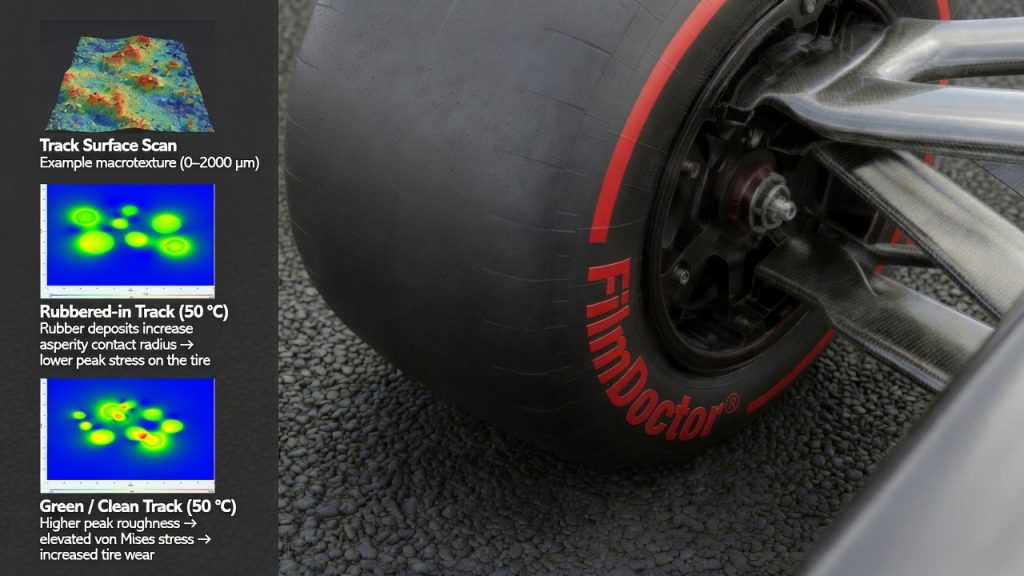
What the simulation shows at a glance
- Green / clean track: Sharp aggregate peaks produce significantly higher local stresses. In the roughest locations these stresses reach critical values that accelerate wear. With little material already filling the valleys, the load-induced expansion of the tire rubber has less opportunity to blunt the asperities.
- Rubbered-in track: Rubber deposits increase the effective contact radius of the asperities. In addition, because rubber is incompressible (Poisson’s ratio ≈ 0.49–0.5), the tire compound expands under contact load and is forced into the surface valleys. This further increases real contact area, lowers peak von Mises stress on the tire, and creates more rubber-on-rubber interface.
In short
As the track rubbers in, the tire’s stress environment stabilizes for a given temperature and downforce. The combination of deposited rubber expanding under the tire’s loading, it reduces aggressive peak stresses and increases conformal rubber-rubber contact — exactly the conditions that improve grip while moderating wear.
On a green track the same tire is working harder over many localized high-stress zones.
As tire temperatures rise and the track continues to evolve, we expect this relationship to shift again. The same rapid simulation loop (a few seconds on a laptop) lets engineers quantify those shifts before the next session — whether the input is a simulated surface or a real measured track scan and evolving tire property data.
*The surface used is a simulated example. FilmDoctor® fully supports importing actual measured surface scans when available. The software can also include weak interfaces to model dust, poor adhesion, or delamination between track layers or tire layers — features already used by customers to understand and optimize thin film coating surfaces under aggressive contact conditions.
More to come.
[1] N. Schwarzer, “Scale invariant mechanical surface optimization applying analytical time dependent contact mechanics for layered structures”, Chapter 22 in Applied Nanoindentation in Advanced Materials, edited by Atul Tiwari and Sridhar Natarajan, John Wiley & Sons, 2017, pp. 513–560. ISBN: 978-1-119-08449-5
Link: https://onlinelibrary.wiley.com/doi/10.1002/9781119084501.ch22
If you have any questions concerning the theory, please contact Norbert Schwarzer directly via email: n.schwarzer@siomec.de
If you have any questions concerning the software and animation, please contact Nick Bierwisch: n.bierwisch@siomec.de
For all other concerns (software, offers, development, investor requests) address Peggy Heuer-Schwarzer: p.heuer@siomec.de or Troy vom Braucke: troy@gpplasma.com
SIO the other newsletter – No. 182: The Hidden Energy Driving Tire Wear
By Troy vom Braucke
In this next series we will look at the surfaces that decide lap time. We start with the four contact patches between race-track and tire — the only places the car touches the ground. Grip, wear, steering feel and driver confidence are all decided there.
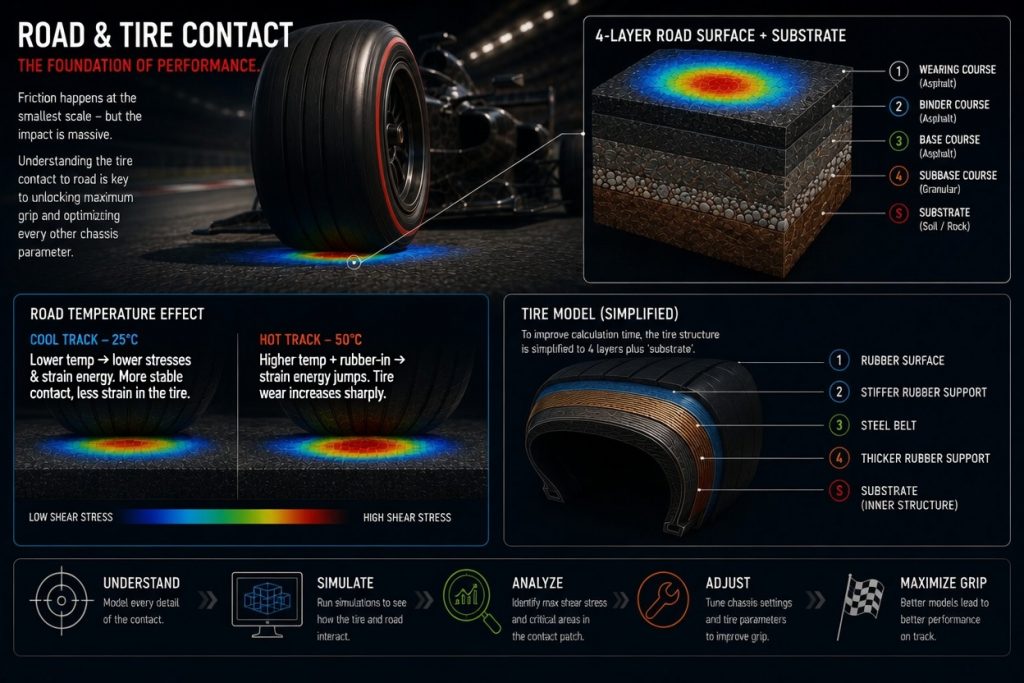
The challenge
Race engineers monitor the usual tire and load channels. Drivers feel when the tire suddenly loses the plateau. Neither can directly see the strain energy being pumped into the rubber on every cycle — yet that energy is what actually drives wear and thermal degradation.
What the simulation revealed
When track temperature rises and the surface rubbers in, the peak stresses in the tire remain almost constant (modulus values drop but high strain rates increase them). Shear strain and distortion energy, however, more than double.
This means the rubber is deforming and dissipating significantly more energy per cycle — the primary driver of increased wear and thermal degradation. The structure remains strong, but the rubber works much harder as temperatures increase.
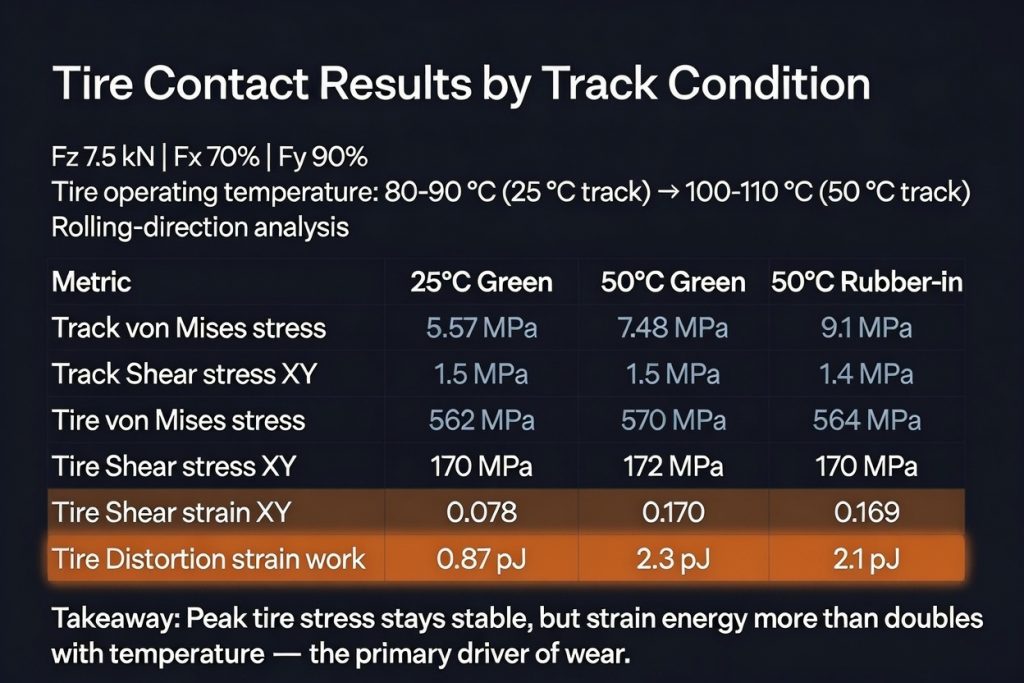
Why this matters
The insight is available in minutes on a laptop — fast enough to influence setup the same day when the right data is fed back into the model. Aero development feeds the process directly: better downforce correlation simply improves the force inputs used in the simulation. For tire designers, the same rapid feedback supports structural and compound optimization before parts are built.
Why FilmDoctor®
Conventional FEA can deliver stress and strain energy, yet the models are typically large, complex and slow to set up. FilmDoctor runs on a laptop and is built on a different scale independent physical foundation [1].
This analytical approach allows reverse optimization and handles in-homogeneous layered and graded materials at all scales, nonlinear and viscoelastic materials, metals, ceramics, friction, wear and erosion efficiently, while avoiding the mesh-related starting uncertainties of conventional FEA.
The result is that the strain energy in the tire contact patch — and how it interacts with load, track temperature, track structure, surface roughness, and surface state — becomes practical, fast and precise to explore.
More to come.
*As race car tire and aero loading details are not published, full design parameters and assumptions used for this example are available for those interested.
[1] N. Schwarzer, “Scale invariant mechanical surface optimization applying analytical time dependent contact mechanics for layered structures”, Chapter 22 in Applied Nanoindentation in Advanced Materials, edited by Atul Tiwari and Sridhar Natarajan, John Wiley & Sons, 2017, pp. 513–560. ISBN: 978-1-119-08449-5
Link: https://onlinelibrary.wiley.com/doi/10.1002/9781119084501.ch22
If you have any questions concerning the theory, please contact Norbert Schwarzer directly via email: n.schwarzer@siomec.de
If you have any questions concerning the software and animation, please contact Nick Bierwisch: n.bierwisch@siomec.de
For all other concerns (software, offers, development, investor requests) address Peggy Heuer-Schwarzer: p.heuer@siomec.de or Troy vom Braucke: troy@gpplasma.com
SIO the other newsletter – No. 181: Why Perfect Coatings Fail: The Frequency Factor
By Troy vom Braucke
In the most recent series of newsletters, we have been showing how a metric frequency analysis of complex systems can be applied. However, that same math is also important to the materials scientist and possible with FilmDoctor®.
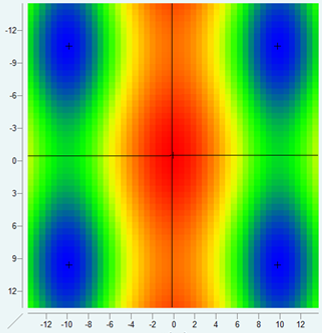
X-Y mapping of a surface (or calotte crater) of the Young’s modulus, yield strength and Poisson’s ratio at a target length scale can reveal stress differences in deposition methods.
The property differences can come from a variety of sources across different scales: composition, microstructure, geometry and edge effects, or macroparticles in arc deposited coatings. Another source of this inhomogeneity can be from pulsed deposition technologies. The frequencies from RF, DC/AC, HiPIMS, HiPIMS+ve kick each have their own effect on the plasma and consequently the depositing atoms and film properties.
Mapping this variation (including Poisson’s ratio and stress) can be critically important in understanding material failure modes if the contact size is of a relevant scale. When designing and optimizing the coatings, playing with these degrees of freedom is important! Therefore, understanding them is important!
Custom developed modules of FilmDoctor® can include these frequenciesof lateral properties coming from such sources, while the ‘add defect’ capability allows a more customized variation of properties to be included.
The goal is to improve the replicability of scratch, indentation and other test data on more complex inhomogeneous materials at relevant contact scales, and to forward simulate how these property variations impact the critical stresses and failure modes of your functional coatings under real application conditions.
It is very human of us to simplify a model or a system description to make life easier, and many times we can get away with it. But the hard work of gaining new knowledge, innovating new products and developing ourselves, requires pushing past our own assumptions and/or unconscious dogma.
I’ll leave you with the final question: Have you made an assumption of constant Young’s modulus, Yield Strength (or in its calculation), or Poisson’s ratio?
If you have any questions concerning the theory, please contact Norbert Schwarzer directly via email: n.schwarzer@siomec.de
If you have any questions concerning the software and animation, please contact Nick Bierwisch: n.bierwisch@siomec.de
For all other concerns (software, offers, development, investor requests) address Peggy Heuer-Schwarzer: p.heuer@siomec.de or Troy vom Braucke: troy@gpplasma.com
SIO the other newsletter – No. 180: FilmDoctor® + AI: America Under Stress
By Troy vom Braucke
Western societies are now operating under sustained external pressure combined with high levels of internal stress. In any complex system, when accumulated stress exceeds the capacity to absorb it, the structure either reorganizes or fractures. The West is currently carrying multiple loads simultaneously: economic strain, political polarization, rapid demographic change, and declining institutional trust.
This pattern is playing out clearly in the United States. For example, Martin Armstrong’s model shows no viable path to a solution for the Western financial system within the current framework. He states ‘when there is no economic solution, the only remaining option is to change the rules of the game through conflict’ — a process his analysis extends through 2027 [1].
The visuals below illustrate what this breaking point looks like in practice: a coherent structural domain under excessive stress eventually fracturing into smaller, more isolated groups. Structures are visually polarized and prior events can lead to defect creation weakening the structure prior to the next event.
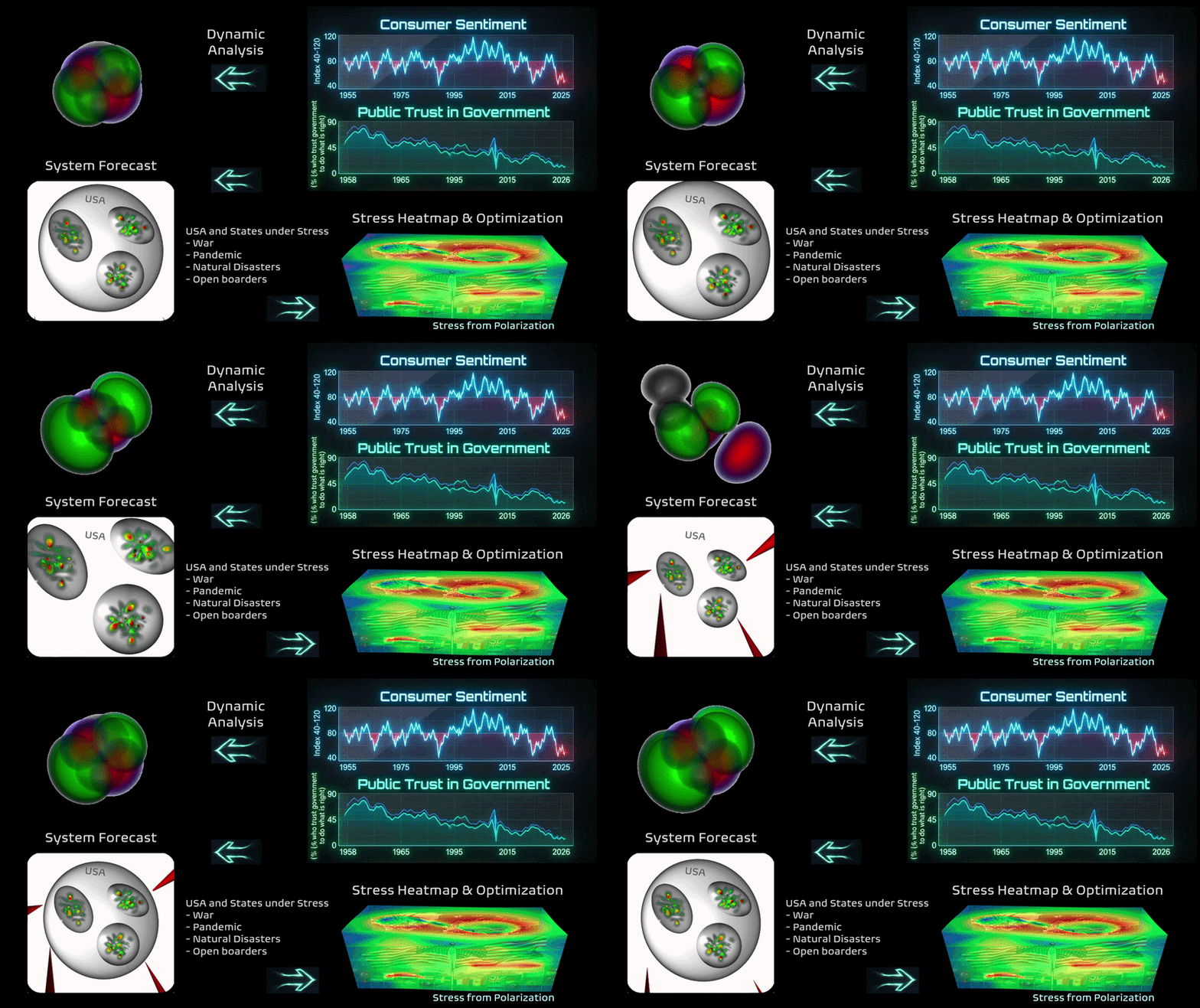
However, the same underlying mechanics [5] explored in FilmDoctor® also reveals different possibilities. Stress does not always have to reach the breaking point. In physical systems, built-up pressure can be relieved in a controlled way before structural failure occurs. The question is whether these principles can be applied at the societal level while there is still capacity to do so.
The real issue is not whether pressure will continue. It is whether societies will treat these stresses as a structural problem that can be managed, or allow them to become the mechanism that forces a more chaotic reset.
Interested in turning deep physics into a versatile, cross-domain intelligence platform?
[1] M. Armstrong, “PRIVATE BLOG – Here we Go Into An Unwinnable War for 2027”, Armstrong Economics, July 8th, 2026.
[2] Federal Reserve Bank of St. Louis (FRED) https://fred.stlouisfed.org/
[3] Pew Research https://www.pewresearch.org/
[4] American National Election Studies (ANES) https://electionstudies.org/
[5] N. Schwarzer, “Fluid Universe — The Way of Structured Water and Its Mathematical Foundations”, Jenny Stanford Publishing, 2026.
If you have any questions concerning the theory, please contact Norbert Schwarzer directly via email: n.schwarzer@siomec.de
If you have any questions concerning the software and animation, please contact Nick Bierwisch: n.bierwisch@siomec.de
For all other concerns (software, offers, development, investor requests) address Peggy Heuer-Schwarzer: p.heuer@siomec.de or Troy vom Braucke: troy@gpplasma.com
SIO the other newsletter – No. 179: FilmDoctor® + AI Concept: Materials Today. Markets Tomorrow?
By Troy vom Braucke
FilmDoctor® already delivers precise surface & coating optimization (critical stress, strain etc.) — proven in motor-sport and advanced surface engineering.
In recent newsletters we talked about a project to add AI to FilmDoctor and later showed how 3 music pieces can be separated out from a single soundtrack. What if instead of extracting the individual music, we want to look at the ‘music of society’, or more specifically the music of the stock markets?
The FilmDoctor®-AI concept adds powerful possibilities: Based on input data + simple questions about attributes, the same first-principles AI engine can switch seamlessly from materials system analysis to socioeconomic forecasting. Capital flows, equities, bonds, Dow Jones and so on, summing up to show the socioeconomic confidence cycles, the economic bubbles with boom and bust, critical stress locations and weak points within the socioeconomic system.
The same physics that allows us to detect coherent domain ‘pop-in’ and ‘pop-out’ phase transitions in materials, can detect a space-time volume of potential trades at turning points invisible to current techniques.
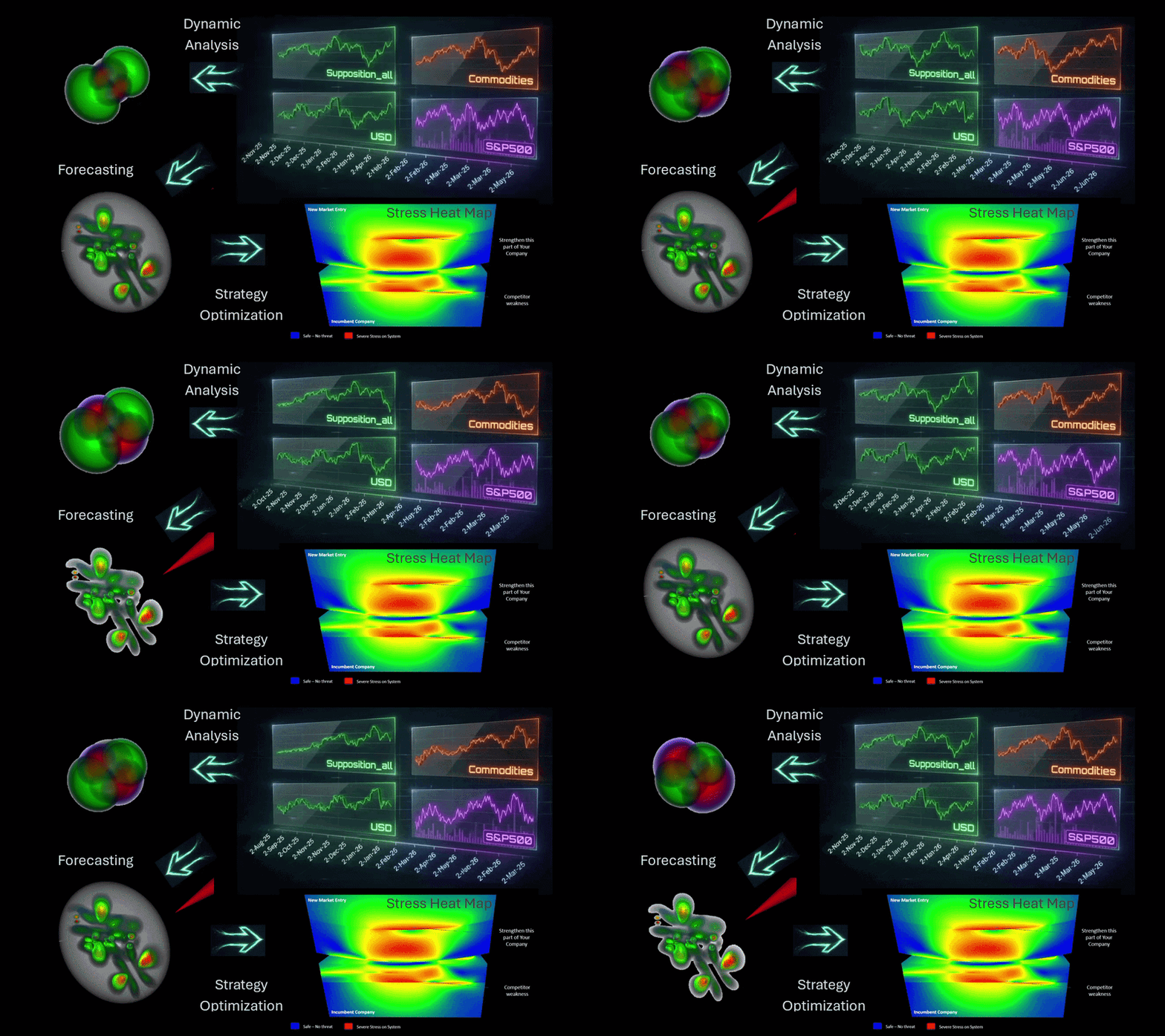
Why this matters for business growth:
- See stress build-up and defects leading to market failure at a glance — a ‘stress test’ in materials or markets
- Find optimal solutions to shield or neutralize effects of forecast critical stress events
- Forecast through phase transition turning points [1] where dominant scales disappear.
- Decompose complex superimposed signals fast to understand why.
- No black-box AI — scale-invariant and bidirectional testing
- One engine for engineers and business strategists
In what other ways will you want to use it?
Interested in turning deep physics into a versatile, cross-domain intelligence platform?
[1] N. Schwarzer, “Fluid Universe — The Way of Structured Water and Its Mathematical Foundations”, Jenny Stanford Publishing, 2026.
If you have any questions concerning the theory, please contact Norbert Schwarzer directly via email: n.schwarzer@siomec.de
If you have any questions concerning the software and animation, please contact Nick Bierwisch: n.bierwisch@siomec.de
For all other concerns (software, offers, development, investor requests) address Peggy Heuer-Schwarzer: p.heuer@siomec.de or Troy vom Braucke: troy@gpplasma.com
SIO the other newsletter – No. 178: One mixed track. Three scores extracted. No training data.
By Troy vom Braucke
Following our last newsletter on Schwarzer’s Fluid Universe framework, here is an example demonstration of what the physics can do.
Given only a combined stereo mix of three classical piano scores — no composer names, no metadata, no prior information other than the description of major attributes of a musical score — the coherent domain mathematics can extract each individual score as a separate solution. Visualised as orbital probability density wave functions, each orbital beats to its own score. Think of it as a quantum-gravity generalisation of a Fourier transform — similar concept, fundamentally different mathematical engine (see NL #45 The Perfect Metaphor).
No billion-parameter training sets. No statistical black box. No data centre. Just physics-derived pattern extraction, built from first principles — analytical, and critically, it works in both directions. Forward and reverse solution finding from the same framework.
What the animation shows: the orbitals naturally self-organise into a liposome-like cell structure beating to the combined superposed track. The liposome structure is from the mathematics — the superposition of all three scores. Run it one direction, you get the orbitals. Run it the other, you get the cell.
The framework is scale-invariant — the same physics powering FilmDoctor® applies whether the input data describes molecular dynamics, indentation & scratch data, audio signals, immune function, financial markets, or societal dynamics. Any data, any scale, given the attributes, properties or dimensions described in space-time coordinates. I tried Meta’s SAM Audio AI tool and had no luck, and if you try it, don’t cheat by telling it who the composers are.
More application demonstrations to follow.
If you have any questions concerning the theory, please contact Norbert Schwarzer directly via email: n.schwarzer@siomec.de
If you have any questions concerning the software and animation, please contact Nick Bierwisch: n.bierwisch@siomec.de
For all other concerns (software, offers, development, investor requests) address Peggy Heuer-Schwarzer: p.heuer@siomec.de or Troy vom Braucke: troy@gpplasma.com
SIO the other newsletter – No. 177: The physics underneath your materials just got a deeper foundation
By Troy vom Braucke
New first-principles coherent domain framework — and what it means for load-displacement analysis, hypersonic surfaces, energy systems and more
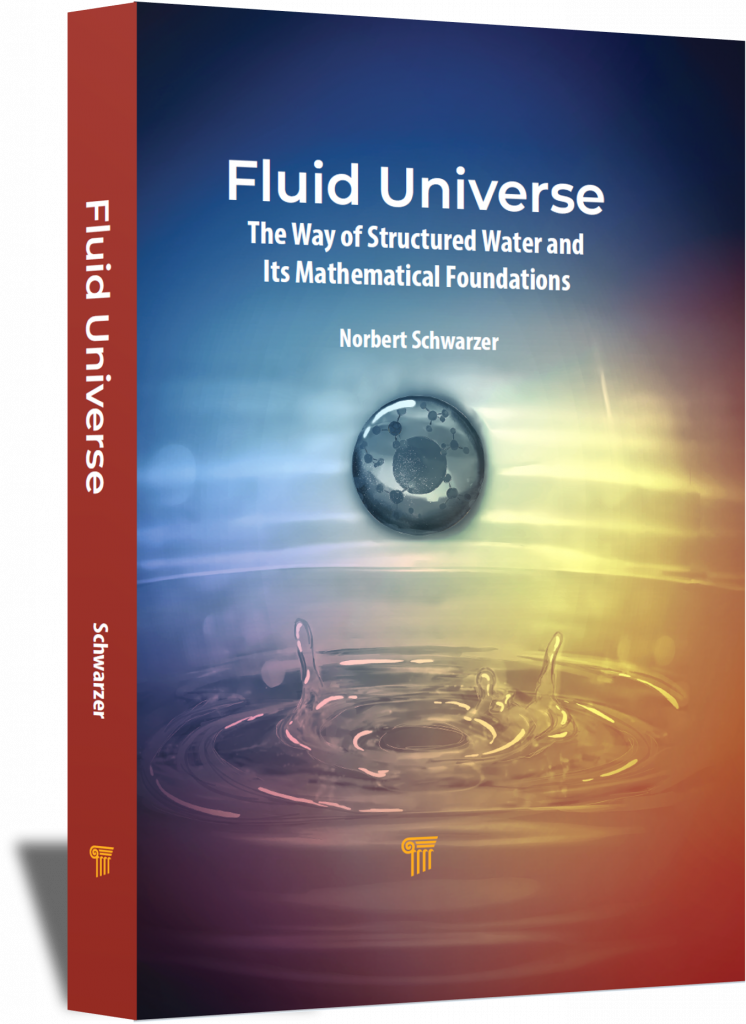
Officially published on June 8, 2026, by Jenny Stanford Publishing, Norbert Schwarzer’s latest book Fluid Universe — The Way of Structured Water and Its Mathematical Foundations is now available, and we look forward to receiving the hard copies.
Don’t let the title mislead you. This is not a book about structured water — it is a rigorous mathematical treatment of coherent domains, considered through structured water as the exemplar. The framework extends across non-solid and solid phases alike: plasma’s, degenerate matter, and crystalline materials under contact stress.
For materials scientists and engineers, a direct application is load-displacement curve analysis. Pop-in and pop-out events can represent coherent domain transitions — grain boundary sliding, shear band formation, or phase change — not just point defects. The book derives elasticity equations from the Einstein-Hilbert action and treats elastic waves among cohesive domains from first principles (see Ch. 5.6.4.4), giving these observations hard theoretical provenance.
This builds on Schwarzer’s prior work [1-6] and the analytical capabilities already embedded in FilmDoctor® — capabilities most users haven’t fully utilized. Having the physics in first principles opens this up well beyond coatings: hypersonic surfaces, fuel cell and battery optimization, and our rechargeable diesel liquid battery tech from [Newsletter #164].
First movers who integrate this into their measurement and design workflow will have an analytical edge that won’t be easy to replicate.
“The implications? Revolutionary. We’re talking about the potential for a new class of materials. New energy systems. New understandings of time, matter, and cognition.”
~ Dr. William Wismann, D.Sc.Tech. (Foreword)
“A refreshing bridge between physical intuition and high-dimensional formalism. A formidable and compelling contribution to the literature of a fast-evolving foundational epoch.”
~ Roy D. Herbert, Author of Chronoflux Principia
Official Page — Routledge / Taylor & Francis
[1] N. Schwarzer, “Scale invariant mechanical surface optimization applying analytical time dependent contact mechanics for layered structures”, Chapter 22 in “Applied Nanoindentation in Advanced Materials”, Atul Tiwari (Editor), Sridhar Natarajan (Co-Editor), ISBN: 978-1-119-08449-5, 2017, https://www.wiley.com/en-us/Applied+Nanoindentation+in+Advanced+Materials-p-9781119084495
[2] W. Wismann, D. Martin, N. Schwarzer, “Creation, Separation and the Mind…”, 2024, RASA strategy book, ISBN 979-8-218-44483-9
[3] N. Schwarzer, “Mathematical Psychology – The World of Thoughts as a Quantum Space-Time with a Gravitational Core”, Jenny Stanford Publishing, ISBN: 9789815129274
[4] N. Schwarzer: “The Math of Body, Soul and the Universe”, Jenny Stanford Publishing, ISBN 9789814968249
[5] N. Schwarzer, “Quantum Gravity War – How will the nearby unification of physics change the future of warfare”, Jenny Stanford Publishing, ISBN: 9789814968584
[6] N. Schwarzer, “The World Formula: A Late Recognition of David Hilbert‘s Stroke of Genius” (1st ed.), Jenny Stanford Publishing, 2022, https://doi.org/10.1201/9781003146445
If you have any questions concerning the theory, please contact Norbert Schwarzer directly via email: n.schwarzer@siomec.de
If you have any questions concerning the software and animation, please contact Nick Bierwisch: n.bierwisch@siomec.de
For all other concerns (software, offers, development, investor requests) address Peggy Heuer-Schwarzer: p.heuer@siomec.de or Troy vom Braucke: troy@gpplasma.com
SIO the other newsletter – No. 176: FilmDoctor® AI Project Concept
By Troy vom Braucke
Simplifying Complex Contact Mechanics to Make Faster Informed Decisions

Last week we discussed the importance of knowing about the critical stress and strain in coating solutions to improve product performance and optimize manufacturing processes.
However, the complex stress and strain field analysis by FilmDoctor® is not always immediately intuitive — especially without specialized training. What the results reveal about potential failure modes, optimization opportunities, or hidden risks may not always be apparent to users.
FilmDoctor® is capable of evaluating measurement uncertainties and determining their magnitude and identifying possible sources. Nevertheless, fully understanding the impact of these uncertainties on the stress and strain fields often requires substantial expertise.
This is why we have been exploring an AI solution built directly on the same quantum-gravity derived frameworkthatpowers FilmDoctor®. This framework is scale-invariant and effectively handles non-linearities, coherent domains (think ‘pop-ins’) and singularities across scales from sub-atomic layers to geological scales.
The intention is to use this framework to help users understand both the input measurement data and the complex stress and strain results that FilmDoctor® produces. Rather than replacing the need for expertise, the aim is to reduce the time and effort currently required to interpret the outputs and identify what matters most for materials performance and optimization — giving users a practical advantage in development speed and decision making.
If you’re interested in getting involved early in the project, reach out to us.
If you have any questions concerning the theory, please contact Norbert Schwarzer directly via email: n.schwarzer@siomec.de
If you have any questions concerning the software and animation, please contact Nick Bierwisch: n.bierwisch@siomec.de
For all other concerns (software, offers, development, investor requests) address Peggy Heuer-Schwarzer: p.heuer@siomec.de or Troy vom Braucke: troy@gpplasma.com
SIO the other newsletter – No. 175: Stress Can Kill Coatings – Know Before It Fails with FilmDoctor®
By Troy vom Braucke
Preventing film failure starts with managing stress.

In complex multi-layer thin films, unknown or unoptimized stress profiles can be the root cause of weakened interfaces, reduced load-bearing capacity, and degraded optical or charge transport performance — directly limiting product lifetime and reliability.
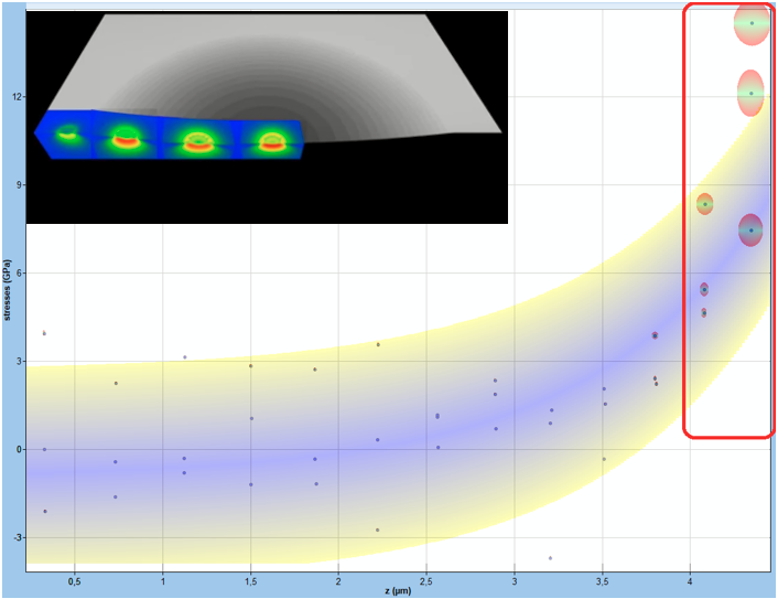
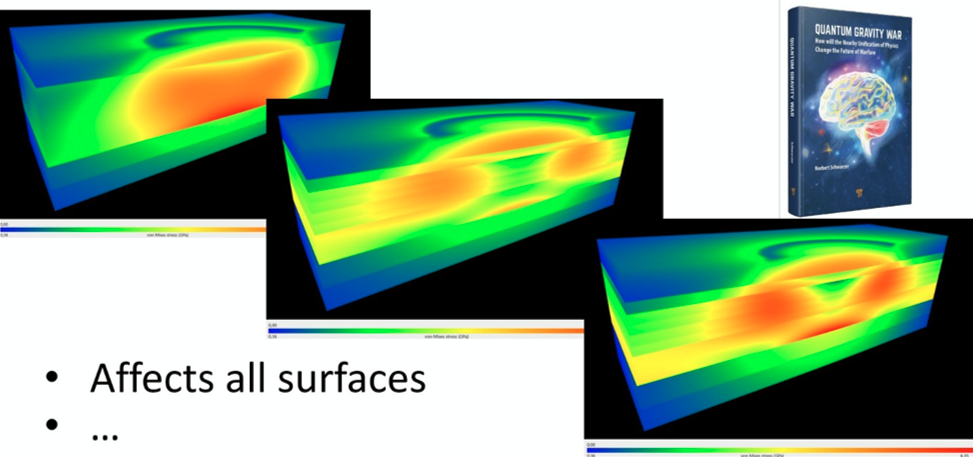
The Calo Indent Method (Calotte crater + nano/micro indentation), when combined with FilmDoctor®, gives process engineers the practical tool they need. It analyzes the raw load-depth data to deliver depth-resolved profiles of Young’s modulus, yield strength, hardness, and biaxial/shear stress, plus von Mises stress fields and full stress-field visualizations — all using equipment most labs already own.
Core Benefits
- Relatively fast, industrial & low-cost
A shallow spherical calotte crater is created with a ball-crater tester, followed by indentations along the polished slope using a standard nano/micro indenter. No waiting on synchrotron access, no complex XRD, no external setups required. - Relative stress profiles – ideal for process control
Data exported from the indenter is analyzed in FilmDoctor® to provide the visualized stress profile (in data tables and stress fields). The coating process engineer then uses this information to adjust the deposition recipe to achieve the desired stress profile.
Getting closer to absolute stress: Combine with the Stoney equation film curvature method to get the average full thickness film stress. Match the calculated ‘Calo Indent’ average to the ‘Stoney’ calculated average and shift the profile on the stress axis accordingly. - Absolute stress when needed
Only possible with FilmDoctor® software on advanced indenters with lateral-load capability: measures local Poisson’s ratio in-situ rather than relying on literature values, and provides biaxial + shear components under real mechanical load—directly linked to the coating’s microstructure.
Result:
The Calo Indent Method, powered by FilmDoctor® analysis, significantly reduces the experimental bottleneck of trial-and-error film stress optimization. Most labs already have the hardware but overlook this software step that turns raw indentation data into complete, actionable stress profiles.
It extracts biaxial and shear stress components as a function of film thickness directly from the indentation data, delivering the critical von Mises values under application contact conditions.
Many users cut iterative development time from months — or even years — down to weeks, enabling confident material design to target performance requirements and tighter manufacturing process controls.
Indenter manufacturers have not yet heavily promoted this capability, creating a clear advantage for early adopters.
Quick Reading (SIO – Saxonian Institute of Surface Mechanics)
- Presentation download: pub2015-002.pdf
- Short explanatory video: Watch the Calo Indent video
Forward to team members as needed. Questions or support in applying it to your coatings? Reply anytime!
If you have any questions concerning the theory, please contact Norbert Schwarzer directly via email: n.schwarzer@siomec.de
If you have any questions concerning the software and animation, please contact Nick Bierwisch: n.bierwisch@siomec.de
For all other concerns (software, offers, development, investor requests) address Peggy Heuer-Schwarzer: p.heuer@siomec.de or Troy vom Braucke: troy@gpplasma.com
SIO the other newsletter – No. 174: Rare Earth Supply Chain under Strain – Thin Film Industry Feels the Impact
By Troy vom Braucke
Dual-use restrictions delays magnet procurement for magnetron sputter source suppliers and machine builders by up to six months while export approvals are sought. There are options to procure in North America, but suppliers then weigh up a six-month delay for a $300 set of magnets or buy in USA for 4X the price.
While not a roadblock, it is a friction introduced by the geopolitical reality that can worsen if further restrictions are applied and supply chains come under critical stress.
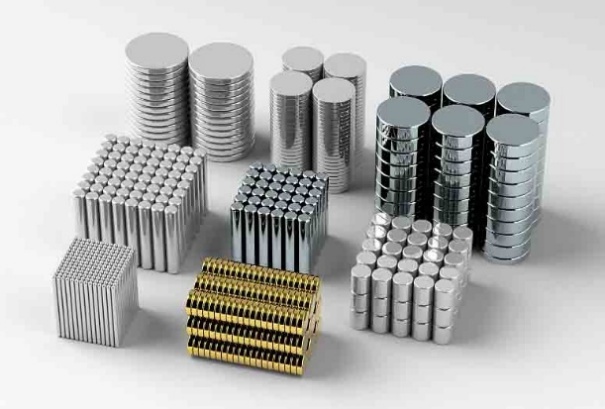
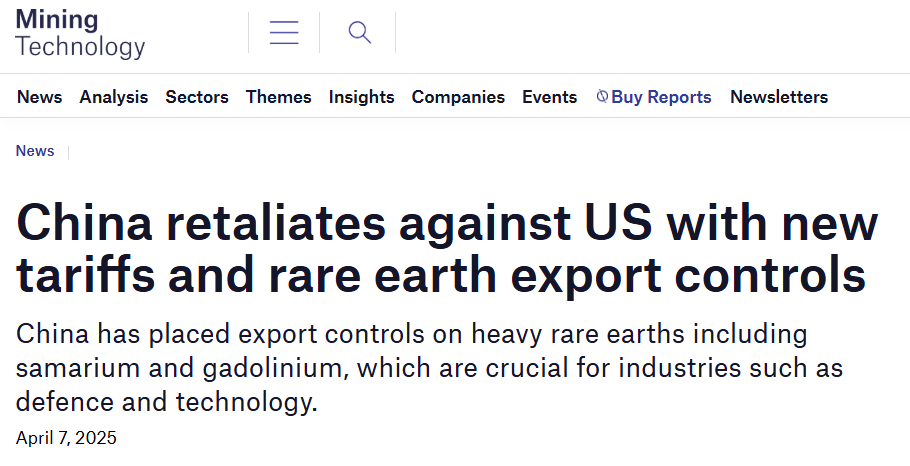
April 2025 news on China’s dual use restrictions for rare earths https://www.mining-technology.com/news/china-retaliatory-tariff-us/
The restrictions remain in force and have created ongoing friction across the supply chain.
Back in 2023 we saw this problem coming in Newsletter No. 48 outlining an alternative approach to find rare earth replacements [1] where FilmDoctor® software technology can be significantly extended to reverse engineer material solutions for a variety of properties using more abundant materials – but there was little interest before the problem arrived – as the situation worsens I suspect that will change.
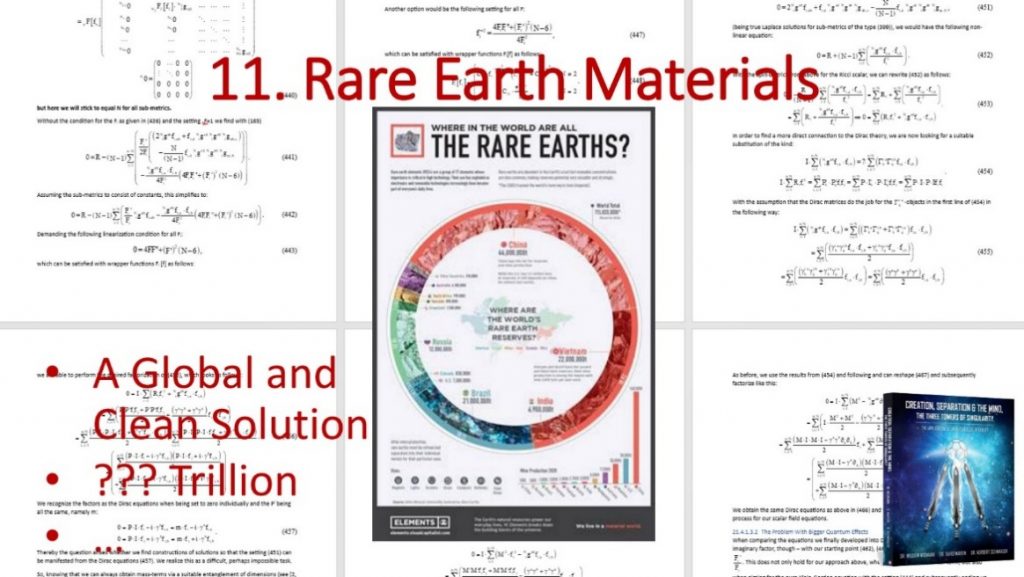
However, with the latest physics from Schwarzer [2, 3] there is another opportunity on the supply chain side to increase output, extraction and refinement efficiency and lower supply costs to be more cost competitive than imported rare earth materials.
Perhaps the society of vacuum coating can help push policy makers and inform industry that there is a technology solution waiting for exploitation.
Interested in exploring FilmDoctor® material replacements, supply-chain improvements, or the underlying physics? Reach out to the team below.
References
[1] N. Schwarzer, “Quantum Gravity War – How will the nearby unification of physics change the future of warfare”, Jenny Stanford Publishing, ISBN: 9789814968584
[2] W. Wismann, D. Martin, N. Schwarzer, “Creation, Separation and the Mind…”, 2024, RASA strategy book, ISBN 979-8-218-44483-9
[3] N. Schwarzer “Fluid Universe – The Way of Structured Water: Mathematical Foundation”, Jenny Stanford Publishing, 2026, ISBN 978-981-5352-15-3
If you have any questions concerning the theory, please contact Norbert Schwarzer directly via email: n.schwarzer@siomec.de
If you have any questions concerning the software and animation, please contact Nick Bierwisch: n.bierwisch@siomec.de
For all other concerns (software, offers, development, investor requests) address Peggy Heuer-Schwarzer: p.heuer@siomec.de or Troy vom Braucke: troy@gpplasma.com
SIO the other newsletter – No. 173: Microplastics: Thin Films to the Rescue
By Julius Schwarzer
We recently had several companies in plastic manufacturing reach out to help find a solution to prevent microplastics wear from their consumer food and drink container products.
Litigation risk is rising for consumer brands whose products shed or leach microplastics through normal wear and thermal cycles. There are high-profile cases with class actions against well-known companies for microplastics and PFAS release from bags/containers into food, baby bottles, and so on, with heated polypropylene leaching millions of particles per use. In addition, litigation against major drink brands for environmental micro-plastic contamination in bottled water and drinks.
Thin-film coatings on food containers and cooking implements offer potential for abrasion and leaching reduction. But the challenge is what coating, how thick, and will it survive on top of plastic substrate?
With FilmDoctor® we found within a few minutes of analysis that to protect against abrasion (i.e., a fork) under a variety of thermal conditions, the typical coatings will not be supported by the plastic substrate properties currently in use. Already many years ago, we applied FilmDoctor® to show that only a combination of intrinsic gradient and proper cover coating structures can help [2 – 7], while classical approaches, needing high film thickness due to the wear performance requirements, making solutions prohibitively expensive. That is not to say a solution can’t be found, but it won’t be a quick add-on fix for many of the current products. Sealing plastics from leeching of PFAS under thermal cycling may be a little easier.
FilmDoctor® didn’t just allow us to understand the current challenge and search for solutions, it allowed us to decide if we could even help them, suggest options for development, or reject the project based on the customer constraints.
The other problem with microplastics is a clean municipal water supply for food production and crop irrigation.

References:
[1] N. Schwarzer, “Fluid Universe – The Way of Structured Water: Mathematical Foundation”, Jenny Stanford Publishing, 2026, ISBN 978-981-5352-15-3.
[2] J.G. Kohl, N.X. Randall,N. Schwarzer, T.T. Ngo, J.M. Shockley, and R.P. Nair, “An Investigation of Scratch Testing of Silicone Elastomer Coatings with a Thickness Gradient”, Journal of Applied Polymer Science, Vol. 124, 2978–2986 (2012), pp. 2978-2986
[3] N. Schwarzer, „Analyse und Simulation der mechanischen Eigenschaften beschichteter Polymere unter Berücksichtigung der meist zeitabhängigen Materialparameter“, 19. NDVaK, 19. u. 20.10. 2011 Dresden, Germany, ISBN 978-3-9812550-3-4, pp. 96-101
[4] N. Schwarzer, “Completely Analytical Tools for the Next Generation of Surface and Coating Optimization”, Coatings 2014, 4, 263-291; doi:10.3390/coatings4020263
[5] James G. Kohl, Nick Bierwisch, Truc T. Ngo, Gregory Favaro, Eric Renget, Norbert Schwarzer, “Determining the viscoelastic behavior of polyester fiberglass composite by continuous micro-indentation and friction properties”, Wear 350-351 (2016) 63–67
[6] James G. Kohl, Norbert Schwarzer, Truc T. Ngo, Gregory Favaro, Eric Rengnet and Nick Bierwisch, “Determining the viscoelastic properties obtained by depth sensing microindentation of epoxy and polyester thermosets using a new phenomenological method”, Mater. Res. Express 2 (2015) 015301
[7] N. Schwarzer, “About Holistic Optimization – Examples From In- and Outside the World of Coatings”, 2015, Proceedings of the 58th Annual Technical SVC Conference
If you have any questions concerning the theory, please contact Norbert Schwarzer directly via email: n.schwarzer@siomec.de
If you have any questions concerning the software and animation, please contact Nick Bierwisch: n.bierwisch@siomec.de
For all other concerns (software, offers, development, investor requests) address Peggy Heuer-Schwarzer: p.heuer@siomec.de or Troy vom Braucke: troy@gpplasma.com
SIO the other newsletter – No. 172: FilmDoctor® – Advanced Digital Twins for High-Performance Powertrain Thin-Film Coatings
By Troy vom Braucke
In next-generation powertrain systems — such as high-efficiency Wankel rotary range-extenders — the difference between good performance and exceptional durability often comes down to mastering the thin-film coatings that control friction, wear, and contact stresses under extreme operating conditions.
Advanced Diamond-Like Carbon (DLC) coatings have become a key enabling technology in these and similar demanding powertrain applications. Optimized multilayer architectures — as highlighted by Mazda in their recent technical presentation on the rotary engine (see here at the 9-minute mark: https://www.youtube.com/watch?v=dff_d7qTTDA ) — help reduce residual stresses, improve adhesion, and significantly enhance long-term performance and reliability.
FilmDoctor® provides engineers with advanced digital twin technology for the mechanical simulation, virtual testing, and optimization of complex multilayer coating systems. Using scale-invariant contact mechanics and time-dependent modeling, the software enables rapid evaluation of stress distributions relevant to adhesion, 2- and 3-body wear, scratch resistance, and potential critical failure mechanisms — accelerating the development of high-performance surface solutions for the automotive industry.
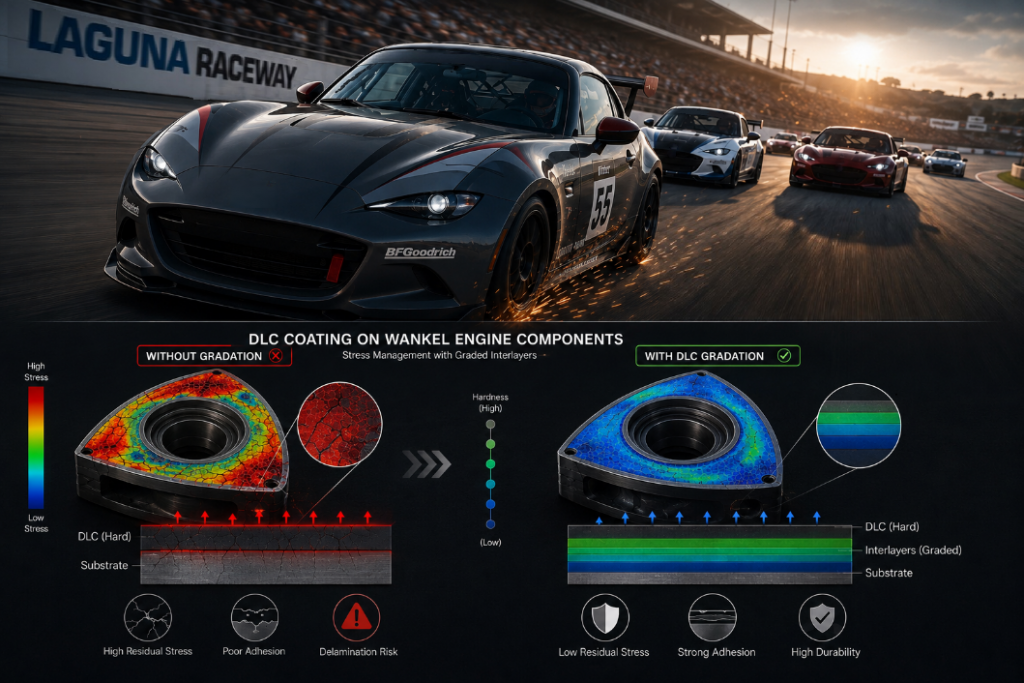
The visualization above illustrates the graded DLC coating concept and how they can be applied on rotary engine components, highlighting the benefits of optimized stress management and durability.
SIOmec® has done a lot in the field of DLC automotive coatings development by helping with the test designs, failure mechanism detection and optimization.
The advanced surface-mechanics modelling behind FilmDoctor® supports coating developers and OEMs in bringing more reliable and energy-efficient powertrain technologies to market faster.
If you have any questions concerning the theory, please contact Norbert Schwarzer directly via email: n.schwarzer@siomec.de
If you have any questions concerning the software and animation, please contact Nick Bierwisch: n.bierwisch@siomec.de
For all other concerns (software, offers, development, investor requests) address Peggy Heuer-Schwarzer: p.heuer@siomec.de or Troy vom Braucke: troy@gpplasma.com
SIO the other newsletter – No. 171: Scale-Invariant Thin Film Solutions for Supersonic & Hypersonic Aircraft
By Troy vom Braucke
Developers of next-generation supersonic and hypersonic aircraft — including programs like Boom Supersonic’s Overture and the Mach 5+ goals from teams such as Hermeus and Venus Aerospace — face well-documented surface-level challenges. Carbon-fiber composites and titanium structures must withstand aerodynamic heating up to 177 °C in supersonic cruise and far higher localized temperatures (approaching or exceeding 2,000 °C) in hypersonic regimes.
Design issues include thermal cycling, creep in high-temperature alloys, viscoelastic relaxation in polymers and glasses, residual and intrinsic stresses, delamination risks in multi-layer composites, oxidation, coating spallation, and durability under intense shear flows from high-speed air.
These design limitations affect weight, cost, scalability of advanced thermal protection systems (TPS), and certification timelines for both proven and next-generation materials.
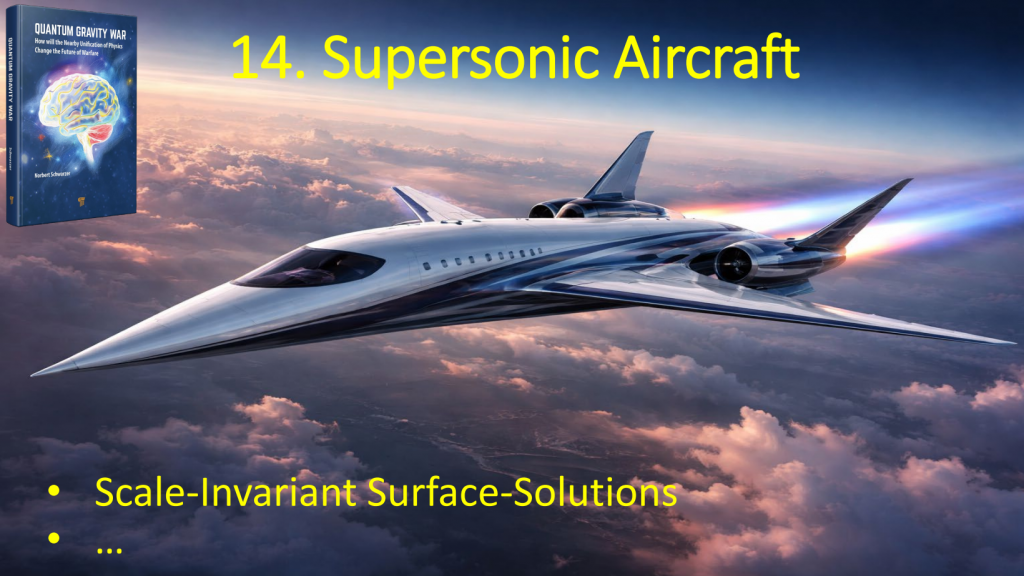
FilmDoctor® tips the balance toward dramatically faster design optimization — reducing months or years of simulation work to days or weeks.
Leveraging scale-invariant surface solutions, FilmDoctor® models thin films, multi-layer stacks, and mechanical structures as ensembles of properties. This delivers exact analytical precision for the time-dependent material properties arising from friction-induced heat transfer, as well as residual stresses — particularly at leading edges of aero surfaces and other critical high-heat zones — at every scale from nano-coatings to full airframe surfaces while not forgetting the human element in the design co-considerations [1].
High-performance thin films and advanced composites can be optimized via highly computationally efficient (laptop based) digital twins that run orders of magnitude faster than traditional CFD or molecular dynamics, free of training data in AI approaches or patchwork physics approximations.
This analytical physics approach [2, 3] with FilmDoctor® invites fresh consideration for high-performance surface engineering in extreme flight environments.
If you have any questions concerning the theory, please contact Norbert Schwarzer directly via email: n.schwarzer@siomec.de
If you have any questions concerning the software and animation, please contact Nick Bierwisch: n.bierwisch@siomec.de
For all other concerns (software, offers, development, investor requests) address Peggy Heuer-Schwarzer: p.heuer@siomec.de or Troy vom Braucke: troy@gpplasma.com
SIO the other newsletter – No. 170: The Final Moore Cycle: Thin Films and the Einstein Gravity Quantum Computer
By Troy vom Braucke
Moore’s Law is stalling. Despite the industry shift toward 3D chip architectures, classical computing is blocked by atomic-scale limits, quantum tunneling, heat dissipation challenges, and unsustainable power consumption. Quantum computers face equally severe barriers with decoherence and scalability.
Schwarzer discussed in [1] and presented at ICMCTF [2] an alternative path from fundamental first principles: the Einstein Gravity Quantum Computer. Where solutions to the Einstein field equations can produce a true Turing machine via metric oscillations and dimensional entanglement.
To realize such a machine, self-organized quantum dots (SAQD’s) show promise as building blocks, yet achieving precise nanometer-scale lateral alignment remains a critical barrier to industrial thin-film production.
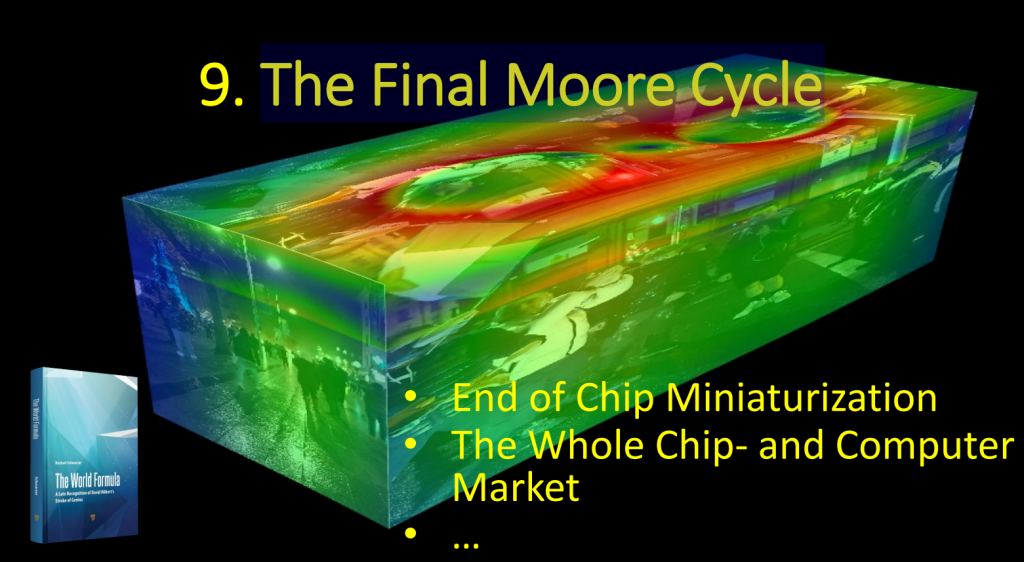
Advanced thin-film technology with atomic resolution is the decisive factor, where precise control of stresses and strains can help solve the alignment challenge. The books ‘Quantum Gravity War’ [3] and ‘Fluid Universe’ [4] also add powerful development paths to achieve control of the lateral spacing via thin film production techniques as well as opening up paths for alternative deposition methods.
SiOmec’s FilmDoctor® software delivers the essential tools necessary for design optimization of these complex systems. Realizing this vision through advanced thin-film engineering can open the door to a new computing paradigm — one with the potential to deliver dramatic improvements in performance, efficiency, and scalability, finally ending the stagnation of Moore’s Law.
If you have any questions concerning the theory, please contact Norbert Schwarzer directly via email: n.schwarzer@siomec.de
If you have any questions concerning the software and animation, please contact Nick Bierwisch: n.bierwisch@siomec.de
For all other concerns (software, offers, development, investor requests) address Peggy Heuer-Schwarzer: p.heuer@siomec.de or Troy vom Braucke: troy@gpplasma.com
SIO the other newsletter – No. 169: SIO partners at SVC TechCon
By Nick Bierwisch
Frank Papa from our partner GP Plasma will take part at the SVC TechCon next week in Long Beach:


In addtion to sharing FilmDoctor® insights at the exhibition booth, he will give a talk in the vendor innovator showcase session at 12:50 p.m. in room 104A.
The title is “Custom Vacuum Coating Systems, Vacuum Coater Refurbishment and Contract R&D at GP Plasma“.
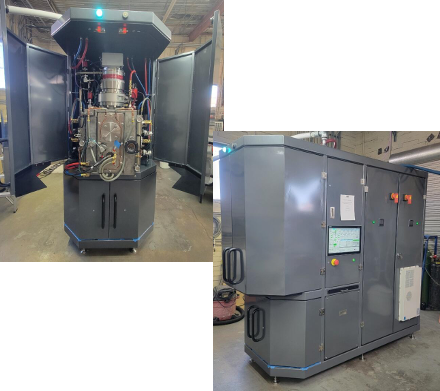
You can meet him at the GP Plasma booth #108 at the exhibition which is open Tuesday, April 28 and Wednesday, April 29.
If you have any questions concerning the theory, please contact Norbert Schwarzer directly via email: n.schwarzer@siomec.de
If you have any questions concerning the software and animation, please contact Nick Bierwisch: n.bierwisch@siomec.de
For all other concerns (software, offers, development, investor requests) address Peggy Heuer-Schwarzer: p.heuer@siomec.de or Troy vom Braucke: troy@gpplasma.com
SIO the other newsletter – No. 168: SIO partners at ICMCTF
By Nick Bierwisch
We are proud to announce that we could contribute to the invited talk of Prof. Ben Beake at the ICMCTF in San Diego next week.
The talk will be opening the session on “Surface Modification of Components in Automotive, Aerospace and Manufacturing Applications I” at 8:00 a.m. on Wednesday, April 22. The talk is titled “Micro-impact testing to develop multilayer coating systems with enhanced durability under cyclic high-stress contact” featuring 3 main topics:
– impact for cutting tools
– this work on DLC for automotive engines
– impact for simulating erosion of thermal barrier coatings for jet engines.
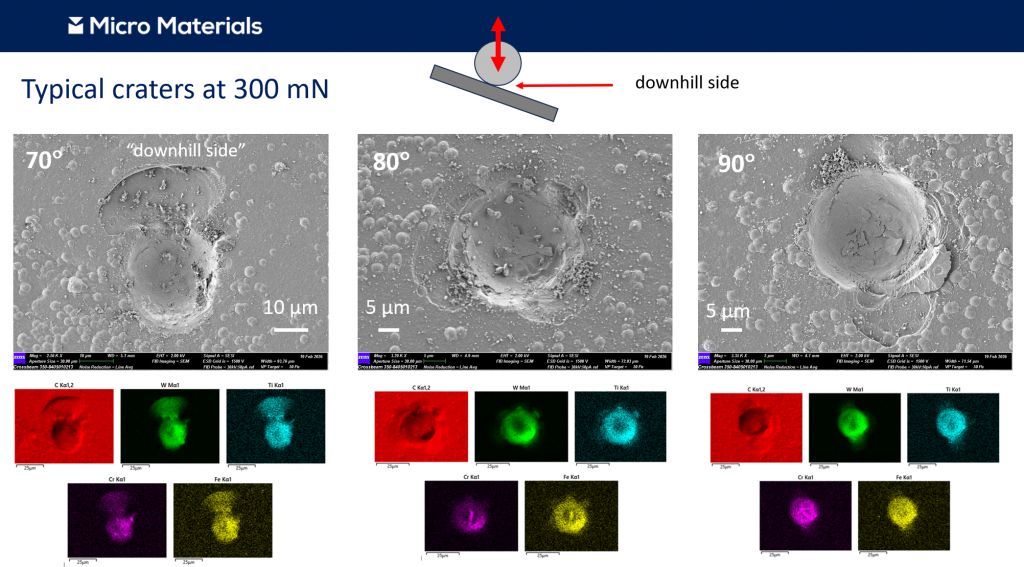
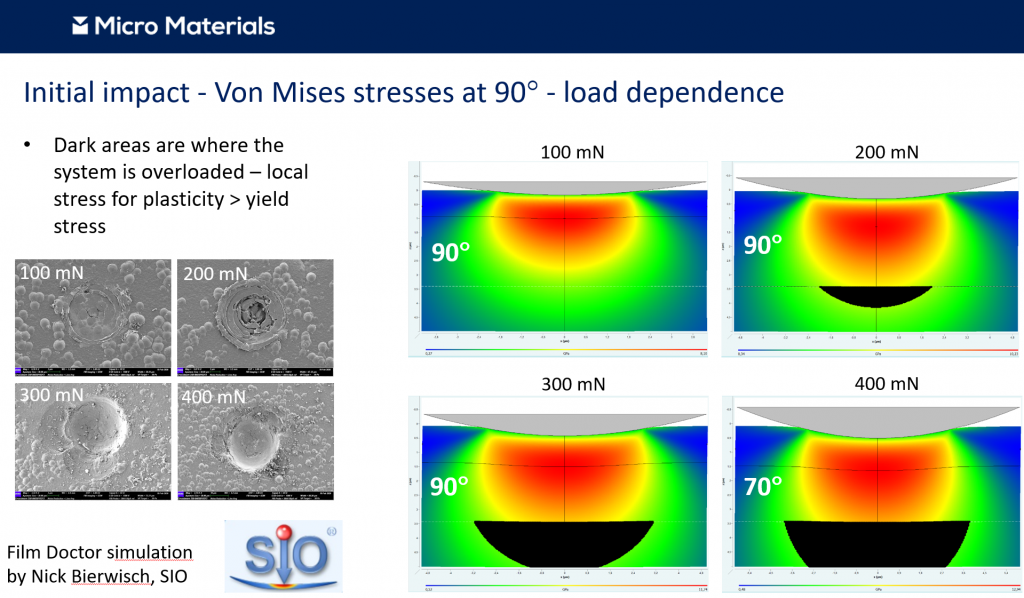
Prof. Beake will also be available at the exhibition on the joint booth #308 of RTec and Micromaterials. The exhibition is open on Tuesday, April 21, from 12:00-7:00 p.m. and Wednesday, April 22, from 10:00 a.m. – 5:00 p.m.
If you have any questions concerning the theory, please contact Norbert Schwarzer directly via email: n.schwarzer@siomec.de
If you have any questions concerning the software and animation, please contact Nick Bierwisch: n.bierwisch@siomec.de
For all other concerns (software, offers, development, investor requests) address Peggy Heuer-Schwarzer: p.heuer@siomec.de or Troy vom Braucke: troy@gpplasma.com
SIO the other newsletter – No. 167: Shark Skin Surfaces: What If “Everything Moving” Could Perform Better?
By Troy vom Braucke
Considering our recent newsletter (NL#164), which drew interested parties into co-development discussions, here is another example of advanced technical solutions possible with our metric first principles simulation tools.
Current simulation approaches typically deliver fixed geometries that work only in narrow operating windows. A generalized method to determine locally adapted, adaptable or even emerging surface topologies — optimized for different locations and fluid speeds — with industry application has remained elusive.
When viewing the image below, consider that the same physics [1] can be applied, where ‘everything moving’ can be more than just the typical fluids, but fields or charged particles as fluidic fields.
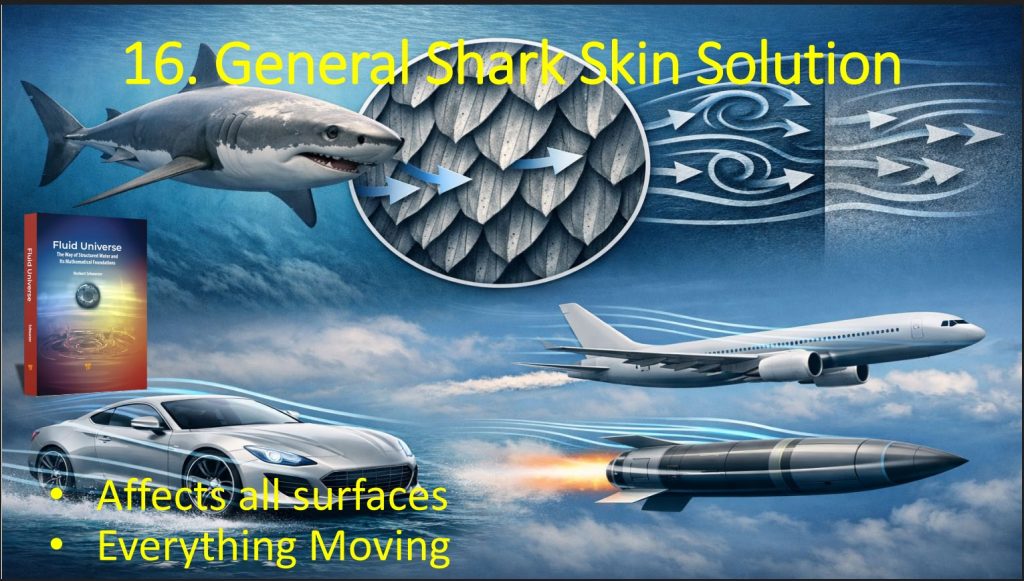
When combined with FilmDoctor®, we see rapid development potential from concept to production, particularly dynamic surface and interface structural solutions to achieve new levels of performance.
While two decades ago similar solutions often faced the problems of limited reliability due to adhesion issues [2, 3], now, many of these solutions are within reach of thin film deposition technology and analytical measurement equipment with suitable FilmDoctor® add-ons to aid in the development, now that precise structures can be determined from our physics simulations.
References:
[1] N. Schwarzer “Fluid Universe – The Way of Structured Water: Mathematical Foundation”, Jenny Stanford Publishing, 2026, ISBN 978-981-5352-15-3.
[2] James G. Kohl, Irwin L. Singer, Norbert Schwarzer, and Victor Y. Yu, “Effect of Bond Coat Modulus on the Durability of Silicone Duplex Coatings”, Progress in Organic Coatings, 56 (2006) 220-226
[3] J.G. Kohl, N.X. Randall,N. Schwarzer, T.T. Ngo, J.M. Shockley, and R.P. Nair, “An Investigation of Scratch Testing of Silicone Elastomer Coatings with a Thickness Gradient”, Journal of Applied Polymer Science, Vol. 124, 2978–2986 (2012), pp. 2978-2986
If you have any questions concerning the theory, please contact Norbert Schwarzer directly via email: n.schwarzer@siomec.de
If you have any questions concerning the software and animation, please contact Nick Bierwisch: n.bierwisch@siomec.de
For all other concerns (software, offers, development, investor requests) address Peggy Heuer-Schwarzer: p.heuer@siomec.de or Troy vom Braucke: troy@gpplasma.com
SIO the other newsletter – No. 166: FilmDoctor® goes Anton Paar – 1 click analysis – Part IV
By Nick Bierwisch
We continue our work on the data analysis simplification (see NL#135, NL#136 and NL#137). This time we aim the OPfC Series module (see NL#159) which can analyze a complete measurement series speeding up the measurement analysis and can give additional information. We developed the fdops import format which contains a list of fdop files.
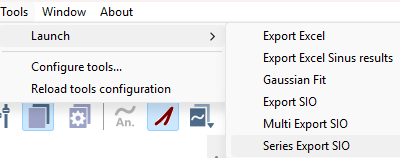
A new python script (Series Export SIO) for the Anton Paar indentation device software was created which exports all measurements, stores the information in the fdops file and starts the installed SIO software.
The measurement information from the files which will be loaded in one go into our software and the OPfC Series module is opened.
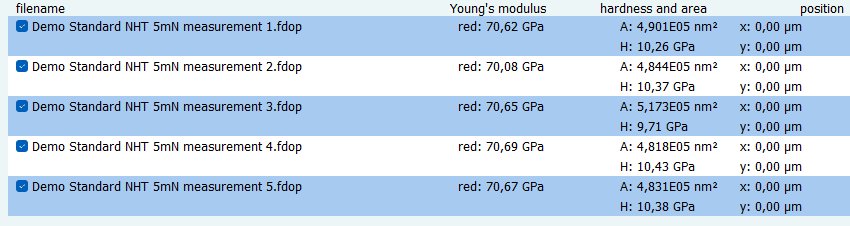
The customer can check if all measurement information were imported correctly and start the series analysis procedure.
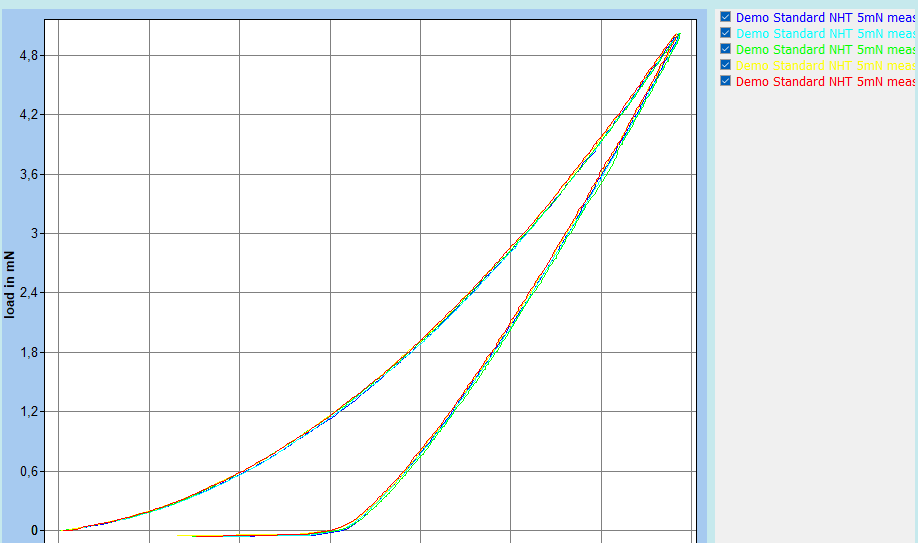
This will speed up the analysis process even more and simplifies the usage and minimize the user inputs.
If you have any questions concerning the theory, please contact Norbert Schwarzer directly via email: n.schwarzer@siomec.de
If you have any questions concerning the software and animation, please contact Nick Bierwisch: n.bierwisch@siomec.de
For all other concerns (software, offers, development, investor requests) address Peggy Heuer-Schwarzer: p.heuer@siomec.de or Troy vom Braucke: troy@gpplasma.com
SIO the other newsletter – No. 165: Subdued Market? More Training & R&D Focus – FilmDoctor® enables
By Troy vom Braucke
In the current subdued market, we are seeing smart and agile US companies investing in R&D to develop innovative new products. This has driven a clear increase in demand for vacuum system and physical vapor deposition training—either for teams new to thin film deposition or those expanding from one technology to another and needing to get up to speed fast.
For GP Plasma, I have and continue to deliver customized training across several markets such as consumer decorative, high-end optics, and for a major international job coater, where I built a “train the trainer” program for them. My approach is conversational. As I visually present the training materials, I also interview participants to draw on their relevant experience while sharing mine. Linking their shared stories to the learning for all participants.
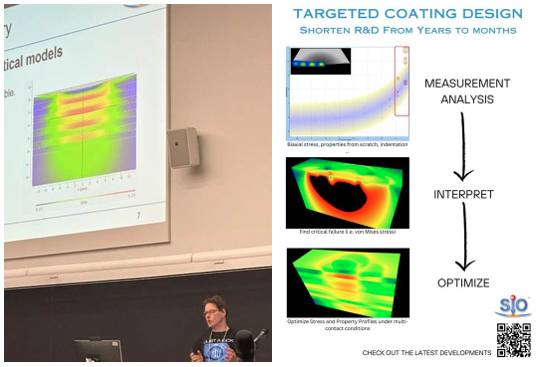
Over the years, I’ve noticed a clear cultural difference in approach: European teams tend to emphasize upfront planning and design before experimenting, while US teams lean toward rapid iterative trial-and-error. The fastest path to market blends both—structured design tools paired with agile experimentation and relentless optimization of not just the product but the innovation process.
I focus on bridging the two approaches. By integrating SIOmec’s FilmDoctor® suite, we turn years of iterative development into weeks. FilmDoctor® quickly reveals materials properties, layer thicknesses, and performance metrics—often in minutes—shifting the bottleneck to manufacturing and testing the coating. That’s where the GP Plasma team excels: using FilmDoctor® insights to select or customize deposition technology with retrofit upgrades to achieve the materials and properties needed and rapidly guide process development from coating design through analytical validation.
This removes much of the “dark art” from PVD development, replacing guesswork with clear decision making, defined engineering targets, and dramatically shortening time-to-market.
Which is why at the end of training I give an overview of how FilmDoctor® helps with application coating design, process development and deposition technology selection.
If you have any questions concerning the theory, please contact Norbert Schwarzer directly via email: n.schwarzer@siomec.de
If you have any questions concerning the software and animation, please contact Nick Bierwisch: n.bierwisch@siomec.de
For all other concerns (software, offers, development, investor requests) address Peggy Heuer-Schwarzer: p.heuer@siomec.de or Troy vom Braucke: troy@gpplasma.com
SIO the other newsletter – No. 164: Rechargeable Diesel: Electricity without Combustion
By Troy vom Braucke
Picture pulling into any gas station to fill your tank like you always have, but to quietly power high-performance electric motors — no combustion, no expensive catalysts, no degrading membranes, no heavy battery pack, no range anxiety.
The problem is every clean-mobility path hits these limits: expensive materials that are consumed/degraded, fuel-purity restrictions that poison cell membranes and prevent using standard fuels, new infrastructure that scales slowly, and energy densities that can’t match hydrocarbons for range and refill speed.
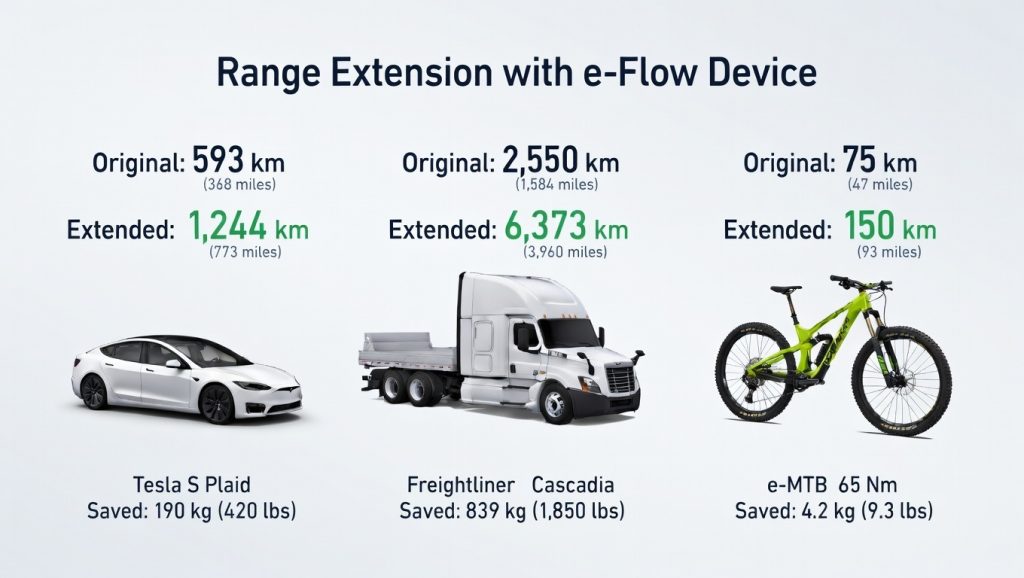
Fuel cells rely on costly platinum that wears out and can’t deal with impurities. Liquid flow-cell systems suffer low power density and membrane degradation, e-Fuels (synthetic fuels) are 3-5 times more expensive than current, take more energy to manufacture than they supply, and have scalability and infrastructure challenges. Advanced batteries deliver only 1/20th to 1/100th the usable energy density of diesel per kg or liter.
We considered a different path (see NL#133 – A Rechargeable Fuel) — turning those barriers into strengths. Because we don’t burn the diesel, the spent fluid can be recharged from the grid or reprocessed for its trace minerals — creating a circular, multi-use fuel cycle using existing infrastructure.
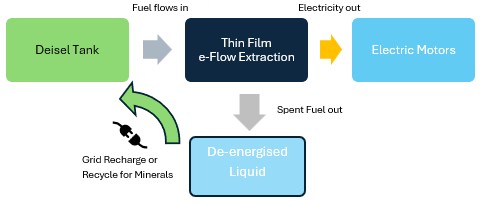
With FilmDoctor® to explore the conceptual design optimization from structures given by the fundamental physics [1, 2], our goal is to reach Diesel’s unmatched energy density, while solving materials degradation with a solution compatible for scale up on thin film deposition equipment.
The next step is building the benchtop demonstrator using thin-film coating processes.
If you’d like to dive deeper into the underlying theory [1, 2] or if you’re involved in advanced coatings and open to a co-development conversation, simply reply to this email.
References:
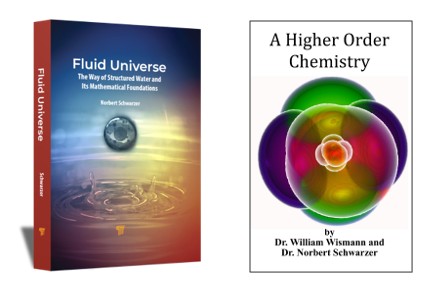
[1] N. Schwarzer “Fluid Universe – The Way of Structured Water: Mathematical Foundation”, Jenny Stanford Publishing, 2026, ISBN 978-981-5352-15-3.
[2] W. Wismann, N. Schwarzer, “A Higher Order Chemistry” 2025, available at discretion of the 1st author.
If you have any questions concerning the theory, please contact Norbert Schwarzer directly via email: n.schwarzer@siomec.de
If you have any questions concerning the software and animation, please contact Nick Bierwisch: n.bierwisch@siomec.de
For all other concerns (software, offers, development, investor requests) address Peggy Heuer-Schwarzer: p.heuer@siomec.de or Troy vom Braucke: troy@gpplasma.com
SIO the other newsletter – No. 163: Z-Pinch Fusion Liquid Wall Impacts with SIOmec’s FilmDoctor® – Part 3
By Troy vom Braucke
In part 1 (NL#160) we started with a basic simulation of particle impacts on a thick, slow-flowing liquid metal wall in a Z-pinch fusion reactor. Part 2 (NL#161) increased flow to explore initial effects. Now, we continue adding degrees of freedom.
This helps us to better grasp the particle impacts on the liquid metal and its interface with the steel chamber wall – with the aim to refine our digital twin using FilmDoctor®. First calculations stay quick this way and we build understanding step by step. Ultimately, to cut down fusion energy development time.
This week, we reduce the fluid film depth and show its velocity profile (see Figure 1) with a parabolic quadratic function for a falling laminar film [3].
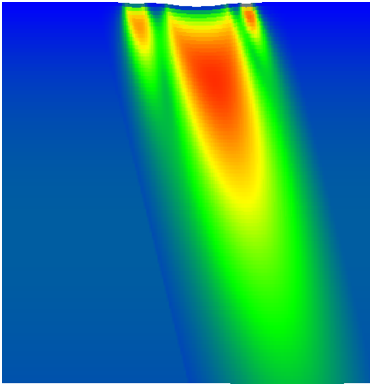
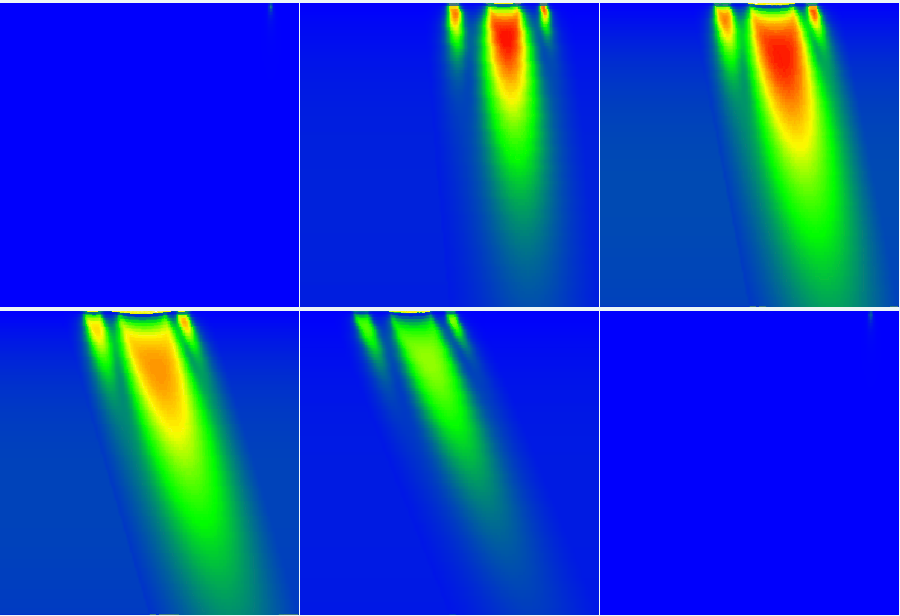
Figure 1: Still and animated gif image of liquid metal 1st wall with flow left to right, showing a parabolic velocity profile from ‘no-slip’ at wall, to flow at the surface. Calculated with FilmDoctor®. Thanks to SIOmec’s Nick Bierwisch for animation support.
But the simulation remains incomplete. In the next newsletter, we’ll apply additional degrees of freedom to examine inhomogeneity with depth from viscosity effects (i.e. Prandtl-like behaviour [4]). We expect this to set up shear flow and related stress fields.
FilmDoctor® has capability to handle time-dependent materials – fluids, creep, biomaterials, polymers, glass. Perfect for plasma-material interactions in fusion energy optimization and for crafting coating solutions in the fusion sector.
References:
[1] https://www.zapenergy.com/blog/history-of-the-z-pinch
[2] M. C. Thompson et. Al. “Engineering Paradigms for Sheared-Flow-Stabilized Z-Pinch Fusion Energy” vol 79, Fusion Science and Technology (2023) https://doi.org/10.1080/15361055.2023.2209131
[3] R. Wang et. Al. “Experimental Validation of Falling Liquid Film Models: Velocity Assumption and Velocity Field Comparison”, Polymers, 2021. https://www.mdpi.com/2073-4360/13/8/1205
[4] Prandtl Number review; https://www.sciencedirect.com/topics/chemistry/prandtl-number
If you have any questions concerning the theory, please contact Norbert Schwarzer directly via email: n.schwarzer@siomec.de
If you have any questions concerning the software and animation, please contact Nick Bierwisch: n.bierwisch@siomec.de
For all other concerns (software, offers, development, investor requests) address Peggy Heuer-Schwarzer: p.heuer@siomec.de or Troy vom Braucke: troy@gpplasma.com
SIO the other newsletter – No. 162: Applied Socioeconomic Tariff Analysis with FilmDoctor®: Visualizing Industry Stress
By Troy vom Braucke
We wanted to understand if USA tariffs can be both beneficial and detrimental to an industry with a view toward the vacuum deposition machine tool suppliers using FilmDoctor® to visualize the resultant stress fields from international trade barriers.
The methods we applied are applicable to other industries such as job coating or measurement equipment and provide an opportunity to show to decision makers why adaptable policy changes may be required.
Just as stress can be visualized in transparent materials (Figure 1), a heat map of stress can be calculated to show regions of a socioeconomic system stress at risk of critical failure.
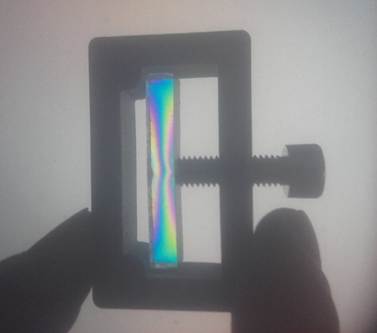
In the vacuum deposition machine tool sector, many countries have diverse support mechanisms. For example, since 2025, China offers substantial incentives, including preferential financing and loan‑interest subsidies.
These measures enable these firms to provide equipment at significantly lower cost. European competitors argue that the subsidized financing allows Chinese OEMs to scale production at a lower capital cost, resulting in pricing advantages that EU firms cannot match [2,3], with similar stress placed on USA machine builders.
The FilmDoctor® simulations below show a simple first-pass stress-field approach, considering the impact of foreign subsidised imports.
- Left sides of imagesshow a USA tariff protecting an industry.
- Right sidesshow an unprotected industry suffering under subsidized imports.
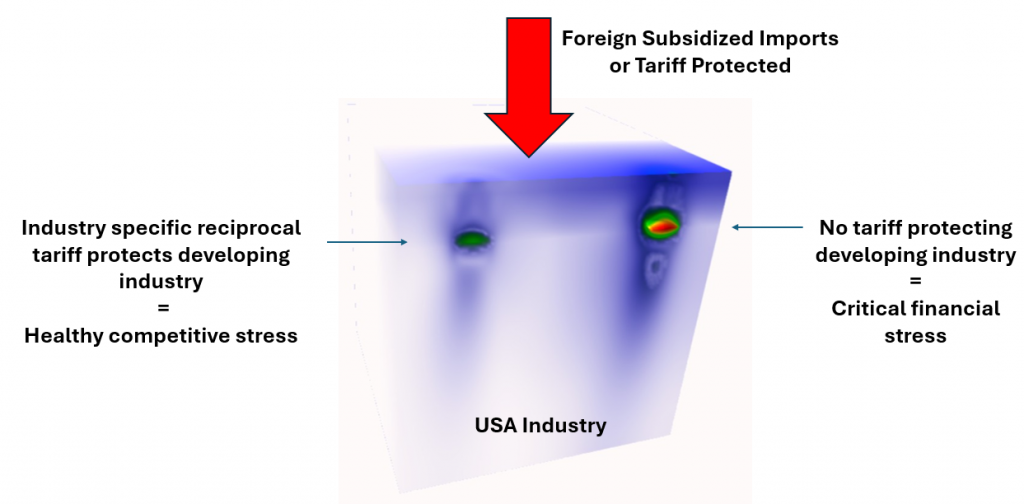
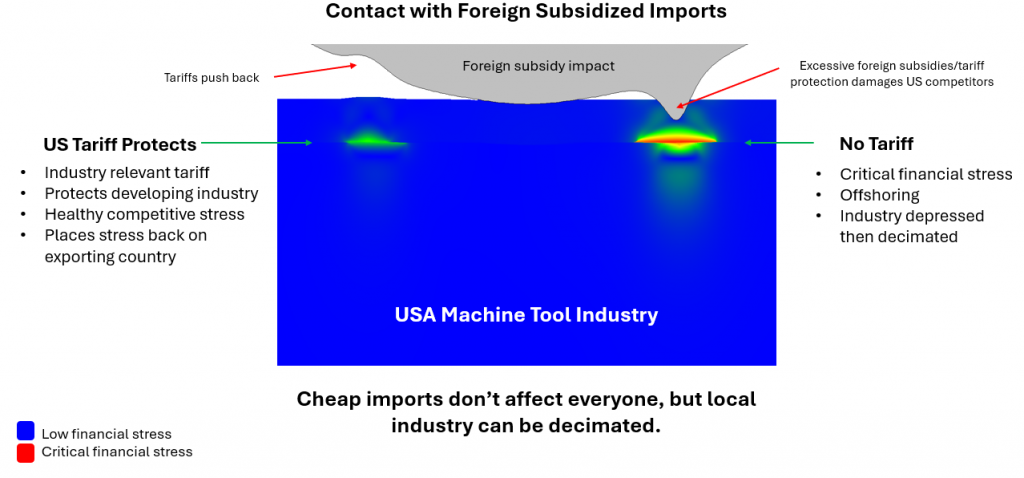
With broader industry information, specific subsidy or import tariffs against US products may trigger a weak point in other areas of the economy – The FilmDoctor® field model approach can show under what circumstances and where in the socio-economy failure can occur given suitable input data. Yes, even with dynamic time dependent data.
Outcome
Tariff can be calculated to optimize the stability of a developing industry, while allowing for healthy international competition.
However, too high a tariff leads to critical stress in the very industry one tries to protect!
This may be due to supply chain impacts, offshoring, or lack of innovation without competitive pressure.
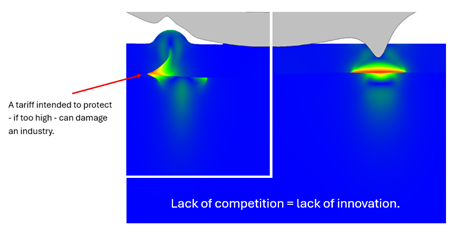
Contact us for a demo!
[1] Autodesk Instructables https://www.instructables.com/Photoelasticimetry-Seeing-Mechanical-Stress-With-O/
[2] China vows easier financing for private firms’ equipment upgrades” [english.www.gov.cn],
[3] SCIO briefing on promoting high-quality development: Ministry of Finance [SCIO brief…try of …]
If you have any questions concerning the theory, please contact Norbert Schwarzer directly via email: n.schwarzer@siomec.de
If you have any questions concerning the software and animation, please contact Nick Bierwisch: n.bierwisch@siomec.de
For all other concerns (software, offers, development, investor requests) address Peggy Heuer-Schwarzer: p.heuer@siomec.de or Troy vom Braucke: troy@gpplasma.com
SIO the other newsletter – No. 161: Z-Pinch Fusion Liquid Wall Impacts with SIOmec’s FilmDoctor® – Part 2
By Troy vom Braucke
In part one of this newsletter (NL#160) the Z-pinch fusion effect was introduced that generates self-confined magnetic fields, compressing plasma to fusion conditions in a compact, magnet-free system [1, 2] providing order of magnitude cost reductions, the promise of reduced development time, and opportunity for coating solutions.
The flowing liquid metal first wall (e.g. bismuth, Pb-Li) in the Z-pinch reactor provides a self-healing first wall. To better understand the particle impacts on the liquid metal and the interface with the steel chamber wall, we increasingly add degrees of freedom to better match the reality to improve our digital twin with FilmDoctor®. In this way first calculations are fast, and we increase our understanding along the way -with the goal to reduce development time of fusion energy.
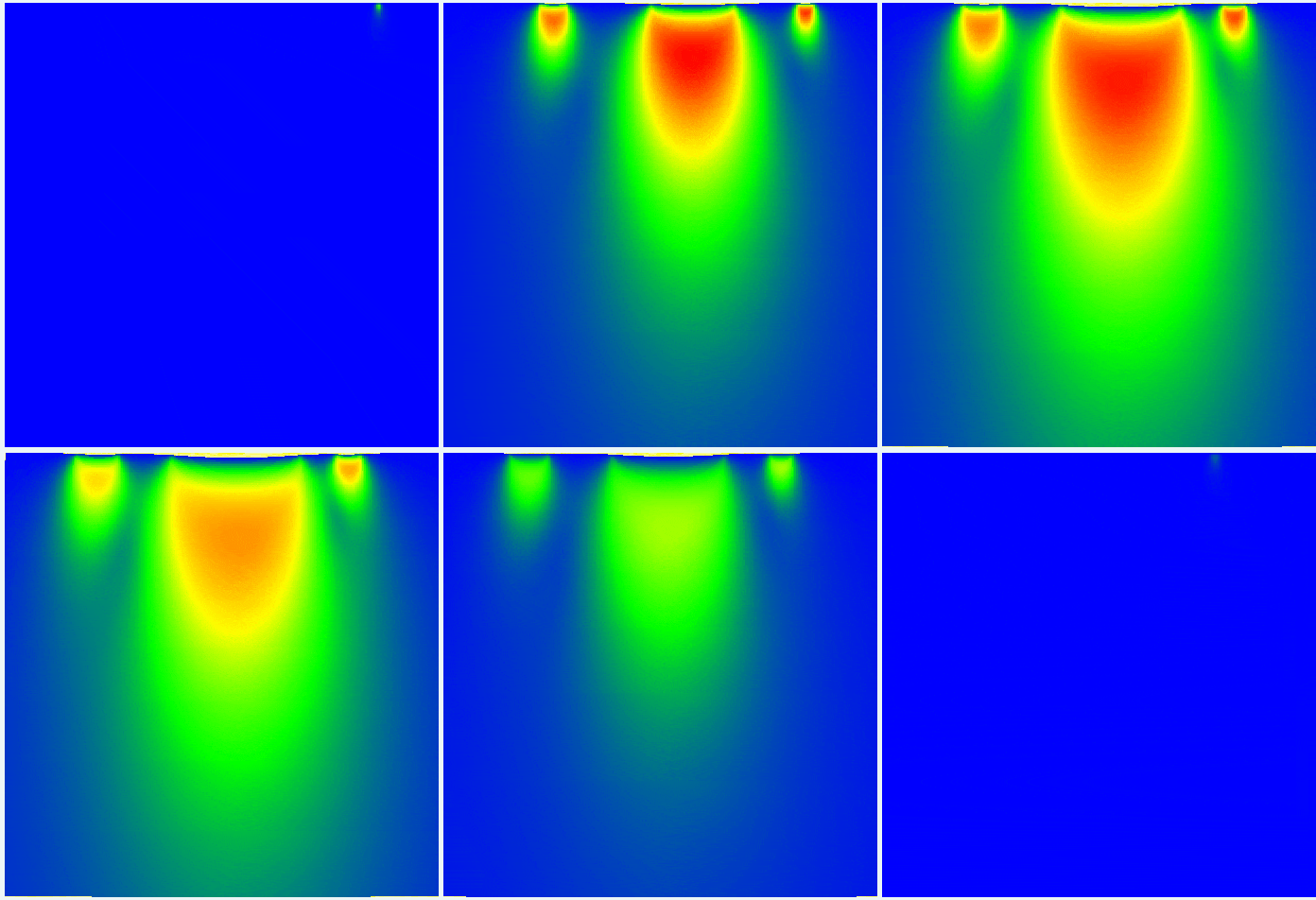
With thanks to SIOmec’s Nick Bierwisch for providing the animation.
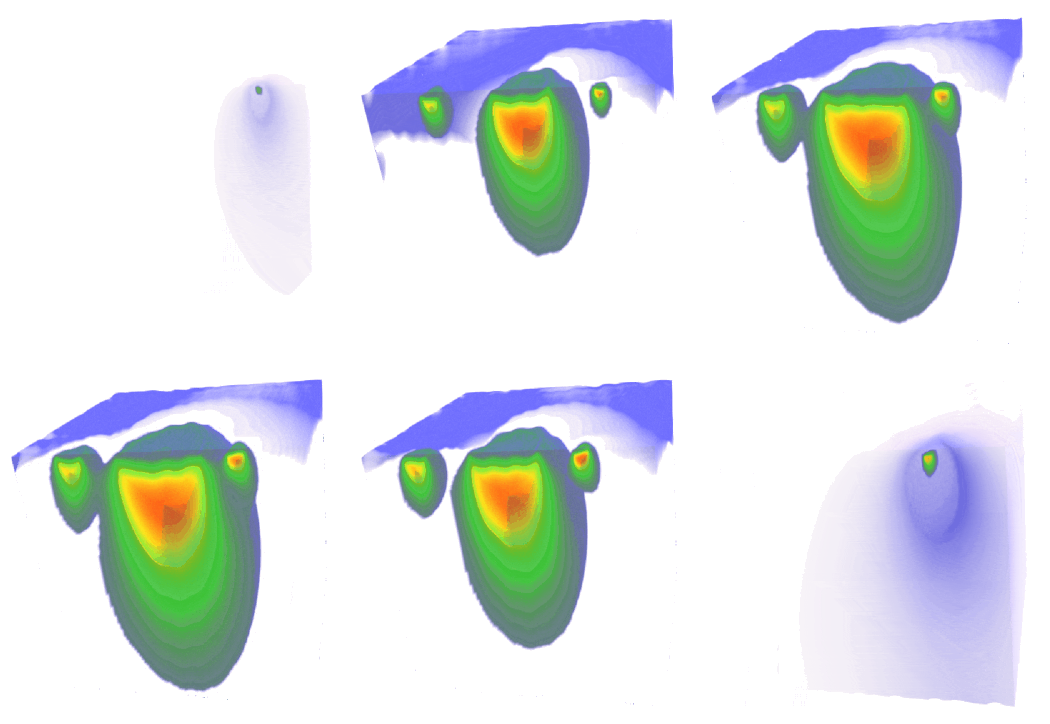
With thanks to SIOmec’s Nick Bierwisch for providing the animation.
This week we included the movement of the liquid metal from left to right (Figure 1) with the background frame appearing stationary, the particle impacts can be seen slowly moving to the left.
In the next newsletter we will increase the degrees of freedom to show higher impact energy with respect to fluid thickness to consider effects similar to Prandtl’s power law.
FilmDoctor® capability of simulating time-dependent materials like fluids, creep, biomaterials, polymers, and glass, makes it ideal for analyzing plasma-material interactions in fusion environments. An opportunity for designing coating solutions to the Fusion industry.
Contact us for a demo!
[1] https://www.zapenergy.com/blog/history-of-the-z-pinch
[2] M. C. Thompson et. Al. “Engineering Paradigms for Sheared-Flow-Stabilized Z-Pinch Fusion Energy” vol 79, Fusion Science and Technology (2023) https://doi.org/10.1080/15361055.2023.2209131
If you have any questions concerning the theory, please contact Norbert Schwarzer directly via email: n.schwarzer@siomec.de
If you have any questions concerning the software and animation, please contact Nick Bierwisch: n.bierwisch@siomec.de
For all other concerns (software, offers, development, investor requests) address Peggy Heuer-Schwarzer: p.heuer@siomec.de or Troy vom Braucke: troy@gpplasma.com
SIO the other newsletter – No. 160: Z-Pinch Fusion Liquid Wall Impacts with SIOmec’s FilmDoctor® – Part 1
By Troy vom Braucke, animation by Nick Bierwisch
The Z-pinch effect was first investigated in 1905 in Australia when physicists James Arthur Pollock and Stewart Barraclough examined a crushed copper lightning rod struck by lightning in the 1800’s, where the massive current generated a self-induced magnetic field that radially compressed the tube [1].
Z-pinch fusion energy technology leverages this to create self-confined magnetic fields, compressing plasma to fusion conditions in a compact, magnet-free system. Historically limited by plasma instabilities, development of shear-flow stabilization—via differential plasma velocities—enabled sustained confinement (~50-100 μs per pulse), offering order of magnitude lower capex costs and faster iterations than tokamak and stellarator designs.
Interestingly, a liquid metal first wall or ‘blanket’ (e.g. bismuth, Pb-Li in future plants from Zap Energy [2]) provide a solution for heat management, erosion resistance, and tritium breeding. However, flow rate optimization and degradation need to be optimized, while opportunities exist for advanced coatings and thin films to combat corrosion and neutron damage (of the cathode).

In this newsletter series, we’ll use SIOmec’s FilmDoctor® to simulate plasma particle impacts on the liquid wall, starting with low flow and a thick layer relative to impact scales (see Figure 1) that would save these fusion companies 1000’s of hours in supercomputing time. Future newsletters will add realism, such as directional flow with depth effect, higher resolutions and 3D tomographic views.
Key materials challenges are [3]:
- Liquid wall erosion/sputtering from keV ions, risking droplet ejection and plasma contamination.
- Neutron degradation, including helium swelling and lithium depletion in Pb-Li.
- Corrosion of underlying steels (<50 μm/year from Pb-Li), needing oxide barrier coatings.
FilmDoctor® capability of simulating time-dependent materials like fluids, creep, biomaterials, polymers, and glass, makes it ideal for analyzing plasma-material interactions in fusion environments. For additional design complexity, the theory is extended in [4] for application toward internally coherent domains in fluids.
[1] https://www.zapenergy.com/blog/history-of-the-z-pinch
[2] Zap Energy, Wikipedia. https://en.wikipedia.org/wiki/Zap_Energy
[3] M. C. Thompson et. Al. “Engineering Paradigms for Sheared-Flow-Stabilized Z-Pinch Fusion Energy” vol 79, Fusion Science and Technology (2023) https://doi.org/10.1080/15361055.2023.2209131
[4] N. Schwarzer, “Fluid Universe – The Way of Structured Water: A Mathematical Foundation”, JennyStanford Publishing (2026) ISBN:9789815352153
If you have any questions concerning the theory, please contact Norbert Schwarzer directly via email: n.schwarzer@siomec.de
If you have any questions concerning the software and animation, please contact Nick Bierwisch: n.bierwisch@siomec.de
For all other concerns (software, offers, development, investor requests) address Peggy Heuer-Schwarzer: p.heuer@siomec.de or Troy vom Braucke: troy@gpplasma.com
SIO the other newsletter – No. 159: OPfC Series Module: Streamlining Batch Nanoindentation Analysis in FilmDoctor®
OPfC Series Module: Streamlining Batch Nanoindentation Analysis in FilmDoctor®
By Nick Bierwisch and Troy vom Braucke
Processing nanoindentation data for thin films often involves painstaking sequential analysis of individual curves, leading to repetitive entry of coating and substrate parameters. This not only consumes lab time but increases the risk of input errors, especially across large datasets from multiple indents.
Manually scanning for bad indents—caused by surface roughness, film defects, equipment noise or anomalies—further delays processing, slowing identification of outliers essential for R&D.
The OPfC® Series module, is an extension of our FilmDoctor® OPfC® module (see NL#150) where we discuss benefits of the Oliver and Pharr for Coatings module for reliably separating substrate effects from thin film properties) solves these issues with efficient batch processing.
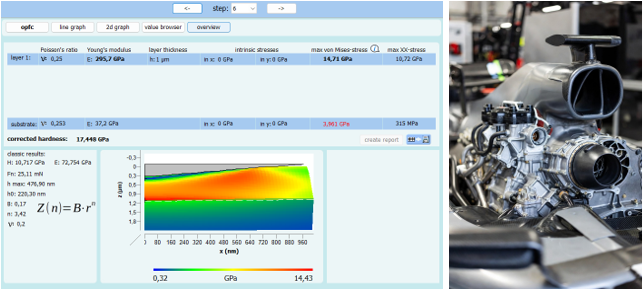
Load an entire measurement series in one go direct from your indentation instrument or its exported data; the module automatically flags high-error curves, applies common parameters to prevent input mistakes, and runs OPfC analysis on each—separating substrate effects via first-principles physics for precise coating modulus and yield strength.
Benefits: In high-stakes applications like performance coatings where development time and speed to market are key, trustworthy fast decisions are critical.
- Drastically reduced analysis time for series data,
- Minimize errors from repetition,
- Enhanced overview for insights and erroneous indents
- Separation of substrate influence from film properties
- Trustworthy Young’s modulus, yield strength, and hardness properties for design inputs.

Batch results are presented with a table overview of given and calculated parameters, and individual curves selected for an in-depth view of substrate-corrected values vs. classical, ideal for optimizing components in performance applications like Formula One (see Figure 1).
Experience faster, error-free workflows and save hours in the lab!
Contact us for a demo!
If you have any questions concerning the theory, please contact Norbert Schwarzer directly via email: n.schwarzer@siomec.de
If you have any questions concerning the software and animation, please contact Nick Bierwisch: n.bierwisch@siomec.de
For all other concerns (software, offers, development, investor requests) address Peggy Heuer-Schwarzer: p.heuer@siomec.de or Troy vom Braucke: troy@gpplasma.com
SIO the other newsletter – No. 158: Fusion First Wall Optimization: Insights from FilmDoctor®
Fusion First Wall Optimization: Insights from FilmDoctor®
Harnessing fusion energy safely is humanity’s dream
By Troy vom Braucke
In our latest project (see gif images below), we demonstrate SIO’s scale-invariant FilmDoctor® software optimizing a fusion chamber first wall against multiple plasma generated particle impacts (particles not shown). The goal for Fusion operators is to extend the life of the first wall to approximately 20 years before replacement.
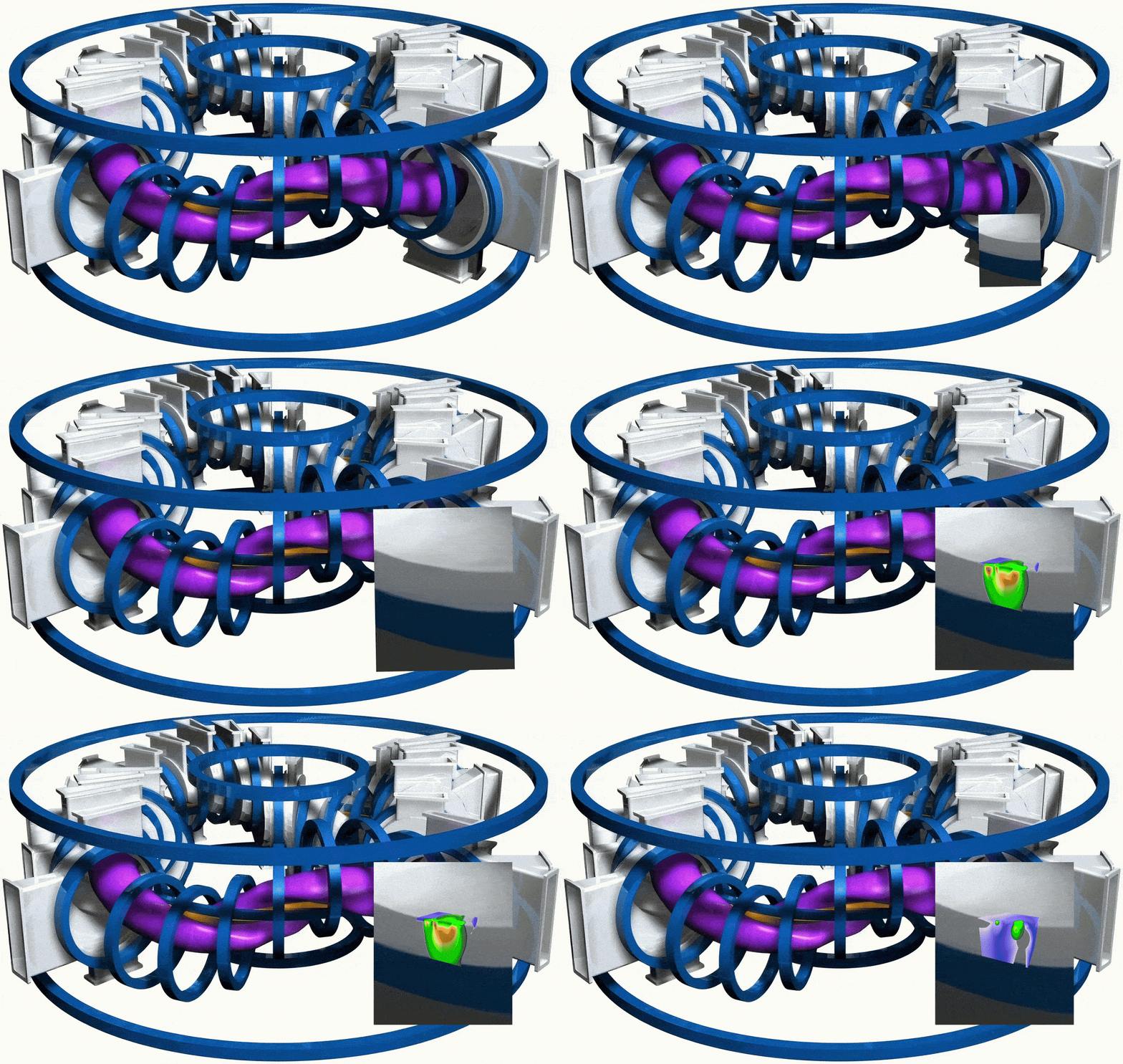
Simulations show many small impacts cause plastic flow in the substrate, risking integrity. Medium and large ones are benign alone, but multi-impact scenarios—overlapping in time and space—amplify damage, even when they’re non-critical as single impacts. By adding a protective layer (usually Tungsten based), it shields the substrate (RAFM steel) from single impacts, but worst-case impact ensembles still induce plastic zones in both the Tungsten layer and substrate (see Figure 2).
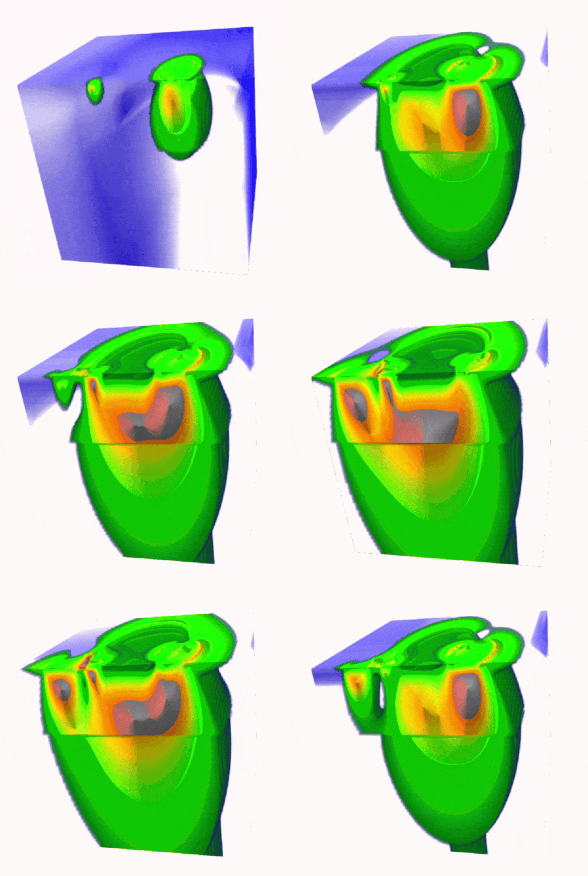
Using FilmDoctor’s iStress® module, we find the optimal intrinsic stress profile in minutes to target during coating deposition. The stress optimization eliminated plastic flow across all impact scenarios (see Figure 3 right image), as 3D animations confirm—no black damage zones. The Uncertainty Budget Calculator (Critload) allows to evaluate impact and coating property variations, finding optimized combinations to protect against best/worst case impact scenarios.
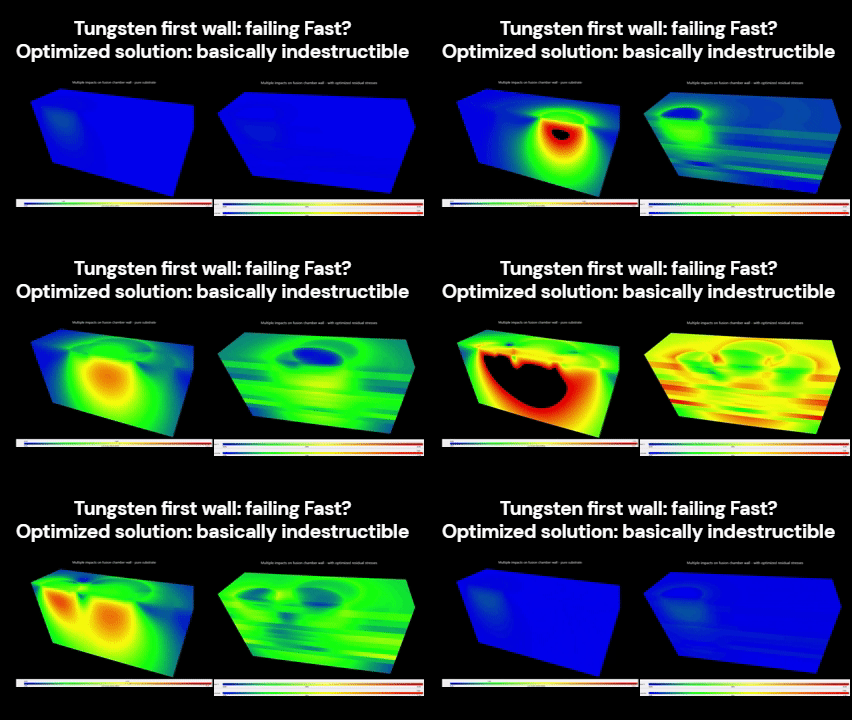
Result: A resilient coating system for fusion walls—and beyond, in any high-impact application of any particle size from sub-atomic to geological scale!
[1] TJ-II model by Jose l. Velasco adapted by SiOmec, CC BY-SA 4.0 <https://creativecommons.org/licenses/by-sa/4.0>, via Wikimedia Commons, source link: https://commons.wikimedia.org/wiki/File:TJ-II_model_including_plasma,_coils_and_vacuum_vessel.jpg

Contact us for a demo!
If you have any questions concerning the theory, please contact Norbert Schwarzer directly via email: n.schwarzer@siomec.de
If you have any questions concerning the software and animation, please contact Nick Bierwisch: n.bierwisch@siomec.de
For all other concerns (software, offers, development, investor requests) address Peggy Heuer-Schwarzer: p.heuer@siomec.de or Troy vom Braucke: troy@gpplasma.com
SIO the other newsletter – No. 157: FilmDoctor® iStress module – recap
An informed approach to optimize longevity and reliability of layered films
By Troy vom Braucke and Nick Bierwisch
In mechanical engineering and materials science, optimizing material systems for enhanced performance and longevity often involves strategies such as:
– Surface strengthening (e.g., nitriding)
– Improved material combinations
– Use of novel coating materials
– Changing the structure and deposition process.
However, the residual stresses, resulting from manufacturing or processing steps, mostly define the performance and limit the lifetime of nanostructured materials, thin films, coatings, and MEMS devices.
An EU-funded consortium project sought to leverage inherent residual stresses in coating-substrate systems rather than mitigating them. The project’s core insight was to engineer tailored residual stress profiles for specific contact conditions, thereby reducing peak stresses and improving load-bearing capacity.
As a key outcome, SiOmec developed the iStress module within FilmDoctor®, which computes optimal stress distributions using analytical models for given operational scenarios. Project partners subsequently refined their manufacturing process techniques to achieve these profiles.
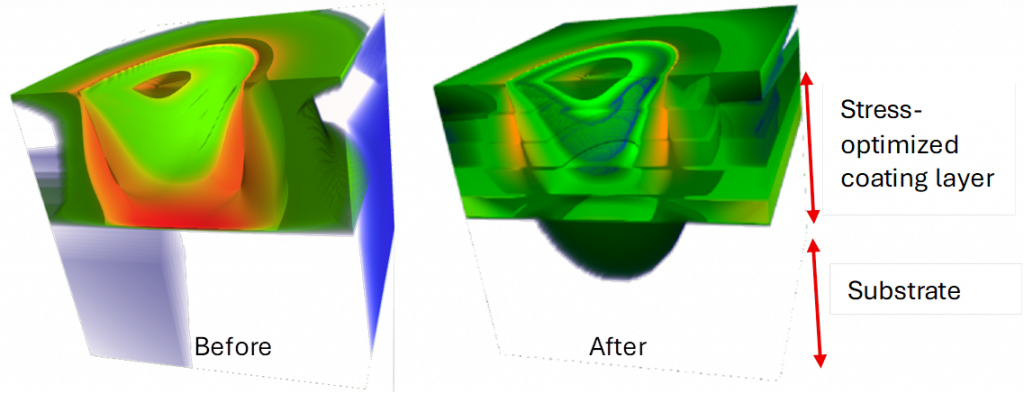
The iStress Module Workflow:
- Select the target layer for optimization in the multilayer system.
- FilmDoctor® iStress evaluates the complete stress-strain-field of the original state.
- User decides how many discrete sublayers are desired in the selected layer.
- The optimal residual stress values per sublayer are calculated to create a stress distribution with lower stress maxima.
In a representative example shown in Figure 2, the maximum von Mises stress decreased from 4.51 GPa (original) to 2.82 GPa (optimized), nearly halving the von Mises stress maxima without material changes.
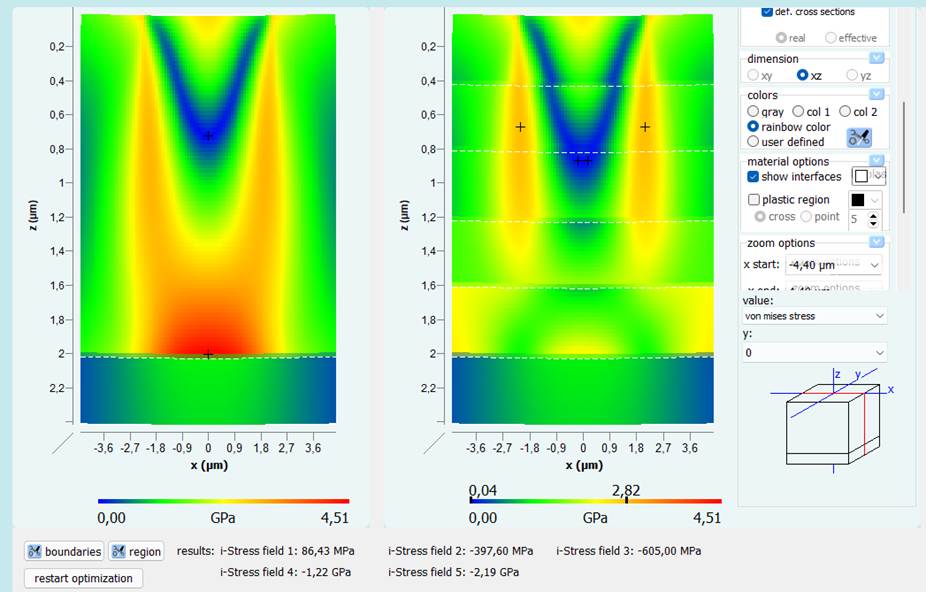
An applied example can be found in the tutorial video in part 2 of ‘Implants of a Lifetime’
For further technical details of the EU project, including measurement protocols for sub-micron residual stress analysis and integration with our simulation tools see: https://cordis.europa.eu/project/id/604646/de
[1] Example geology from https://geology.utah.gov/map-pub/survey-notes/horizontal-drilling-utah/
[2] N. Schwarzer, “Fluid Universe: The Way of Structured Water – mathematical formulation”, Jenny Stanford Publishing, forthcoming release in 2026).
If you have any questions concerning the theory, please contact Norbert Schwarzer directly via email: n.schwarzer@siomec.de
If you have any questions concerning the software and animation, please contact Nick Bierwisch: n.bierwisch@siomec.de
For all other concerns (software, offers, development, investor requests) address Peggy Heuer-Schwarzer: p.heuer@siomec.de or Troy vom Braucke: troy@gpplasma.com
SIO the other newsletter – No. 156: Stress Testing a Chuck Norris Meme with FilmDoctor®
Stress Testing a Chuck Norris Meme with FilmDoctor®
By Troy vom Braucke
It has been said that when Chuck Norris does a push up, he isn’t lifting himself up, he’s pushing the Earth down!
This meme has been kicking around for years and captures the over-the-top toughness of the martial arts legend. Let’s put it to the test with FilmDoctor®, does Chuck actually move the Earth?

Using a mass of 77kg for when he was in his prime, and a typical push up height of 0.3m gives approximately 226 Joules of potential energy, or 113 Joules per hand for a two-hand push up. So clearly for Chuck, we will use 226 Joules for a one-handed push up.
Taking a contact area for an adult male palm of 10cm x 10cm gives a circular radius of 5.64cm, but with a relatively flat contact radius ‘a’ when in contact with the ground.
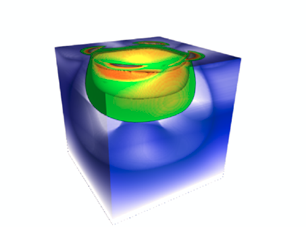
Running the contact analysis in FilmDoctor®, it seems Chuck does push the earth down, but only the part just below his hand. Perhaps you might like to try a Karate chop to a wooden board?
All fun aside, understanding the contactconditions of a hand or foot on the reliability of in-homogeneous layered materials can be critical, like for sporting equipment under extreme scenarios such as our windsurfer example here:
http://siomec.com/wp-content/uploads/2023/06/2007-006.pdf
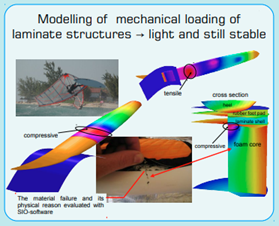
Meme Data: We used a compressible loamy soil (E= 15MPa, v= 0.15) 10cm deep, above Sandstone rock (E=84GPa, v = 0.13).
If you have any questions concerning the theory, please contact Norbert Schwarzer directly via email: n.schwarzer@siomec.de
If you have any questions concerning the software and animation, please contact Nick Bierwisch: n.bierwisch@siomec.de
For all other concerns (software, offers, development, investor requests) address Peggy Heuer-Schwarzer: p.heuer@siomec.de or Troy vom Braucke: troy@gpplasma.com
SIO the other newsletter – No. 155: Efficient Oil Extraction with FilmDoctor®
Efficient Oil Extraction with FilmDoctor® – Safer, Smarter, Subsidence-Free
By Troy vom Braucke
FilmDoctor® uses analytical physics to simulate digital twins of stress and strain fields in multi-layered oil reservoirs, cutting subsidence risk (by up to 90% in our hypothetical example below)—faster and more precise than FEA, and using real site data or literature values for preliminary analysis.
Traditional extraction softens the oil-bearing sandstone, leading to a risk of casing collapse, with wells typically limited to 40-50% of the oil being feasibly extracted.
We simulated traditional extraction methods compared to new state-of-the-art technology from RASA® to understand risks as oil is depleted due to the impact of lost circulation zones and costly repairs in the millions, while showing potential for real-time optimization of oil fields.
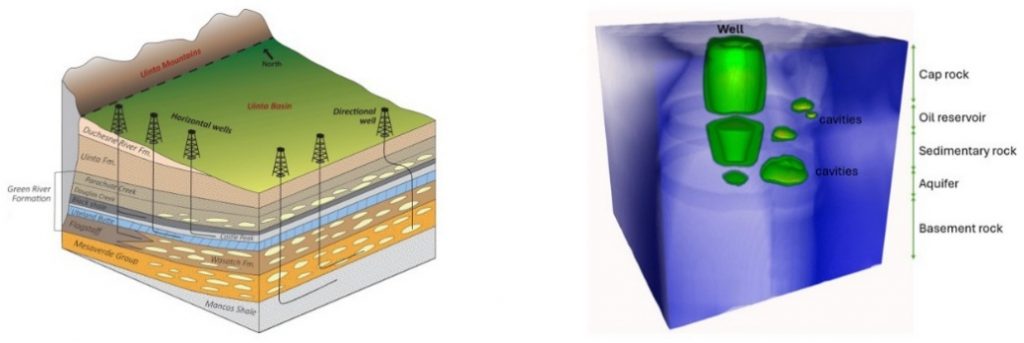
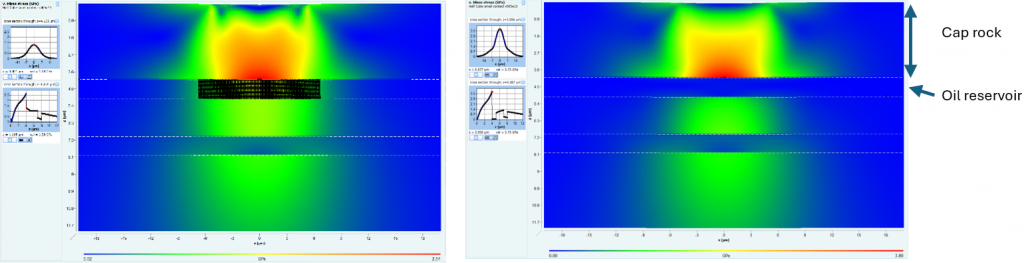
Using traditional extraction methods, the porous oil-bearing layer suffers from pore compaction as the oil is drained, leading in our example to increased von Mises stress of 1.3 GPa exceeding the yield strength (see Figure 2a). FilmDoctor® flags these changes preventively to help avert casing collapse.
In contrast, we explored the flexibility of RASA®’s advanced tech, evaluating a process tweak with the simulation to show the result of significantly reducing viscosity in layer 2.
Max von Mises stress in layer 2 below 200 MPa and within the yield strength of the substrate (see Figure 2b). The process effectively annealing out the stress, converting layer 2 close its original stress-free “virgin” state, an impact as dramatic as the following image for oil-field economics:
FilmDoctor® bridges geological-scale oil reservoirs to nanoscale applications.
Building on this layered approach to minimize stress, a similar approach—echoing viscosity cuts in reservoirs— applies in aluminum-graphene batteries to allow for low-resistance domains of ion flow, enabling rapid charging with minimal heat and wear to extend cycles.
These layered solutions exploit core physics [2] to boost performance.
Ready to create a digital twin of your Well?
If you have any questions concerning the theory, please contact Norbert Schwarzer directly via email: n.schwarzer@siomec.de
If you have any questions concerning the software and animation, please contact Nick Bierwisch: n.bierwisch@siomec.de
For all other concerns (software, offers, development, investor requests) address Peggy Heuer-Schwarzer: p.heuer@siomec.de or Troy vom Braucke: troy@gpplasma.com
References
[1] Example geology from https://geology.utah.gov/map-pub/survey-notes/horizontal-drilling-utah/
[2] N. Schwarzer, “Fluid Universe: The Way of Structured Water – mathematical formulation”, Jenny Stanford Publishing, forthcoming release in 2026).
SIO the other newsletter – No. 154: Update: Simplified Reporting with FilmDoctor®
By Troy vom Braucke and Nick Bierwisch
In a recent newsletter we discussed the application of a jet landing on a runway to understand the stresses in the landing zone for hard, soft, and taxiing scenarios.
However, sharing your FilmDoctor® analysis to colleagues meant manually exporting data sections, images, or entire project files—time-consuming and fragmented, with no one-click option for a complete report for each module used.
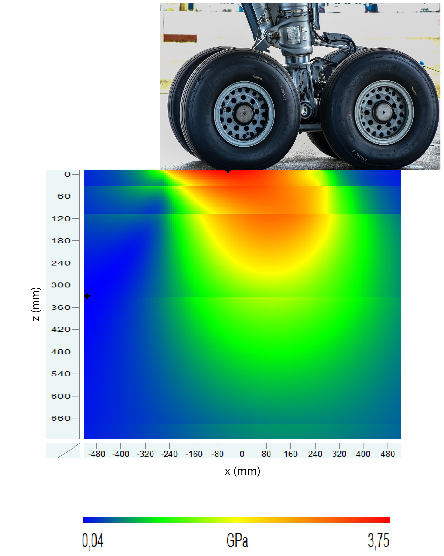
We’ve integrated Typst [1] – a fast, open-source LaTeX alternative – to generate professional, presentation-ready PDF reports instantly. One button exports all data, images, and analysis summaries for select modules, making it effortless to extract insights, share with teams and project partners, and archive.
See attached example reports for OPfC® and FilmDoctor® modules, based on our jet runway landing scenario—complete with input data and stress field visuals.
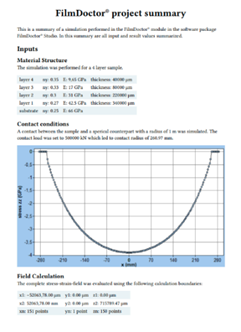
We’re rolling this out to more modules soon.
Contact us today for your free software update (while available in your update period) or to check compatibility with older versions. Let’s streamline your workflow!
If you have any questions concerning the theory, please contact Norbert Schwarzer directly via email: n.schwarzer@siomec.de
If you have any questions concerning the software and animation, please contact Nick Bierwisch: n.bierwisch@siomec.de
For all other concerns (software, offers, development, investor requests) address Peggy Heuer-Schwarzer: p.heuer@siomec.de or Troy vom Braucke: troy@gpplasma.com
References
[1] Typst (http://www.typst.app) an open source Latex alternative which offers us new ways to create reports, summaries and so on. It was developed in Berlin, Germany and is written in Rust which makes it extremely fast and more flexible than creating document with Latex. Our software collects the needed data, creates the images and prepares the document. In the following step that document is compiled with Typst (mostly in under 1 second) and the final PDF document is created.