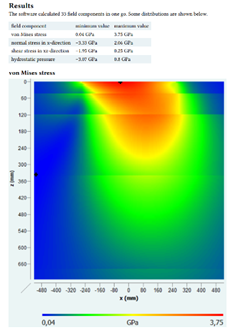
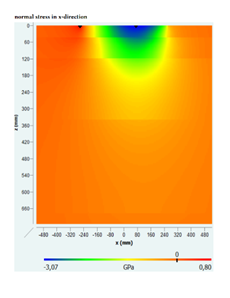
SIO the other newsletter – No. 166: FilmDoctor® goes Anton Paar – 1 click analysis – Part IV
By Nick Bierwisch
We continue our work on the data analysis simplification (see NL#135, NL#136 and NL#137). This time we aim the OPfC Series module (see NL#159) which can analyze a complete measurement series speeding up the measurement analysis and can give additional information. We developed the fdops import format which contains a list of fdop files.
A new python script (Series Export SIO) for the Anton Paar indentation device software was created which exports all measurements, stores the information in the fdops file and starts the installed SIO software.
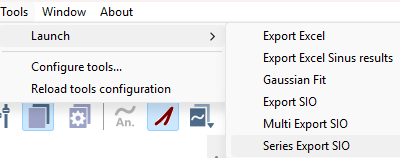
The measurement information from the files which will be loaded in one go into our software and the OPfC Series module is opened.
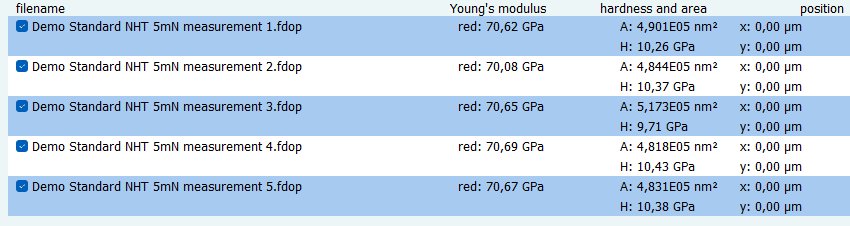
The customer can check if all measurement information were imported correctly and start the series analysis procedure.
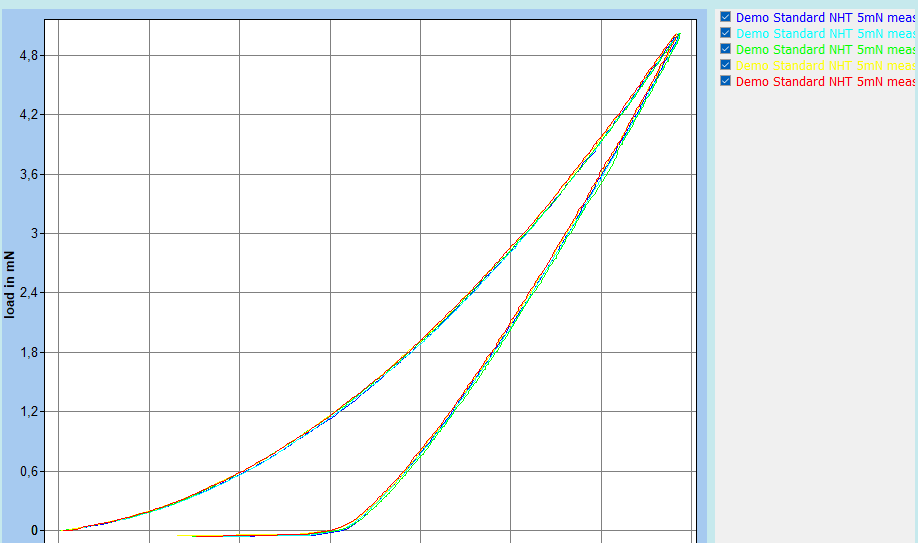
This will speed up the analysis process even more and simplifies the usage and minimize the user inputs.
If you have any questions concerning the theory, please contact Norbert Schwarzer directly via email: n.schwarzer@siomec.de
If you have any questions concerning the software and animation, please contact Nick Bierwisch: n.bierwisch@siomec.de
For all other concerns (software, offers, development, investor requests) address Peggy Heuer-Schwarzer: p.heuer@siomec.de or Troy vom Braucke: troy@gpplasma.com
SIO the other newsletter – No. 165: Subdued Market? More Training & R&D Focus – FilmDoctor® enables
By Troy vom Braucke
In the current subdued market, we are seeing smart and agile US companies investing in R&D to develop innovative new products. This has driven a clear increase in demand for vacuum system and physical vapor deposition training—either for teams new to thin film deposition or those expanding from one technology to another and needing to get up to speed fast.
For GP Plasma, I have and continue to deliver customized training across several markets such as consumer decorative, high-end optics, and for a major international job coater, where I built a “train the trainer” program for them. My approach is conversational. As I visually present the training materials, I also interview participants to draw on their relevant experience while sharing mine. Linking their shared stories to the learning for all participants.
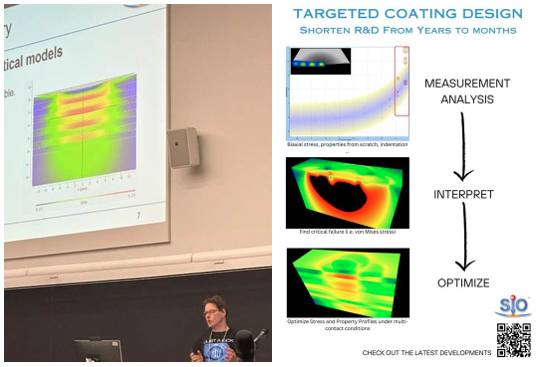
Over the years, I’ve noticed a clear cultural difference in approach: European teams tend to emphasize upfront planning and design before experimenting, while US teams lean toward rapid iterative trial-and-error. The fastest path to market blends both—structured design tools paired with agile experimentation and relentless optimization of not just the product but the innovation process.
I focus on bridging the two approaches. By integrating SIOmec’s FilmDoctor® suite, we turn years of iterative development into weeks. FilmDoctor® quickly reveals materials properties, layer thicknesses, and performance metrics—often in minutes—shifting the bottleneck to manufacturing and testing the coating. That’s where the GP Plasma team excels: using FilmDoctor® insights to select or customize deposition technology with retrofit upgrades to achieve the materials and properties needed and rapidly guide process development from coating design through analytical validation.
This removes much of the “dark art” from PVD development, replacing guesswork with clear decision making, defined engineering targets, and dramatically shortening time-to-market.
Which is why at the end of training I give an overview of how FilmDoctor® helps with application coating design, process development and deposition technology selection.
If you have any questions concerning the theory, please contact Norbert Schwarzer directly via email: n.schwarzer@siomec.de
If you have any questions concerning the software and animation, please contact Nick Bierwisch: n.bierwisch@siomec.de
For all other concerns (software, offers, development, investor requests) address Peggy Heuer-Schwarzer: p.heuer@siomec.de or Troy vom Braucke: troy@gpplasma.com
SIO the other newsletter – No. 164: Rechargeable Diesel: Electricity without Combustion
By Troy vom Braucke
Picture pulling into any gas station to fill your tank like you always have, but to quietly power high-performance electric motors — no combustion, no expensive catalysts, no degrading membranes, no heavy battery pack, no range anxiety.
The problem is every clean-mobility path hits these limits: expensive materials that are consumed/degraded, fuel-purity restrictions that poison cell membranes and prevent using standard fuels, new infrastructure that scales slowly, and energy densities that can’t match hydrocarbons for range and refill speed.
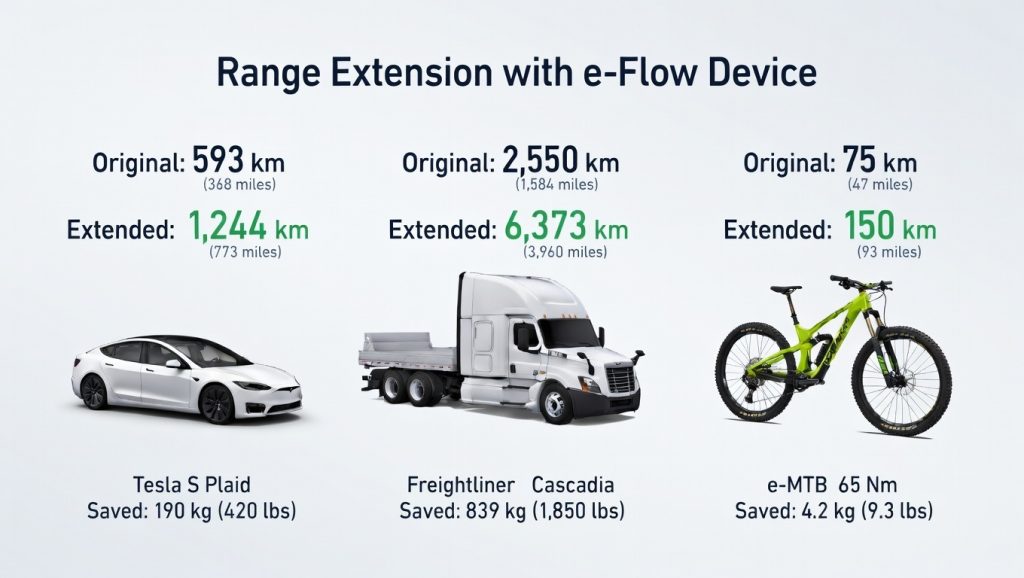
Fuel cells rely on costly platinum that wears out and can’t deal with impurities. Liquid flow-cell systems suffer low power density and membrane degradation, e-Fuels (synthetic fuels) are 3-5 times more expensive than current, take more energy to manufacture than they supply, and have scalability and infrastructure challenges. Advanced batteries deliver only 1/20th to 1/100th the usable energy density of diesel per kg or liter.
We considered a different path (see NL#133 – A Rechargeable Fuel) — turning those barriers into strengths. Because we don’t burn the diesel, the spent fluid can be recharged from the grid or reprocessed for its trace minerals — creating a circular, multi-use fuel cycle using existing infrastructure.
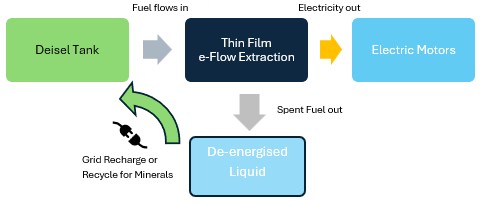
With FilmDoctor® to explore the conceptual design optimization from structures given by the fundamental physics [1, 2], our goal is to reach Diesel’s unmatched energy density, while solving materials degradation with a solution compatible for scale up on thin film deposition equipment.
The next step is building the benchtop demonstrator using thin-film coating processes.
If you’d like to dive deeper into the underlying theory [1, 2] or if you’re involved in advanced coatings and open to a co-development conversation, simply reply to this email.
References:
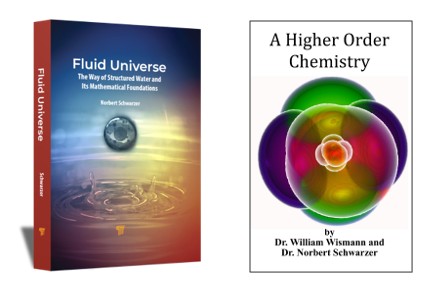
[1] N. Schwarzer “Fluid Universe – The Way of Structured Water: Mathematical Foundation”, Jenny Stanford Publishing, 2026, ISBN 978-981-5352-15-3.
[2] W. Wismann, N. Schwarzer, “A Higher Order Chemistry” 2025, available at discretion of the 1st author.
If you have any questions concerning the theory, please contact Norbert Schwarzer directly via email: n.schwarzer@siomec.de
If you have any questions concerning the software and animation, please contact Nick Bierwisch: n.bierwisch@siomec.de
For all other concerns (software, offers, development, investor requests) address Peggy Heuer-Schwarzer: p.heuer@siomec.de or Troy vom Braucke: troy@gpplasma.com
SIO the other newsletter – No. 163: Z-Pinch Fusion Liquid Wall Impacts with SIOmec’s FilmDoctor® – Part 3
By Troy vom Braucke
In part 1 (NL#160) we started with a basic simulation of particle impacts on a thick, slow-flowing liquid metal wall in a Z-pinch fusion reactor. Part 2 (NL#161) increased flow to explore initial effects. Now, we continue adding degrees of freedom.
This helps us to better grasp the particle impacts on the liquid metal and its interface with the steel chamber wall – with the aim to refine our digital twin using FilmDoctor®. First calculations stay quick this way and we build understanding step by step. Ultimately, to cut down fusion energy development time.
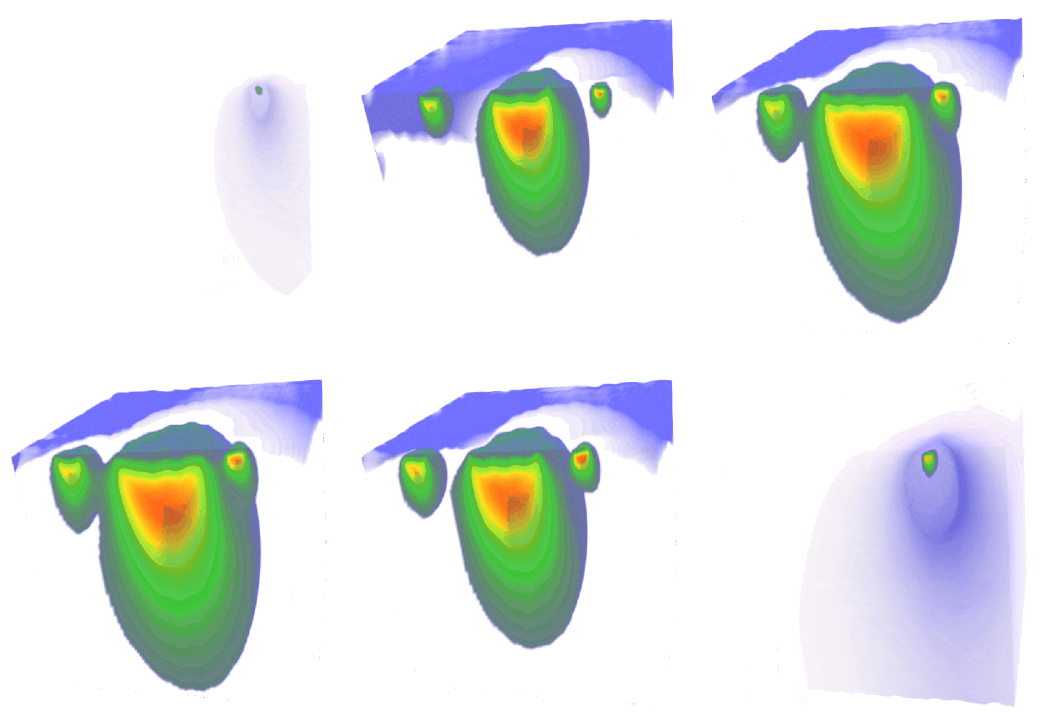
This week, we reduce the fluid film depth and show its velocity profile (see Figure 1) with a parabolic quadratic function for a falling laminar film [3].
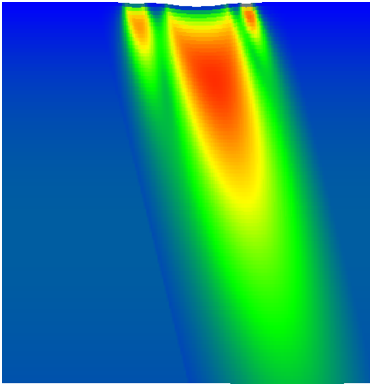
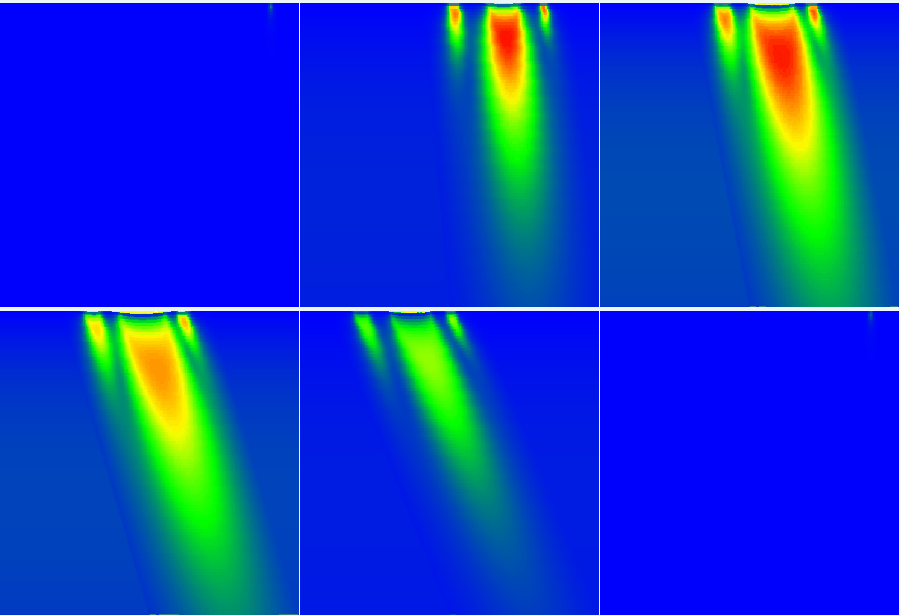
Figure 1: Still and animated gif image of liquid metal 1st wall with flow left to right, showing a parabolic velocity profile from ‘no-slip’ at wall, to flow at the surface. Calculated with FilmDoctor®. Thanks to SIOmec’s Nick Bierwisch for animation support.
But the simulation remains incomplete. In the next newsletter, we’ll apply additional degrees of freedom to examine inhomogeneity with depth from viscosity effects (i.e. Prandtl-like behaviour [4]). We expect this to set up shear flow and related stress fields.
FilmDoctor® has capability to handle time-dependent materials – fluids, creep, biomaterials, polymers, glass. Perfect for plasma-material interactions in fusion energy optimization and for crafting coating solutions in the fusion sector.
Contact us for a demo!
References:
[1] https://www.zapenergy.com/blog/history-of-the-z-pinch
[2] M. C. Thompson et. Al. “Engineering Paradigms for Sheared-Flow-Stabilized Z-Pinch Fusion Energy” vol 79, Fusion Science and Technology (2023) https://doi.org/10.1080/15361055.2023.2209131
[3] R. Wang et. Al. “Experimental Validation of Falling Liquid Film Models: Velocity Assumption and Velocity Field Comparison”, Polymers, 2021. https://www.mdpi.com/2073-4360/13/8/1205
[4] Prandtl Number review; https://www.sciencedirect.com/topics/chemistry/prandtl-number
If you have any questions concerning the theory, please contact Norbert Schwarzer directly via email: n.schwarzer@siomec.de
If you have any questions concerning the software and animation, please contact Nick Bierwisch: n.bierwisch@siomec.de
For all other concerns (software, offers, development, investor requests) address Peggy Heuer-Schwarzer: p.heuer@siomec.de or Troy vom Braucke: troy@gpplasma.com
SIO the other newsletter – No. 162: Applied Socioeconomic Tariff Analysis with FilmDoctor®: Visualizing Industry Stress
By Troy vom Braucke
We wanted to understand if USA tariffs can be both beneficial and detrimental to an industry with a view toward the vacuum deposition machine tool suppliers using FilmDoctor® to visualize the resultant stress fields from international trade barriers.
The methods we applied are applicable to other industries such as job coating or measurement equipment and provide an opportunity to show to decision makers why adaptable policy changes may be required.
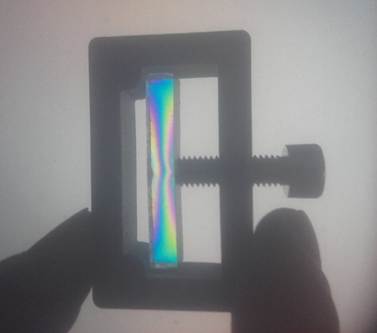
Just as stress can be visualized in transparent materials (Figure 1), a heat map of stress can be calculated to show regions of a socioeconomic system stress at risk of critical failure.
In the vacuum deposition machine tool sector, many countries have diverse support mechanisms. For example, since 2025, China offers substantial incentives, including preferential financing and loan‑interest subsidies.
These measures enable these firms to provide equipment at significantly lower cost. European competitors argue that the subsidized financing allows Chinese OEMs to scale production at a lower capital cost, resulting in pricing advantages that EU firms cannot match [2,3], with similar stress placed on USA machine builders.
The FilmDoctor® simulations below show a simple first-pass stress-field approach, considering the impact of foreign subsidised imports.
- Left sides of imagesshow a USA tariff protecting an industry.
- Right sidesshow an unprotected industry suffering under subsidized imports.
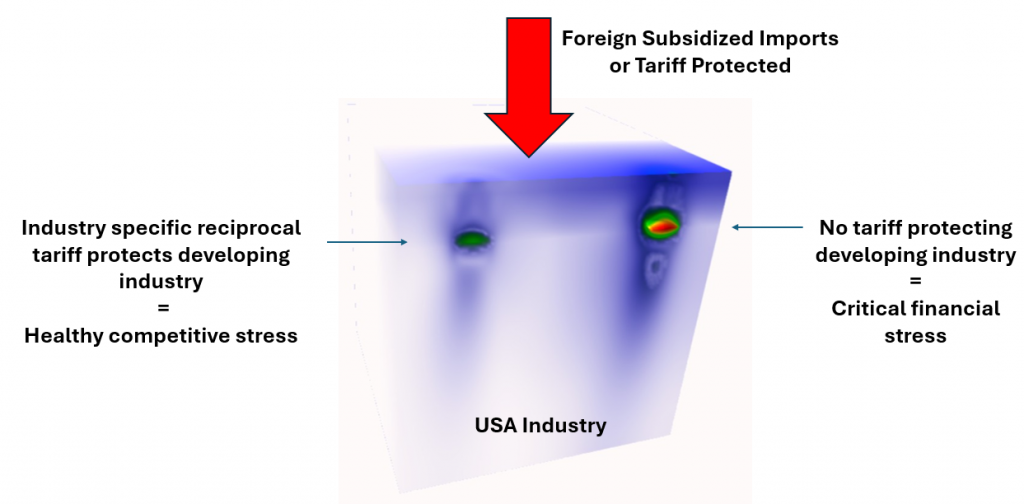
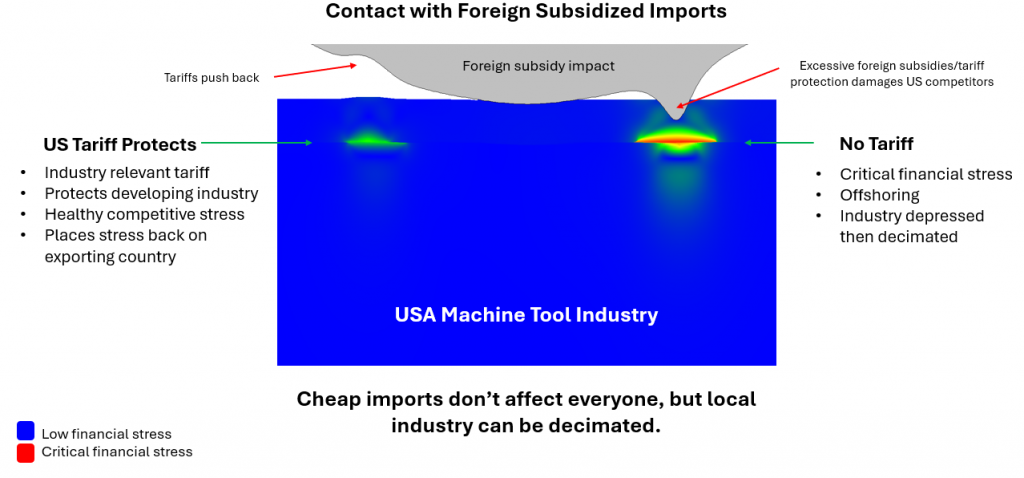
With broader industry information, specific subsidy or import tariffs against US products may trigger a weak point in other areas of the economy – The FilmDoctor® field model approach can show under what circumstances and where in the socio-economy failure can occur given suitable input data. Yes, even with dynamic time dependent data.
Outcome
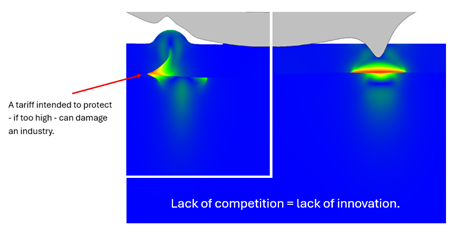
Tariff can be calculated to optimize the stability of a developing industry, while allowing for healthy international competition.
However, too high a tariff leads to critical stress in the very industry one tries to protect!
This may be due to supply chain impacts, offshoring, or lack of innovation without competitive pressure.
Contact us for a demo!
[1] Autodesk Instructables https://www.instructables.com/Photoelasticimetry-Seeing-Mechanical-Stress-With-O/
[2] China vows easier financing for private firms’ equipment upgrades” [english.www.gov.cn],
[3] SCIO briefing on promoting high-quality development: Ministry of Finance [SCIO brief…try of …]
If you have any questions concerning the theory, please contact Norbert Schwarzer directly via email: n.schwarzer@siomec.de
If you have any questions concerning the software and animation, please contact Nick Bierwisch: n.bierwisch@siomec.de
For all other concerns (software, offers, development, investor requests) address Peggy Heuer-Schwarzer: p.heuer@siomec.de or Troy vom Braucke: troy@gpplasma.com
SIO the other newsletter – No. 161: Z-Pinch Fusion Liquid Wall Impacts with SIOmec’s FilmDoctor® – Part 2
By Troy vom Braucke
In part one of this newsletter (NL#160) the Z-pinch fusion effect was introduced that generates self-confined magnetic fields, compressing plasma to fusion conditions in a compact, magnet-free system [1, 2] providing order of magnitude cost reductions, the promise of reduced development time, and opportunity for coating solutions.
The flowing liquid metal first wall (e.g. bismuth, Pb-Li) in the Z-pinch reactor provides a self-healing first wall. To better understand the particle impacts on the liquid metal and the interface with the steel chamber wall, we increasingly add degrees of freedom to better match the reality to improve our digital twin with FilmDoctor®. In this way first calculations are fast, and we increase our understanding along the way -with the goal to reduce development time of fusion energy.
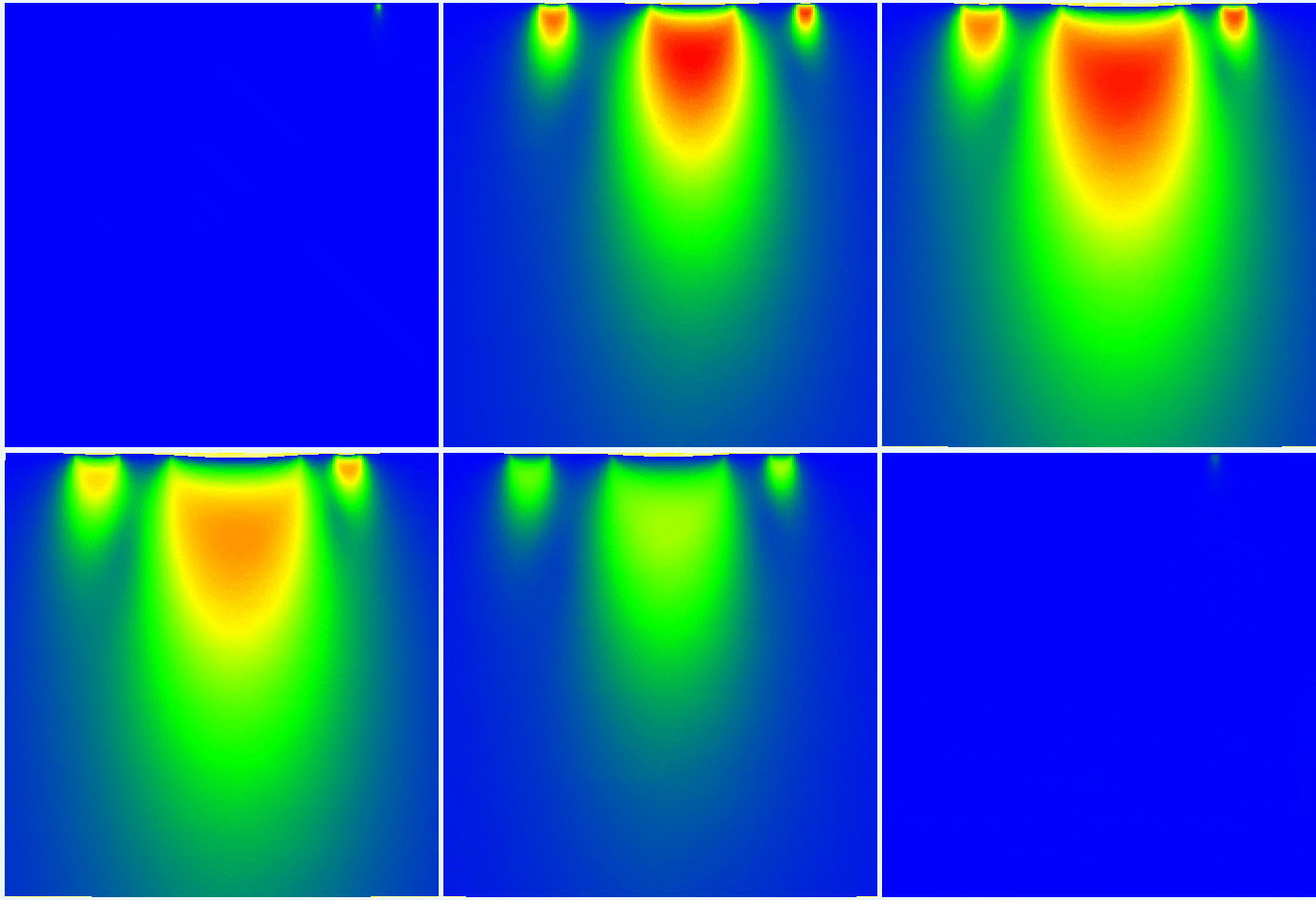
With thanks to SIOmec’s Nick Bierwisch for providing the animation.
With thanks to SIOmec’s Nick Bierwisch for providing the animation.
This week we included the movement of the liquid metal from left to right (Figure 1) with the background frame appearing stationary, the particle impacts can be seen slowly moving to the left.
In the next newsletter we will increase the degrees of freedom to show higher impact energy with respect to fluid thickness to consider effects similar to Prandtl’s power law.
FilmDoctor® capability of simulating time-dependent materials like fluids, creep, biomaterials, polymers, and glass, makes it ideal for analyzing plasma-material interactions in fusion environments. An opportunity for designing coating solutions to the Fusion industry.
Contact us for a demo!
[1] https://www.zapenergy.com/blog/history-of-the-z-pinch
[2] M. C. Thompson et. Al. “Engineering Paradigms for Sheared-Flow-Stabilized Z-Pinch Fusion Energy” vol 79, Fusion Science and Technology (2023) https://doi.org/10.1080/15361055.2023.2209131
If you have any questions concerning the theory, please contact Norbert Schwarzer directly via email: n.schwarzer@siomec.de
If you have any questions concerning the software and animation, please contact Nick Bierwisch: n.bierwisch@siomec.de
For all other concerns (software, offers, development, investor requests) address Peggy Heuer-Schwarzer: p.heuer@siomec.de or Troy vom Braucke: troy@gpplasma.com
SIO the other newsletter – No. 160: Z-Pinch Fusion Liquid Wall Impacts with SIOmec’s FilmDoctor® – Part 1
By Troy vom Braucke, animation by Nick Bierwisch
The Z-pinch effect was first investigated in 1905 in Australia when physicists James Arthur Pollock and Stewart Barraclough examined a crushed copper lightning rod struck by lightning in the 1800’s, where the massive current generated a self-induced magnetic field that radially compressed the tube [1].
Z-pinch fusion energy technology leverages this to create self-confined magnetic fields, compressing plasma to fusion conditions in a compact, magnet-free system. Historically limited by plasma instabilities, development of shear-flow stabilization—via differential plasma velocities—enabled sustained confinement (~50-100 μs per pulse), offering order of magnitude lower capex costs and faster iterations than tokamak and stellarator designs.
Interestingly, a liquid metal first wall or ‘blanket’ (e.g. bismuth, Pb-Li in future plants from Zap Energy [2]) provide a solution for heat management, erosion resistance, and tritium breeding. However, flow rate optimization and degradation need to be optimized, while opportunities exist for advanced coatings and thin films to combat corrosion and neutron damage (of the cathode).

In this newsletter series, we’ll use SIOmec’s FilmDoctor® to simulate plasma particle impacts on the liquid wall, starting with low flow and a thick layer relative to impact scales (see Figure 1) that would save these fusion companies 1000’s of hours in supercomputing time. Future newsletters will add realism, such as directional flow with depth effect, higher resolutions and 3D tomographic views.
Key materials challenges are [3]:
- Liquid wall erosion/sputtering from keV ions, risking droplet ejection and plasma contamination.
- Neutron degradation, including helium swelling and lithium depletion in Pb-Li.
- Corrosion of underlying steels (<50 μm/year from Pb-Li), needing oxide barrier coatings.
FilmDoctor® capability of simulating time-dependent materials like fluids, creep, biomaterials, polymers, and glass, makes it ideal for analyzing plasma-material interactions in fusion environments. For additional design complexity, the theory is extended in [4] for application toward internally coherent domains in fluids.
Contact us for a demo!
[1] https://www.zapenergy.com/blog/history-of-the-z-pinch
[2] Zap Energy, Wikipedia. https://en.wikipedia.org/wiki/Zap_Energy
[3] M. C. Thompson et. Al. “Engineering Paradigms for Sheared-Flow-Stabilized Z-Pinch Fusion Energy” vol 79, Fusion Science and Technology (2023) https://doi.org/10.1080/15361055.2023.2209131
[4] N. Schwarzer, “Fluid Universe – The Way of Structured Water: A Mathematical Foundation”, JennyStanford Publishing (2026) ISBN:9789815352153
If you have any questions concerning the theory, please contact Norbert Schwarzer directly via email: n.schwarzer@siomec.de
If you have any questions concerning the software and animation, please contact Nick Bierwisch: n.bierwisch@siomec.de
For all other concerns (software, offers, development, investor requests) address Peggy Heuer-Schwarzer: p.heuer@siomec.de or Troy vom Braucke: troy@gpplasma.com
SIO the other newsletter – No. 159: OPfC Series Module: Streamlining Batch Nanoindentation Analysis in FilmDoctor®
OPfC Series Module: Streamlining Batch Nanoindentation Analysis in FilmDoctor®
By Nick Bierwisch and Troy vom Braucke
Processing nanoindentation data for thin films often involves painstaking sequential analysis of individual curves, leading to repetitive entry of coating and substrate parameters. This not only consumes lab time but increases the risk of input errors, especially across large datasets from multiple indents.
Manually scanning for bad indents—caused by surface roughness, film defects, equipment noise or anomalies—further delays processing, slowing identification of outliers essential for R&D.
The OPfC® Series module, is an extension of our FilmDoctor® OPfC® module (see NL#150) where we discuss benefits of the Oliver and Pharr for Coatings module for reliably separating substrate effects from thin film properties) solves these issues with efficient batch processing.
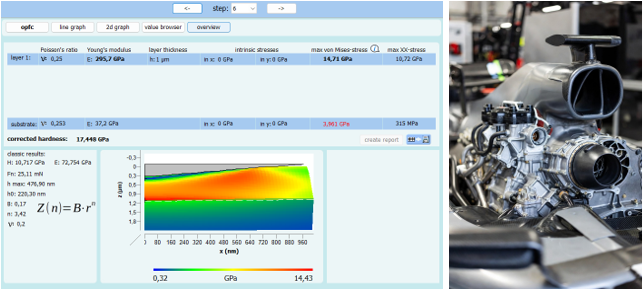
Load an entire measurement series in one go direct from your indentation instrument or its exported data; the module automatically flags high-error curves, applies common parameters to prevent input mistakes, and runs OPfC analysis on each—separating substrate effects via first-principles physics for precise coating modulus and yield strength.
Benefits: In high-stakes applications like performance coatings where development time and speed to market are key, trustworthy fast decisions are critical.
- Drastically reduced analysis time for series data,
- Minimize errors from repetition,
- Enhanced overview for insights and erroneous indents
- Separation of substrate influence from film properties
- Trustworthy Young’s modulus, yield strength, and hardness properties for design inputs.

Batch results are presented with a table overview of given and calculated parameters, and individual curves selected for an in-depth view of substrate-corrected values vs. classical, ideal for optimizing components in performance applications like Formula One (see Figure 1).
Experience faster, error-free workflows and save hours in the lab!
Contact us for a demo!
If you have any questions concerning the theory, please contact Norbert Schwarzer directly via email: n.schwarzer@siomec.de
If you have any questions concerning the software and animation, please contact Nick Bierwisch: n.bierwisch@siomec.de
For all other concerns (software, offers, development, investor requests) address Peggy Heuer-Schwarzer: p.heuer@siomec.de or Troy vom Braucke: troy@gpplasma.com
SIO the other newsletter – No. 158: Fusion First Wall Optimization: Insights from FilmDoctor®
Fusion First Wall Optimization: Insights from FilmDoctor®
Harnessing fusion energy safely is humanity’s dream
By Troy vom Braucke
In our latest project (see gif images below), we demonstrate SIO’s scale-invariant FilmDoctor® software optimizing a fusion chamber first wall against multiple plasma generated particle impacts (particles not shown). The goal for Fusion operators is to extend the life of the first wall to approximately 20 years before replacement.
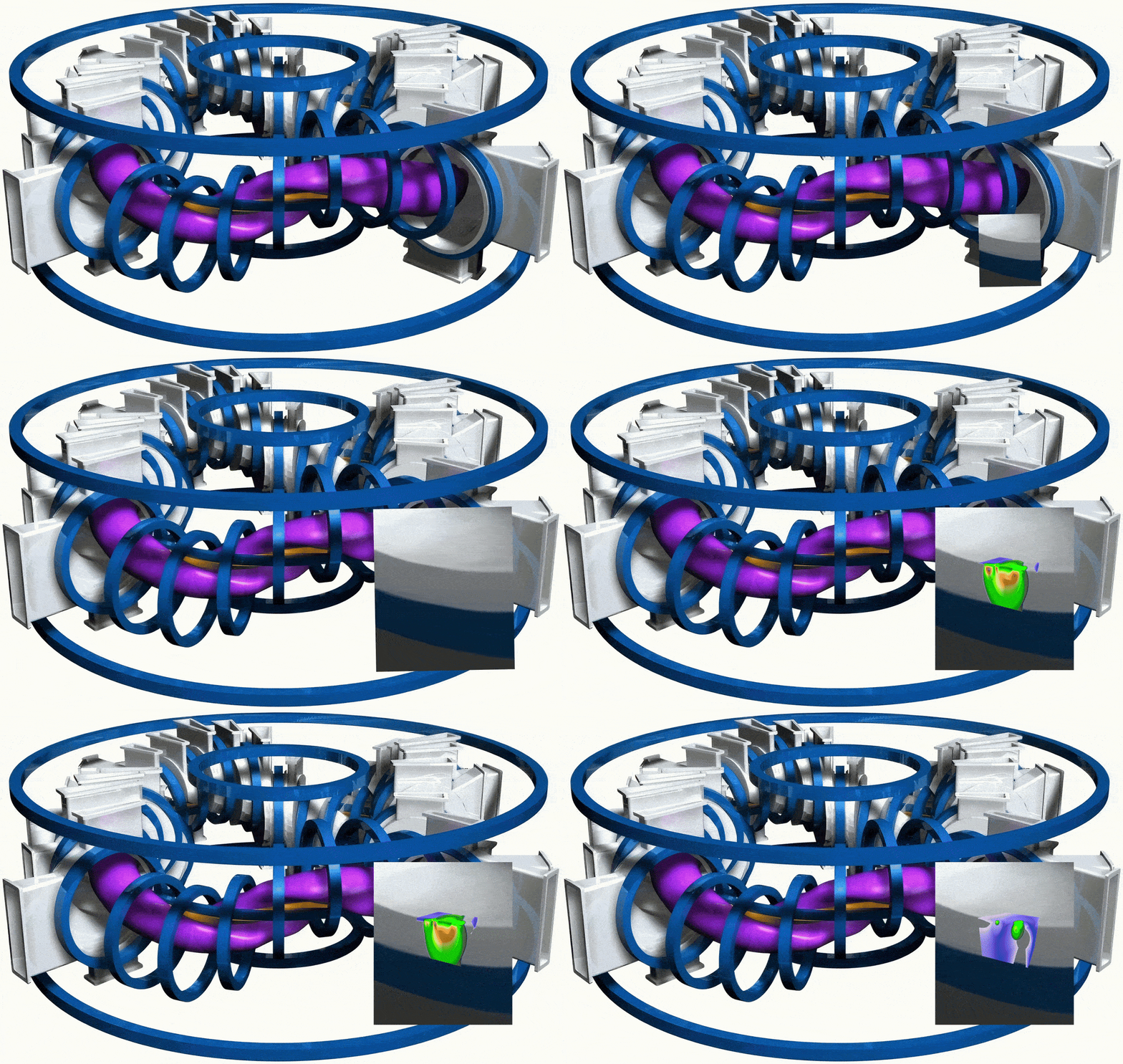
Simulations show many small impacts cause plastic flow in the substrate, risking integrity. Medium and large ones are benign alone, but multi-impact scenarios—overlapping in time and space—amplify damage, even when they’re non-critical as single impacts. By adding a protective layer (usually Tungsten based), it shields the substrate (RAFM steel) from single impacts, but worst-case impact ensembles still induce plastic zones in both the Tungsten layer and substrate (see Figure 2).
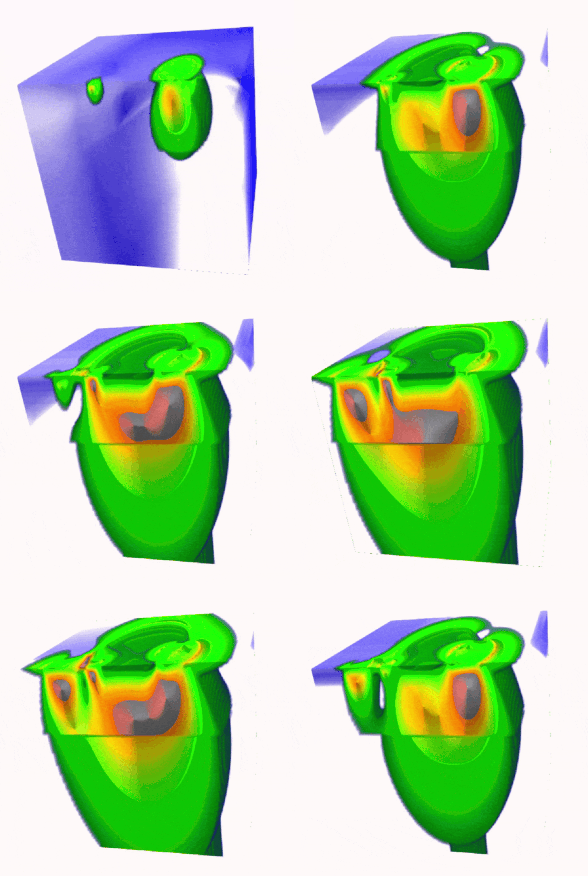
Using FilmDoctor’s iStress® module, we find the optimal intrinsic stress profile in minutes to target during coating deposition. The stress optimization eliminated plastic flow across all impact scenarios (see Figure 3 right image), as 3D animations confirm—no black damage zones. The Uncertainty Budget Calculator (Critload) allows to evaluate impact and coating property variations, finding optimized combinations to protect against best/worst case impact scenarios.
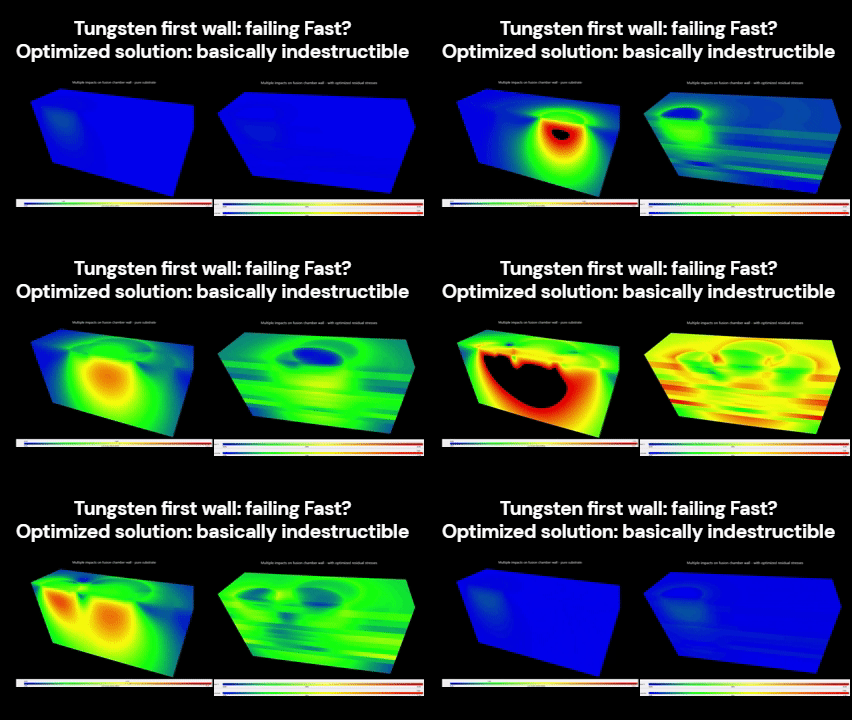
Result: A resilient coating system for fusion walls—and beyond, in any high-impact application of any particle size from sub-atomic to geological scale!
[1] TJ-II model by Jose l. Velasco adapted by SiOmec, CC BY-SA 4.0 <https://creativecommons.org/licenses/by-sa/4.0>, via Wikimedia Commons, source link: https://commons.wikimedia.org/wiki/File:TJ-II_model_including_plasma,_coils_and_vacuum_vessel.jpg

Contact us for a demo!
If you have any questions concerning the theory, please contact Norbert Schwarzer directly via email: n.schwarzer@siomec.de
If you have any questions concerning the software and animation, please contact Nick Bierwisch: n.bierwisch@siomec.de
For all other concerns (software, offers, development, investor requests) address Peggy Heuer-Schwarzer: p.heuer@siomec.de or Troy vom Braucke: troy@gpplasma.com
SIO the other newsletter – No. 157: FilmDoctor® iStress module – recap
An informed approach to optimize longevity and reliability of layered films
By Troy vom Braucke and Nick Bierwisch
In mechanical engineering and materials science, optimizing material systems for enhanced performance and longevity often involves strategies such as:
– Surface strengthening (e.g., nitriding)
– Improved material combinations
– Use of novel coating materials
– Changing the structure and deposition process.
However, the residual stresses, resulting from manufacturing or processing steps, mostly define the performance and limit the lifetime of nanostructured materials, thin films, coatings, and MEMS devices.
An EU-funded consortium project sought to leverage inherent residual stresses in coating-substrate systems rather than mitigating them. The project’s core insight was to engineer tailored residual stress profiles for specific contact conditions, thereby reducing peak stresses and improving load-bearing capacity.
As a key outcome, SiOmec developed the iStress module within FilmDoctor®, which computes optimal stress distributions using analytical models for given operational scenarios. Project partners subsequently refined their manufacturing process techniques to achieve these profiles.
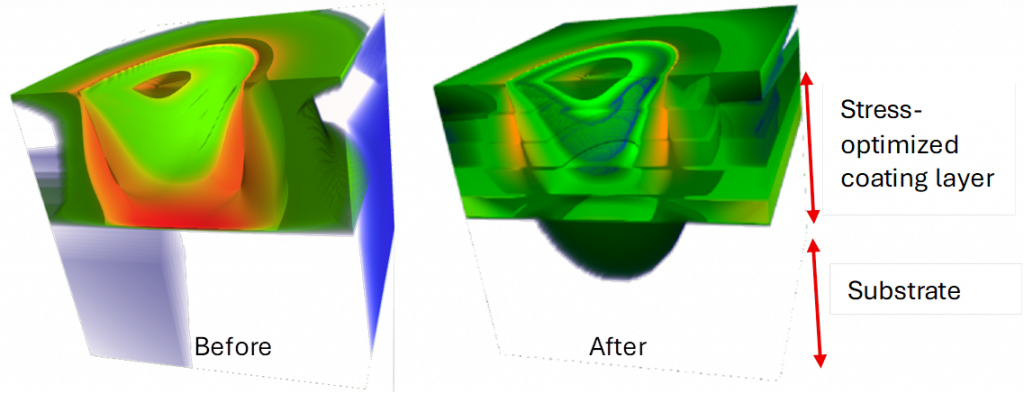
The iStress Module Workflow:
- Select the target layer for optimization in the multilayer system.
- FilmDoctor® iStress evaluates the complete stress-strain-field of the original state.
- User decides how many discrete sublayers are desired in the selected layer.
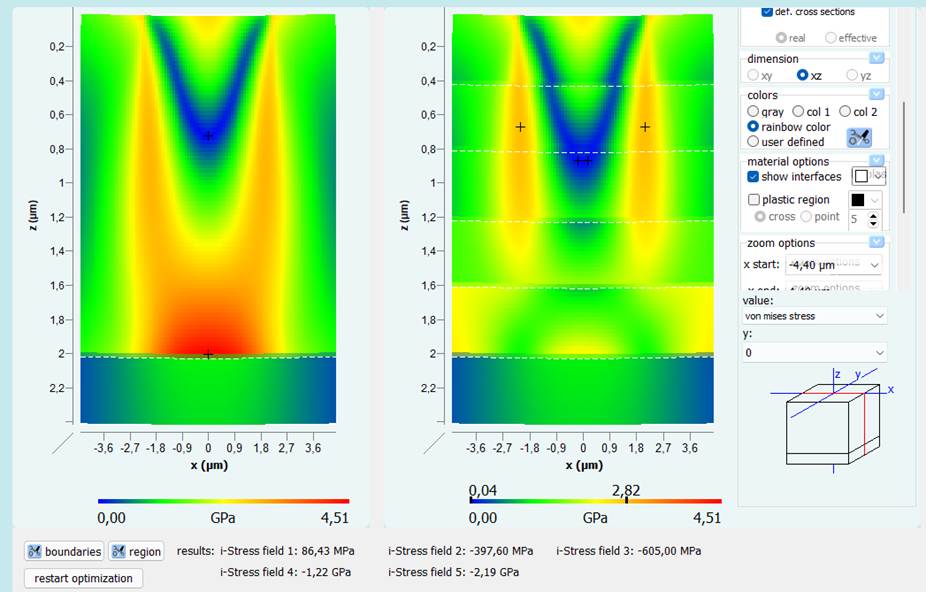
- The optimal residual stress values per sublayer are calculated to create a stress distribution with lower stress maxima.
In a representative example shown in Figure 2, the maximum von Mises stress decreased from 4.51 GPa (original) to 2.82 GPa (optimized), nearly halving the von Mises stress maxima without material changes.
An applied example can be found in the tutorial video in part 2 of ‘Implants of a Lifetime’
For further technical details of the EU project, including measurement protocols for sub-micron residual stress analysis and integration with our simulation tools see: https://cordis.europa.eu/project/id/604646/de
[1] Example geology from https://geology.utah.gov/map-pub/survey-notes/horizontal-drilling-utah/
[2] N. Schwarzer, “Fluid Universe: The Way of Structured Water – mathematical formulation”, Jenny Stanford Publishing, forthcoming release in 2026).
If you have any questions concerning the theory, please contact Norbert Schwarzer directly via email: n.schwarzer@siomec.de
If you have any questions concerning the software and animation, please contact Nick Bierwisch: n.bierwisch@siomec.de
For all other concerns (software, offers, development, investor requests) address Peggy Heuer-Schwarzer: p.heuer@siomec.de or Troy vom Braucke: troy@gpplasma.com
SIO the other newsletter – No. 156: Stress Testing a Chuck Norris Meme with FilmDoctor®
Stress Testing a Chuck Norris Meme with FilmDoctor®
By Troy vom Braucke
It has been said that when Chuck Norris does a push up, he isn’t lifting himself up, he’s pushing the Earth down!
This meme has been kicking around for years and captures the over-the-top toughness of the martial arts legend. Let’s put it to the test with FilmDoctor®, does Chuck actually move the Earth?

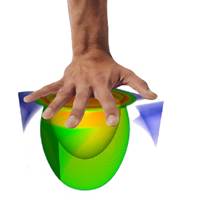
Using a mass of 77kg for when he was in his prime, and a typical push up height of 0.3m gives approximately 226 Joules of potential energy, or 113 Joules per hand for a two-hand push up. So clearly for Chuck, we will use 226 Joules for a one-handed push up.
Taking a contact area for an adult male palm of 10cm x 10cm gives a circular radius of 5.64cm, but with a relatively flat contact radius ‘a’ when in contact with the ground.
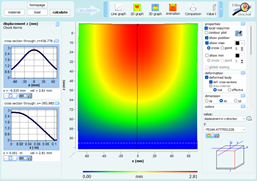
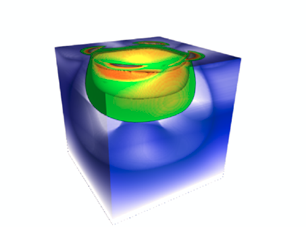
Running the contact analysis in FilmDoctor®, it seems Chuck does push the earth down, but only the part just below his hand. Perhaps you might like to try a Karate chop to a wooden board?
All fun aside, understanding the contactconditions of a hand or foot on the reliability of in-homogeneous layered materials can be critical, like for sporting equipment under extreme scenarios such as our windsurfer example here:
http://siomec.com/wp-content/uploads/2023/06/2007-006.pdf
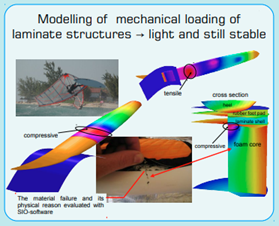
Meme Data: We used a compressible loamy soil (E= 15MPa, v= 0.15) 10cm deep, above Sandstone rock (E=84GPa, v = 0.13).
If you have any questions concerning the theory, please contact Norbert Schwarzer directly via email: n.schwarzer@siomec.de
If you have any questions concerning the software and animation, please contact Nick Bierwisch: n.bierwisch@siomec.de
For all other concerns (software, offers, development, investor requests) address Peggy Heuer-Schwarzer: p.heuer@siomec.de or Troy vom Braucke: troy@gpplasma.com
SIO the other newsletter – No. 155: Efficient Oil Extraction with FilmDoctor®
Efficient Oil Extraction with FilmDoctor® – Safer, Smarter, Subsidence-Free
By Troy vom Braucke
FilmDoctor® uses analytical physics to simulate digital twins of stress and strain fields in multi-layered oil reservoirs, cutting subsidence risk (by up to 90% in our hypothetical example below)—faster and more precise than FEA, and using real site data or literature values for preliminary analysis.
Traditional extraction softens the oil-bearing sandstone, leading to a risk of casing collapse, with wells typically limited to 40-50% of the oil being feasibly extracted.
We simulated traditional extraction methods compared to new state-of-the-art technology from RASA® to understand risks as oil is depleted due to the impact of lost circulation zones and costly repairs in the millions, while showing potential for real-time optimization of oil fields.
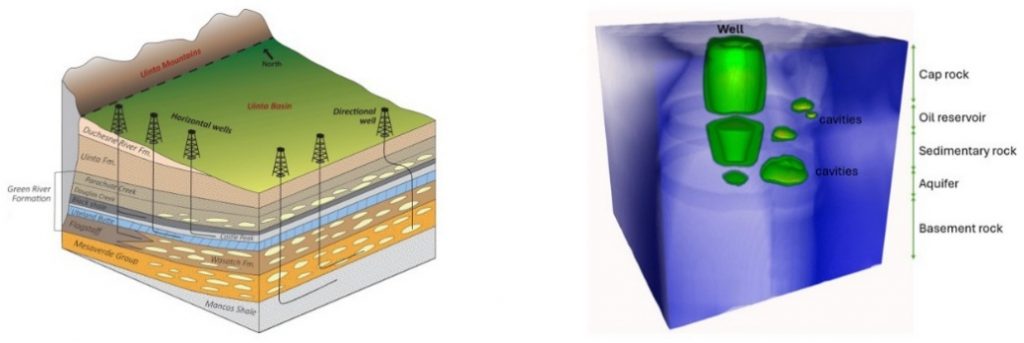
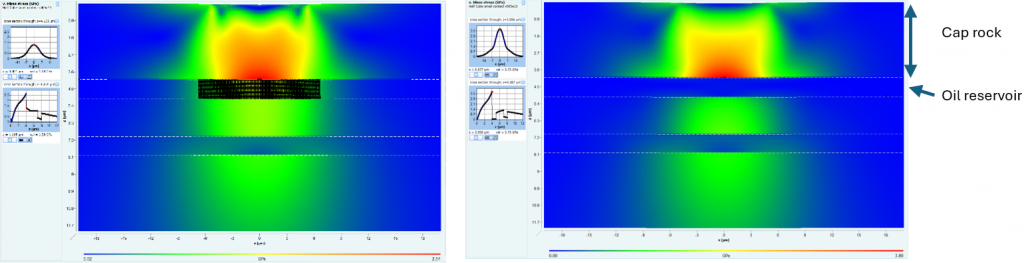
Using traditional extraction methods, the porous oil-bearing layer suffers from pore compaction as the oil is drained, leading in our example to increased von Mises stress of 1.3 GPa exceeding the yield strength (see Figure 2a). FilmDoctor® flags these changes preventively to help avert casing collapse.
In contrast, we explored the flexibility of RASA®’sadvanced tech, evaluating a process tweak with the simulation to show the result of significantly reducing viscosity in layer 2.
Max von Mises stress in layer 2 below 200 MPa and within the yield strength of the substrate (see Figure 2b). The process effectively annealing out the stress, converting layer 2 close its original stress-free “virgin” state, an impact as dramatic as the following image for oil-field economics:

FilmDoctor® bridges geological-scale oil reservoirs to nanoscale applications.
Building on this layered approach to minimize stress, a similar approach—echoing viscosity cuts in reservoirs— applies in aluminum-graphene batteries to allow for low-resistance domains of ion flow, enabling rapid charging with minimal heat and wear to extend cycles.
These layered solutions exploit core physics [2] to boost performance.
Ready to create a digital twin of your Well?
Contact us for a FilmDoctor® Demo—Transform your site data into wins.
If you have any questions concerning the theory, please contact Norbert Schwarzer directly via email: n.schwarzer@siomec.de
If you have any questions concerning the software and animation, please contact Nick Bierwisch: n.bierwisch@siomec.de
For all other concerns (software, offers, development, investor requests) address Peggy Heuer-Schwarzer: p.heuer@siomec.de or Troy vom Braucke: troy@gpplasma.com
References
[1] Example geology from https://geology.utah.gov/map-pub/survey-notes/horizontal-drilling-utah/
[2] N. Schwarzer, “Fluid Universe: The Way of Structured Water – mathematical formulation”, Jenny Stanford Publishing, forthcoming release in 2026).
SIO the other newsletter – No. 154: Update: Simplified Reporting with FilmDoctor®
By Troy vom Braucke and Nick Bierwisch
In a recent newsletter we discussed the application of a jet landing on a runway to understand the stresses in the landing zone for hard, soft, and taxiing scenarios.
However, sharing your FilmDoctor analysis to colleagues meant manually exporting data sections, images, or entire project files—time-consuming and fragmented, with no one-click option for a complete report for each module used.
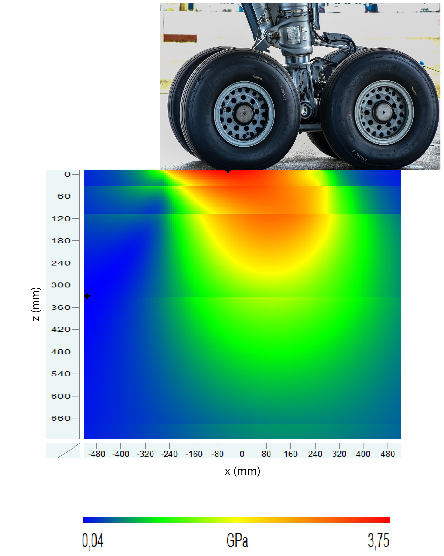
We’ve integrated Typst [1] – a fast, open-source LaTeX alternative – to generate professional, presentation-ready PDF reports instantly. One button exports all data, images, and analysis summaries for select modules, making it effortless to extract insights, share with teams and project partners, and archive.
See attached example reports for OPfC® and FilmDoctor® modules, based on our jet runway landing scenario—complete with input data and stress field visuals.
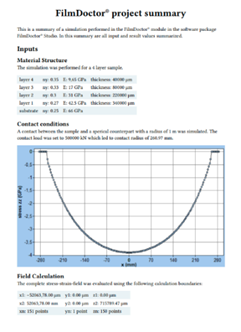
We’re rolling this out to more modules soon.
Contact us today for your free software update (while available in your update period) or to check compatibility with older versions. Let’s streamline your workflow!
If you have any questions concerning the theory, please contact Norbert Schwarzer directly via email: n.schwarzer@siomec.de
If you have any questions concerning the software and animation, please contact Nick Bierwisch: n.bierwisch@siomec.de
For all other concerns (software, offers, development, investor requests) address Peggy Heuer-Schwarzer: p.heuer@siomec.de or Troy vom Braucke: troy@gpplasma.com
References
[1] Typst (http://www.typst.app) an open source Latex alternative which offers us new ways to create reports, summaries and so on. It was developed in Berlin, Germany and is written in Rust which makes it extremely fast and more flexible than creating document with Latex. Our software collects the needed data, creates the images and prepares the document. In the following step that document is compiled with Typst (mostly in under 1 second) and the final PDF document is created.